
The Looming Threat of Super volcanic Eruptions
How an Unprepared World Faces a Catastrophic Future


Oh dear! Scientists predict that a volcanic eruption, if it occurs, could be among the most destructive in human history. There is a probability of one in six that it might occur within the next hundred years; it would probably be another serious blow to the climate and put millions of lives at risk. In January 2022, the Hunga Tonga-Hunga Ha'apai volcano erupted in the South Pacific, exploding to colossal proportions. The eruption generated tsunamis that reached Japan, North America, and South America. The damage to Tonga was immense, about 20 percent of the entire economy of the country. Now researchers from the Niels Bohr Institute in Copenhagen study ice samples taken from Greenland and Antarctica, and the results are alarming as they foretell a global volcanic disaster. They say that there is a fair chance that an even more significant eruption, by 10-100 times Tonga's, is possible. In earlier times, eruptions of this magnitude have altered the climate and even led to the collapse of civilizations. Despite this impending threat from volcanoes, there is an utter absence of any deliberate preparation. Michael Cassidy, a volcanologist from the University of Birmingham, has warned that no meaningful preparation is underway for something that is expected to be far worse than a volcanic eruption. He said already that obviously, there is billions spent by NASA and other agencies in asteroid defense, yet the likelihood of the super eruption of a volcano is way beyond the possible impact of an asteroid. As far as plans for dealing with an eruption are concerned, they do not exist in any coordinated or even national manner at the moment, even though the volcanic eruption is expected to be far worse. The economic fallout from such an eruption would be historic; it would sever supply chains and production, and cause worldwide financial turmoil.
The last major 7 catastrophe occurred in 1815 at Mount Tambora in Indonesia. Thousands lost their lives in a matter of days. The catastrophe altered weather patterns and caused famine and food shortages across the world, affecting millions. That eruption was the biggest in recorded history. It expelled an enormous cloud of particles into the sky. Those particles blocked sunlight, cooled the planet, and caused worldwide havoc. The eruption marked the beginning of a year-long winter, the Year Without a Summer. The winter cooled, starvation followed after harvest failures, cholera worked its way around, and tens of thousands perished. Shocking! The eruption probably was the reason that Mary Shelley started to write in isolation in Switzerland one summertime that turned out to be unusually cold in 1816! Since then, many volcanoes have erupted, but none has come to near the scale of Tambora. Now, more than 200 years later, scientists warn that the threat of a new supervolcano looms. Another big eruption may come, and the world might be unprepared for it. Should any such eruption occur today, its ramifications would be multiplied by a modern-day global interconnection which would then further amplify the disruptions across different industries and regions.
In this context, as the scientists are debating the probable date of the next eruption, the experts are venting their frustration and insisting on preparing for it as soon as possible. If any volcanic eruption were to take place now, it would prove to be detrimental even compared to the state of The Year Without A Summer. This is because, at that time, we did not have the burden of dealing with other weather changes and a more vulnerable global system-who knows what cataclysmic changes the combined effect would bring? Rampino warns that today the world is more unstable; this means any mega eruption could create more havoc than ever before. This time-when the aftermath of such an eruption is made cooler instead of warmer due to greenhouse gases from fossil fuels. The existence of volcanoes posing threats to humanity. A volcanologist Dr. Thomas Aubry showed that under conditions of a hotter and more dynamic atmosphere, volcanic eruptions would spread sulfur dioxide gas much faster and much farther than they would have in earlier days. Such gas would turn into sulfate aerosols reflecting the sun's rays, causing global cooling. Then the particles would exert greater cooling force because of an even distribution compared to what happened in 1815. The size of those particles floating in the atmosphere has implications for their ability to alter sunlight and absorb it, generating another cooling effect to exaggerate things by 15% if a possible eruption should take place in a warmer climate. Beyond environmental impacts, outages of electricity on general levels to interruptions of transportation networks, interaction with modern structures and infrastructures will surely represent a big challenge.
Simultaneously, everything is still mired in uncertainty. In reality, scientists from the University of Geneva state that we are just beginning to appreciate the global ramifications of such an event. Moreover, forecasting the risk of future volcanic eruptions is problematic because there are very few records of older ones. Ice cores obtained from Greenland and Antarctica, along with ancient tree rings, are used by researchers to reconstruct past volcanic activity; these reconstructive avenues serve as records of historical weather-related disruptions. These data imply that, in the past couple of millennia, several eruptions caused a temporary drop in the global temperature of about 2 to 2.5 degrees Fahrenheit for a certain number of years. One of the most disastrous examples is the 1257 eruption of Samalas in Indonesia; it was probably responsible for the beginning of the Little Ice Age, a period of generally global cooling lasting for centuries. More recent and far less powerful, the eruption of Mount Pinatubo in the Philippines in 1991 caused faint global cooling for a few years. With the eruption occurring in the satellite era, it allowed studies to determine just how much sulfur dioxide was vented and how it impacted the atmosphere. But even with satellites and seismic equipment, volcanologists face serious difficulties with predicting when the next big volcanic eruption will arrive. A lack of sufficient long-term historical records prevents any serious prediction and thus force preparations to be made on probabilistic models.
In readiness, with the requisite foresight confirmed not to be observed, the study of worst-case scenarios would greatly help due preparations by the authorities. Among these would be the laying out of evacuation procedures and also the stockpiling of food against global crop failures induced mainly by volcanic cooling. The different weather patterns might induce volcanic activity. The melting of glaciers reduces the weight over underground magma, which increases the chances of an eruption. More extreme precipitation, which is on the rise, may get into the cracks of the volcanoes' chambers and trigger catastrophic explosions powered by steam. Such explosions could result from either active or dormant volcanoes. Such hazards are leading scientists to map volcanoes that are susceptible to climate change, with their findings pointing to the highest supervolcano hazard from areas such as Iceland, Chile, and Indonesia. These are places where glaciers are fast melting and rainfall is growing very rapid. According to a study carried out in 2022, 716 volcanoes worldwide, approximately 58% of all known active above-water volcanoes, may be set off by extreme rainfall, increasing the chance of another mini ice age. If no anticipation is done, millions could face displacement, economic hardship, the risk of food security, and the enhancement of long-term recovery causation.
Back to what happened on January 15, 2022, the Hunga Tonga-Hunga Ha'apai eruption. Scientists have established it to constitute by far the greatest plume recorded. The underwater volcano in the South Pacific launched an ash cloud to an elevation of 187,000 feet, which is higher than any other eruption on record. Even more fascinating about this eruption is that it is the first-ever reaching the mesosphere-the third layer of the Earth's atmosphere. The mesosphere starts at about 160,000 feet above Earth, where meteors begin burning up and become the shooting stars. In the observational task of measuring the height of the plume, researchers from the University of Oxford and RAL Space combined data from three geostationary weather satellites. Until recently, the record for the highest volcanic plume belonged to the 1991 eruption of Mt. Pinatubo in the Philippines, which reached 131,000 feet in height. Such measurements were made possible only with the advancement of satellite technology, which nobody would have even dreamt of ten years back. Scientists continue to emphasize that keeping volcanoes under close surveillance is very important because technological advancements could provide warning signs that would save a lot of lives.
About the Creator
Hillary
If you can dream it, you can do it. - Walt Disney
These are the stories that I post here:
- Movie reviews
- facts
- poets
I Spoke to Astrophysicists About Starlink’s Expansion: The Doomsday Scenario Keeping Them Up at Night
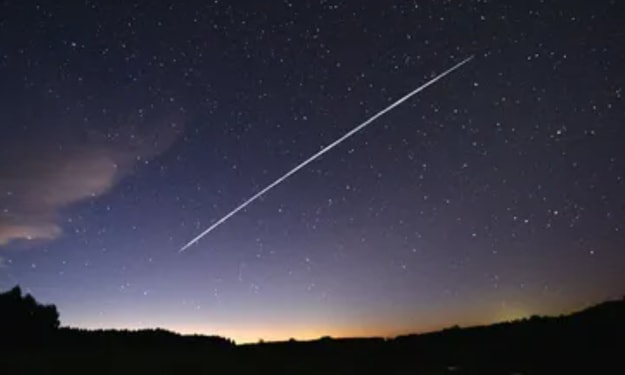
SpaceX’s Starlink project has captured headlines for its ambitious goal: provide high-speed internet across the globe by deploying thousands of low-Earth orbit satellites. While the idea of connecting remote communities is exciting, astrophysicists and space experts are sounding the alarm about a growing doomsday scenario that could threaten both space exploration and our ability to observe the night sky. After speaking to several astrophysicists, it’s clear that Starlink’s expansion, if unchecked, could dramatically alter Earth's orbital environment, disrupt astronomical observations, and even increase the risk of space debris collisions. Here’s what experts are warning the public about. The Scale of Starlink’s Expansion As of now, SpaceX has launched over 4,000 Starlink satellites, with plans to deploy tens of thousands more in the coming years. Each satellite orbits at altitudes between 340 km and 1,200 km, which places them in the low-Earth orbit region used by countless other satellites and scientific missions. Astrophysicists point out that this rapid proliferation is unprecedented. Dr. Lisa Montez, an astronomer specializing in satellite impacts on optical telescopes, told me, “We are looking at a situation where the density of satellites is increasing faster than anyone has fully planned for. This is uncharted territory.” The problem isn’t just the sheer number of satellites—it’s the concentration in specific orbital bands, which makes collisions more likely and complicates orbital management. The Night Sky Is at Risk For centuries, humanity has marveled at the stars, studying the cosmos to better understand our place in the universe. But astrophysicists warn that Starlink is dramatically altering the night sky, making it more challenging to conduct research and enjoy unpolluted stargazing. Every time a telescope captures an image, the reflective surfaces of Starlink satellites can leave streaks of light, masking or distorting the data. “Even a single bright satellite passing through a telescope’s field of view can ruin an entire night of observation,” Dr. Montez explains. Observatories around the world are already noticing the impact. The Vera C. Rubin Observatory in Chile, set to be one of the most advanced facilities for studying dark matter and the evolution of galaxies, may see thousands of Starlink satellites crossing its field of view nightly, potentially reducing the quality of its data and increasing processing costs. The Doomsday Scenario: Space Debris Beyond observations, astrophysicists are increasingly concerned about space debris, which could trigger a cascading chain reaction known as Kessler Syndrome. This occurs when collisions between satellites produce debris that then hits other satellites, creating more debris in an accelerating feedback loop. Professor Rajesh Patel, a space environment specialist, told me, “If a few hundred Starlink satellites collide, it could create tens of thousands of fragments. That would threaten other satellites, international space missions, and even human spaceflight.” Space debris doesn’t just float harmlessly—it travels at speeds over 28,000 km/h, enough to destroy functional satellites or damage spacecraft. With tens of thousands of Starlink satellites planned, the potential for catastrophic collisions is growing, especially since low-Earth orbit is already crowded. Mitigation Efforts and Controversies SpaceX has acknowledged these concerns and claims to implement collision avoidance protocols, using automated systems to maneuver satellites out of harm’s way. The company also plans for satellites to deorbit at the end of their lifespan, burning up in the atmosphere. However, experts argue that these measures may not be enough. Automated systems can fail, and human error or unexpected orbital dynamics could still lead to accidents. Furthermore, the sheer number of satellites makes it difficult to track and manage each one effectively, particularly as other private companies and nations plan similar mega-constellations. Dr. Montez adds, “Even if every satellite works perfectly, the night sky is already changing. The aesthetic and scientific impacts are immediate, whereas collision risks are looming but potentially devastating.” Broader Implications for Humanity The expansion of Starlink raises ethical and regulatory questions. Who has the right to fill low-Earth orbit? How much impact on astronomy and scientific research is acceptable for the sake of global internet coverage? International regulatory bodies like the United Nations Office for Outer Space Affairs (UNOOSA) and the Federal Communications Commission (FCC) have some oversight, but critics argue that global coordination is lagging behind corporate launches. Without international agreements and enforceable regulations, the sky could become a congested and hazardous environment, impacting both science and commerce. Astrophysicists emphasize that this isn’t just a matter of aesthetics. The ability to observe celestial phenomena affects climate science, space weather monitoring, and tracking near-Earth objects. If observations are increasingly compromised, our understanding of Earth and space could suffer. What Can Be Done? Experts suggest several strategies to mitigate risks: International Coordination: Global treaties or agreements to regulate satellite density and orbital placement. Reflectivity Reduction: Coating satellites to reduce brightness and their impact on telescopes. Enhanced Tracking Systems: Better monitoring of orbital debris and automated collision avoidance. Selective Deployment: Careful planning to avoid overcrowding specific orbital bands. While SpaceX is implementing some of these solutions, astrophysicists argue that industry self-regulation is insufficient. They advocate for a coordinated international approach to protect both scientific research and long-term orbital sustainability. Conclusion The expansion of Starlink represents a remarkable technological achievement, promising global internet access and unprecedented connectivity. Yet it also highlights the unintended consequences of space commercialization, including the potential for a cluttered sky, disrupted astronomy, and catastrophic space debris collisions. Astrophysicists remain vigilant. They warn that without careful oversight, humanity could face a doomsday scenario in low-Earth orbit, jeopardizing scientific discovery and space safety for generations. As we continue to celebrate innovations like Starlink, it’s crucial to remember that the sky belongs to all of us—scientists, enthusiasts, and everyday observers alike. Balancing technological progress with environmental stewardship of space may be one of the most critical challenges of the 21st century.
By Muhammad Hassanabout 17 hours ago in Earth
Turning Waste into Worth: Plastic Pyrolysis in the Circular Economy
Plastic pollution has become one of the defining environmental challenges of our time. From overflowing landfills to microplastics in oceans, the traditional “take–make–dispose” model is no longer sustainable. In response, the concept of the circular economy has gained global attention, aiming to keep materials in use for as long as possible while reducing waste. Among the emerging technologies supporting this transition, plastic pyrolysis stands out as a promising solution.
By Bestonpyrolysisa day ago in Earth



Comments (1)
I love super volcanos’! Threat or not, they’re amazing’! Good work!