
The Long-Tailed Tit: Nature’s Fluffy Acrobat
How This Tiny Bird with a Big Tail Captivates Birdwatchers and Biologists Alike
Introduction
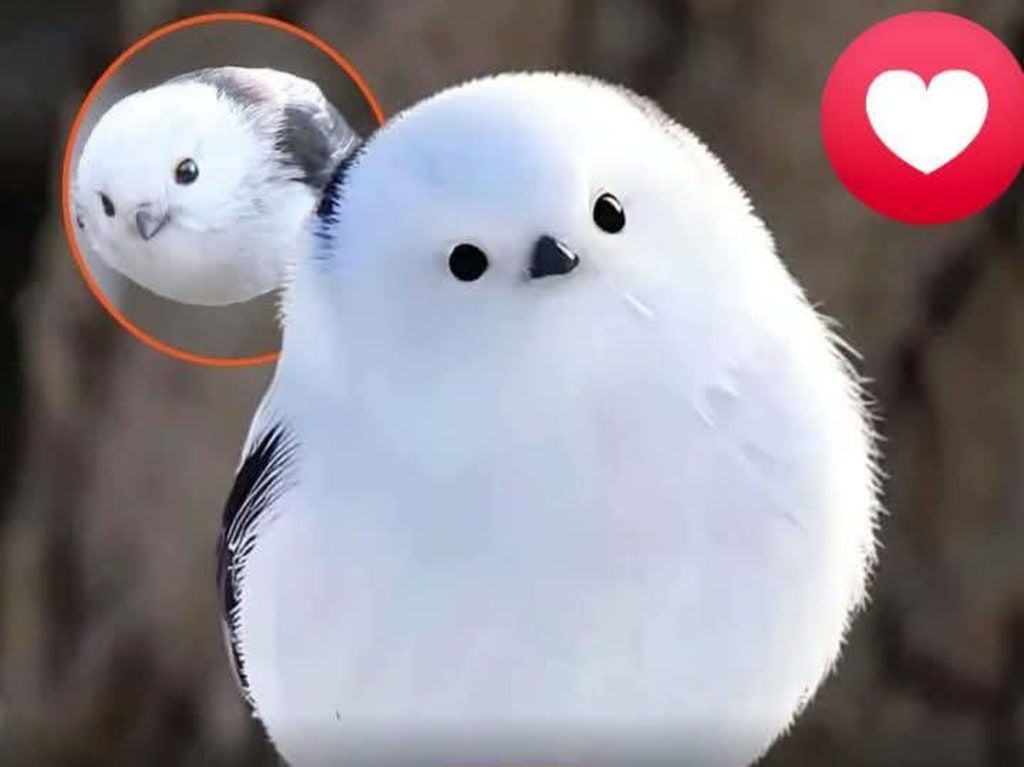
Perched among the trees with its comically long tail and fluffy round body, the Long-Tailed Tit is one of nature's most endearing creatures. Often described as a flying cotton ball with a stick for a tail, this small songbird is not only adorable but also fascinating in behavior, survival tactics, and family values. Found across Europe and parts of Asia, the Long-Tailed Tit is a marvel of evolution and a favorite among bird enthusiasts.
Today, we’ll explore everything about this little bird — from its unique appearance to its complex social life — in a story perfect for a vocal narrative.
---
Chapter 1: A Tiny Bird with a Long Name
The Long-Tailed Tit (Aegithalos caudatus) is a small passerine bird — meaning it's part of the perching bird group. It measures only around 13–15 cm in length, but over half of that is tail! The tail itself serves multiple functions: balance, flight control, and even as a display feature.
Weighing in at just 7–9 grams, it’s lighter than a tablespoon of sugar. Despite its delicate frame, this bird is surprisingly hardy, surviving harsh winters and managing intricate social dynamics in the wild.
---
Chapter 2: What Does It Look Like?
The bird is instantly recognizable once you know what to look for. Its key features include:
Soft, fluffy plumage that’s mostly pinkish-white and black.
A distinctively long, narrow tail — black with white edges.
A tiny, round body that resembles a cotton ball.
A short, stubby beak that helps it forage for small insects and spiders.
In some subspecies like the Aegithalos caudatus caudatus, you’ll find pure white faces, especially in Scandinavian and Eastern populations.
Its look is both charming and functional, blending camouflage with aerodynamic efficiency.
---
Chapter 3: Where Does It Live?
The Long-Tailed Tit can be found across Europe and parts of Asia, particularly in:
Deciduous woodlands
Shrubby parks and gardens
Hedgerows and riverbanks
Unlike many birds, it doesn’t migrate. Instead, it adapts to the changing seasons by modifying its behavior, especially its social interactions and roosting strategies.
---
Chapter 4: Family Above All
Perhaps the most heartwarming trait of the Long-Tailed Tit is its strong social structure. These birds are known for their cooperative breeding behavior.
Here’s how it works:
A mated pair builds a nest and lays eggs, typically 6–12 at a time.
If the nest is destroyed, or if some adults fail to breed, they don’t abandon the season — instead, they help relatives raise their young.
This kind of "kin selection" is rare in birds but common in Long-Tailed Tits.
They’re like a big extended family where “it takes a village to raise a chick” is taken quite literally.
---
Chapter 5: The Art of Nest-Building
The nest of the Long-Tailed Tit is nothing short of a masterpiece. Built mainly by the male and female together, it’s:
Oval-shaped with a small entrance on the side
Made from moss, feathers, lichen, spider webs, and even animal hair
Stretchy yet strong, accommodating growing chicks as they develop
This flexibility is achieved by the spider silk that binds the nest together — yes, spider silk, just like what’s used in a spider's web. It allows the nest to expand as the chicks grow.
A nest may contain over 2,000 feathers, gathered one by one, to line the interior and keep it warm.
---
Chapter 6: What Do They Eat?
These little birds are insectivorous, meaning their diet mainly consists of:
Aphids
Caterpillars
Spiders
Beetles
Occasionally seeds or berries in the winter
They forage actively, often in small flocks, moving acrobatically among the branches. You might see them hanging upside down as they peck at twigs, which makes them look like fluffy gymnasts in the trees.
---
Chapter 7: Winter Survival
Winter is a tough time for small birds, especially those who don’t migrate. The Long-Tailed Tit has a few clever strategies to cope:
Communal roosting: up to 20 birds huddle together in dense shrubs to conserve body heat.
High metabolism: they eat almost constantly to maintain energy levels.
Alarm calls: one bird spotting a predator will alert the others instantly.
And even in freezing conditions, their feathers fluff up like a thermal blanket, giving them that unmistakable round appearance.
---
Chapter 8: Songs, Calls, and Communication
The Long-Tailed Tit is not particularly loud, but it is vocal. Their typical calls include:
"Tsee-tsee" or "si-si-si" sounds, often high-pitched and repeated rapidly
Alarm calls that alert the group to danger
Contact calls to keep in touch with the flock
These sounds are essential in keeping the group together, especially in dense foliage where visibility is low.
---
Chapter 9: Why Birdwatchers Love Them
Long-Tailed Tits are fan favorites among birdwatchers for many reasons:
They’re easy to spot in winter due to their flocking behavior.
Their friendly nature often brings them close to human activity.
Their agility and playful movement make them entertaining to watch.
They’re non-aggressive, social, and cooperative, even with different species in mixed flocks.
They are also indicators of healthy ecosystems, as they depend on insects and dense shrubs — both signs of biodiversity.
---
Chapter 10: Conservation Status and Challenges
Currently, the Long-Tailed Tit is listed as Least Concern on the IUCN Red List. That means their populations are stable — for now.
However, they do face threats, including:
Habitat loss due to urban development
Harsh winters which can reduce survival rates
Decline in insect populations, their primary food source
Planting native shrubs, avoiding pesticides, and maintaining hedgerows are small but impactful ways people can help.
---
Conclusion: Tiny Bird, Big Heart
The Long-Tailed Tit is much more than just a cute fluffball with a comically long tail. It’s a symbol of resilience, cooperation, and beauty in the natural world. With its clever nest-building, social intelligence, and winter survival skills, this bird continues to inspire scientists, artists, and bird lovers alike.
Next time you walk through a woodland or garden, keep your ears open for a soft "tsee-tsee" and your eyes alert for a ball of fluff flitting through the branches. You might just spot the unforgettable Long-Tailed Tit — a small wonder with a big personality.
About the Creator
Hasbanullah
I write to awaken hearts, honor untold stories, and give voice to silence. From truth to fiction, every word I share is a step toward deeper connection. Welcome to my world of meaningful storytelling.
Keep reading
More stories from Hasbanullah and writers in Earth and other communities.
When Concrete Devours Green: The Silent War Between Cities and Nature
Cities are the face of human progress—dynamic hubs of innovation, cultural diversity, and economic opportunity. Yet beneath this veneer lie grave environmental consequences. As urban areas sprawl, they devour forests, farmlands, wetlands, and species-rich habitats. This encroachment doesn’t just erase greenery; it cripples ecosystems, disrupts climate regulation, undermines food security, and diminishes quality of life. But amid this grim reality lies hope: by shifting how we design, govern, and live in cities, we can reclaim balance between urban development and nature’s needs.
By Hasbanullah6 months ago in Earth
Nature’s Hidden Gems: Discovering the Rarest Flowers on Earth
Introduction: When Beauty Meets Rarity Nature is filled with wonders, but few are as captivating—and as elusive—as the rarest flowers on Earth. From enormous parasitic blooms to delicate orchids that appear only under precise conditions, these plants challenge our understanding of survival, evolution, and beauty.
By Ahmed aldeabella2 days ago in Earth
Verizon Outage Today
A sudden Verizon outage can feel unsettling, especially when your phone switches to “SOS” or “emergency calls only” without warning. Across social media and outage-tracking platforms, users often rush to ask the same questions: Is Verizon down right now? Why is my phone in SOS mode? What happened to Verizon today, and when will Verizon be back up? While outages are never convenient, they are not uncommon for large national carriers like Verizon Wireless. Understanding what a Verizon service outage means—and how to respond—can help reduce confusion during moments when connectivity disappears. Is Verizon Down? Understanding Service Outages A Verizon wireless outage occurs when part of Verizon’s cellular or data network becomes unavailable. This can affect voice calls, text messages, mobile data, or all services at once. Some outages are isolated to specific cities, such as Verizon outage NYC, Atlanta, Houston, or New Jersey, while others expand into a broader Verizon nationwide outage. When service is disrupted, users commonly report: Verizon down today Verizon network down Verizon not working Is Verizon down in my area? Verizon service outage These reports often surface within minutes, especially on outage-monitoring platforms. Why Does My Phone Say SOS? One of the most alarming signs during a Verizon outage today is seeing SOS, SOS only, or emergency calls only at the top of an iPhone. This leads many to ask, “Why is my phone in SOS mode Verizon?” SOS mode does not mean your phone is broken. It indicates that your device cannot connect to the Verizon network but can still place emergency calls using any available carrier signal. Common searches during outages include: Why does my phone say SOS only? iPhone stuck in SOS mode Why is my phone on SOS Verizon? What does SOS mean on iPhone? How to get phone out of SOS mode In most cases, the issue resolves automatically once Verizon restores network connectivity. What Caused the Verizon Outage Today? When connectivity drops, users naturally want immediate answers to what caused the Verizon outage today. Verizon does not always publish technical details right away, but outages are typically linked to: Network maintenance or system upgrades Fiber or backend routing failures Power outages affecting Verizon towers Severe weather or environmental damage Unexpected network congestion Despite online speculation, most Verizon outages are not related to cyberattacks. Searches like “Verizon cyber attack today” often trend during disruptions, but confirmed causes are usually infrastructure-related and temporary. How to Check Verizon Outage Status in Real Time If you’re wondering “Is Verizon still down?”, there are several reliable ways to check. Downdetector Verizon Platforms like Downdetector and Down Detector Verizon track real-time user reports. A spike in complaints usually confirms a Verizon outage before official statements are released. Verizon Outage Map Verizon provides a Verizon wireless outage map, sometimes including outage views by ZIP code. This helps answer questions like: Is there a Verizon outage near me? Is Verizon down in my area? My Verizon App and Network Status Pages The My Verizon app and Verizon’s official network status tools may display service alerts and updates during larger outages. Verizon Customer Service During an Outage During a widespread Verizon service outage, many users attempt to call Verizon customer service or search for the Verizon customer service number. While support teams remain active, wait times often increase significantly during major disruptions. Important things to keep in mind: Customer service representatives usually cannot provide exact repair timelines Rebooting your phone repeatedly during an outage rarely helps Network restoration often happens region by region Monitoring Verizon outage updates is typically more effective than calling support during peak outage periods. When Will Verizon Be Back Up? The most pressing question remains: When will Verizon service be restored? The answer depends on: Whether the outage is local or nationwide The cause of the disruption Whether physical repairs are required Minor outages may resolve within minutes or hours. Larger incidents—such as a Verizon cellular outage affecting multiple states—can take longer. Verizon generally prioritizes emergency communications before restoring full voice and data services. Search trends during outages often include: When will Verizon be fixed? How long will Verizon be down? When is Verizon going to be back up? While exact times are rarely guaranteed, service usually returns gradually rather than all at once. Verizon, Competition, and Broader Impact High-profile outages often spark comparisons with competitors like AT&T and T-Mobile. Searches for AT&T outage or T-Mobile outage frequently rise at the same time, as users explore alternative networks. Although outages generate headlines and social media frustration, they rarely have lasting effects on Verizon stock unless disruptions become frequent or prolonged. What to Do If Your Phone Is in SOS Mode If your phone shows SOS only during a Verizon outage: Enable Wi-Fi calling if available Avoid changing SIM or resetting network settings mid-outage Keep your device charged and updated Check Verizon outage updates periodically Once Verizon’s network stabilizes, most phones exit SOS mode automatically. Final Thoughts A Verizon outage can be disruptive, especially when communication suddenly feels out of reach. However, seeing SOS mode does not mean your phone is damaged—it simply reflects a temporary network issue. Staying informed through trusted sources like Downdetector, Verizon’s outage maps, and official Verizon updates can help users navigate these moments with clarity. While outages are frustrating, they are typically temporary, and service restoration is usually a matter of time rather than cause for alarm.
By Saboor Brohi 2 days ago in Earth


Comments
There are no comments for this story
Be the first to respond and start the conversation.