
The Life and Habits of Tiger
"Surviving in the Wild: The Life and Habits of a Tiger"
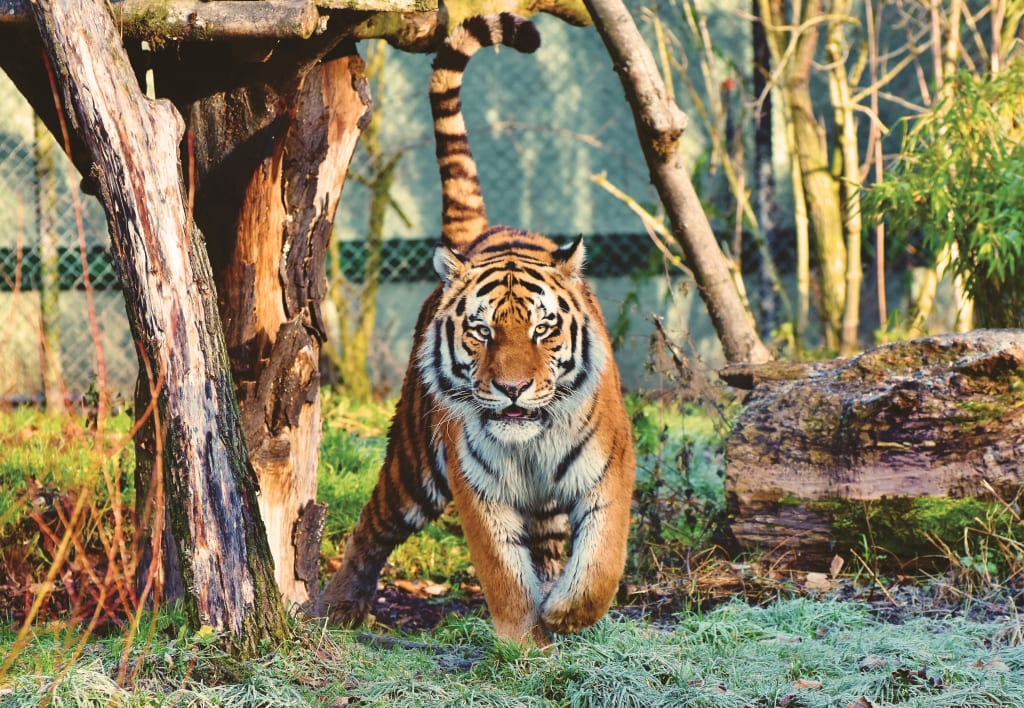
Tigers are one of the most iconic and majestic animals on the planet, known for their distinctive striped coats and impressive size. These big cats are also highly respected and feared predators, capable of taking down prey many times their own size. In this article, we will explore the life and habits of tigers in more detail, delving into their biology, behavior, and conservation status.
Biology of Tigers
Tigers are members of the cat family Felidae, which includes other big cats like lions, leopards, and jaguars. They are the largest of all the cats, with adult males weighing up to 500 pounds and measuring up to 10 feet in length from nose to tail. Female tigers are generally smaller, weighing around 300 pounds and measuring around 8 feet in length.
One of the most distinctive features of tigers is their coat, which is covered in a pattern of dark stripes on a lighter background. This helps them to blend into their natural habitat, which includes dense forests and grasslands throughout Asia. Their stripes are unique to each individual, similar to a human fingerprint, making it easier for researchers to identify and track individual tigers.
Tigers are also known for their sharp teeth and powerful jaws, which they use to kill their prey. Their teeth are capable of crushing bones and tearing through tough hides, allowing them to take down large animals like deer, wild boar, and even water buffalo. Tigers are also skilled swimmers and can swim up to six miles at a time, making them one of the few big cats that can thrive in aquatic environments.
Habitat and Range of Tigers
Tigers are native to Asia and can be found in a range of different habitats throughout the continent. They are most commonly found in dense forests, grasslands, and wetlands, but can also be found in more arid environments like deserts and scrublands. Historically, tigers ranged across much of Asia, from the far eastern reaches of Russia to the islands of Indonesia. Today, however, they are found in just a handful of countries, including India, Nepal, Bhutan, Bangladesh, Myanmar, Thailand, Malaysia, and Indonesia.
Behavior and Diet of Tigers
Tigers are solitary animals and generally only come together for mating purposes. They are territorial and will fiercely defend their home range against other tigers, using scent marking and vocalizations to communicate with other cats. Tigers are also nocturnal animals and are most active during the cooler hours of the day and night.
As carnivores, tigers primarily feed on meat and will hunt a range of different prey depending on their location and availability. In India, for example, tigers feed primarily on deer, wild boar, and water buffalo, while in Indonesia they may feed on smaller prey like monkeys and birds. Tigers are skilled hunters and will often stalk their prey for hours before making a final attack. Once they catch their prey, they will usually drag it away to a safe location to consume it.
Conservation Status of Tigers
Tigers are considered a critically endangered species, with only around 4,000 individuals remaining in the wild today. Habitat loss, poaching, and conflict with humans are the primary threats to their survival, and many populations have declined sharply over the past century. Conservation efforts are underway in many of the countries where tigers still exist, including increased protection of their habitat and increased enforcement of anti-poaching laws. However, much more needs to be done if tigers are to survive in the wild for future generations to enjoy.
Conclusion
Tigers are remarkable animals that are unfortunately threatened by habitat loss and poaching. Efforts to conserve these magnificent creatures are ongoing, but there is still much work to be done. By protecting tiger habitats and reducing poaching, we can help ensure that tigers continue to thrive in the wild.
About the Creator
Keep reading
More stories from noman dhudhi and writers in Earth and other communities.
"The King of the Jungle: A Comprehensive Guide to Lion Behavior and Characteristics"
The lion is a majestic and powerful animal that has captured the imagination of humans for thousands of years. Known as the "King of the Jungle," the lion is a symbol of strength, courage, and leadership. In this comprehensive guide, we will explore the behavior and characteristics of lions in detail, including their habitat, diet, social structure, and hunting techniques.
By noman dhudhi3 years ago in Earth
A Green Solution to Urban Pollution
Air pollution has become one of the most serious environmental challenges facing modern cities. Rapid industrialization, increasing vehicle emissions, and expanding urban populations have significantly degraded air quality around the world. Polluted air not only harms ecosystems but also poses severe health risks to humans, contributing to respiratory diseases, heart conditions, and reduced life expectancy. Among the many strategies proposed to combat this problem, planting and preserving trees stands out as one of the most natural, cost-effective, and sustainable solutions.
By Irshad Abbasi a day ago in Earth


Comments
There are no comments for this story
Be the first to respond and start the conversation.