

Once upon a time, in a not-too-distant future, the world was a vastly different place. The once vibrant and lush forests had been reduced to barren landscapes, and the cities stood as concrete jungles devoid of life. People had forgotten the enchantment and harmony that nature once brought to their lives.
In this desolate world, there lived a young girl named Luna. She had heard tales from her grandmother about a time when trees stretched towards the sky, their leaves whispering secrets and casting a gentle shade. Luna longed to experience the beauty of those stories firsthand, but all she had ever known were concrete buildings and artificial parks.
One day, as Luna wandered through the sterile streets, she noticed a faded poster taped to a wall. It depicted a majestic tree with branches reaching towards the heavens, accompanied by the words, "The Last Tree: A Glimpse of Hope." Luna's heart leaped with excitement. Could it be true? Was there really a tree left in the world?
Driven by curiosity and a yearning for something more, Luna embarked on a daring journey to find the last tree. She knew it wouldn't be an easy task, for the tree's existence had become a secret closely guarded by those in power. But Luna was determined to uncover the truth and bring back hope to a world starved of it.
Through deserted cityscapes and barren wastelands, Luna pressed on. She encountered people along the way who had given up on the idea of a better world, resigned to the bleak reality they had come to accept. But Luna's unwavering spirit and the stories of the last tree that echoed in her heart gave her strength.
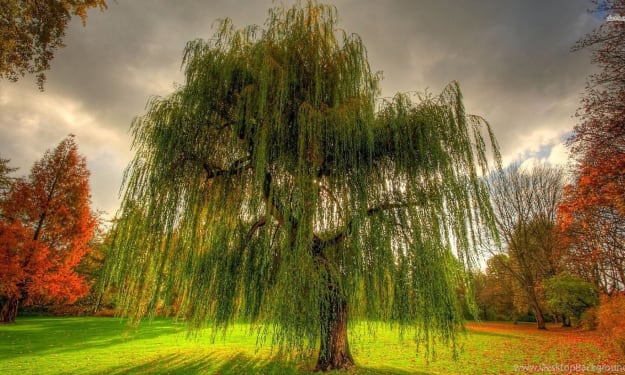
Days turned into weeks, and Luna's determination never wavered. Finally, after a long and arduous journey, she stumbled upon a hidden grove nestled between towering ruins. And there, standing tall and proud, was the last tree. Its branches stretched outwards, its leaves shimmering in the feeble sunlight.
Luna approached the tree, her breath catching in her throat. She reached out and gently touched the rough bark, feeling an inexplicable connection. Tears welled up in her eyes as she realized the weight of what this tree represented. It was a symbol of resilience, of nature's enduring spirit in the face of human destruction.
Word of Luna's discovery spread like wildfire, igniting a spark of hope in the hearts of people who had long forgotten the beauty of nature. Inspired by Luna's courage, they started planting seeds and nurturing the land that had been abandoned for so long.
With each passing day, the world began to transform. Vibrant greenery reemerged, birdsong filled the air, and the scent of wildflowers wafted through the revitalized cities. People reclaimed their connection with the Earth, realizing that their survival was intricately linked to its well-being.
Luna became a beacon of hope, a reminder that even in the face of loss, there is always room for renewal and growth. The last tree stood as a testament to the power of one person's determination to make a difference.
Years later, as Luna sat beneath the shade of a thriving forest, she marveled at the transformation she had helped bring about. The world had found balance once more, and the last tree, though no longer alone, remained a cherished symbol of hope.
The tale of Luna and the last tree would be passed down through generations, a reminder that even in the darkest of times, hope can sprout from the tiniest seed. The world had learned its lesson, and the memory of the barren landscapes served as a constant reminder of the importance of cherishing and protecting our fragile planet.
And so, the last tree lived on, not just as a solitary guardian but as a catalyst. Climate change is an urgent global crisis that requires collective action from governments, organizations, and individuals alike. While governments and institutions play a crucial role in implementing large-scale solutions, it is equally important for individuals to recognize their own responsibilities and make changes in their daily lives to mitigate the impacts of climate change. Each individual has the power to make a difference, and it is through collective efforts that we can create a sustainable future for our planet.
One of the most impactful steps individuals can take is to reduce their carbon footprint. This can be done through simple actions such as conserving energy at home by turning off lights when not in use, using energy-efficient appliances, and properly insulating homes. Additionally, using public transportation, carpooling, or biking instead of driving alone can significantly reduce carbon emissions from transportation.
Individuals also have the power to make conscious choices about their consumption habits. By opting for locally sourced and organic food, individuals can support sustainable agriculture and reduce the carbon emissions associated with long-distance transportation and intensive farming practices. Eating less meat and choosing plant-based alternatives can also have a positive impact, as the meat industry is a significant contributor to greenhouse gas emissions.
Another crucial responsibility individuals have is to conserve water. Water scarcity is becoming an increasingly pressing issue, and by adopting water-saving habits such as taking shorter showers, fixing leaky faucets, and using water-efficient appliances, individuals can contribute to preserving this precious resource.
Individuals can also play an active role in promoting sustainable practices in their communities. This can include participating in local clean-up initiatives, advocating for renewable energy sources, supporting environmentally friendly businesses, and engaging in conversations about climate change with friends, family, and colleagues. By raising awareness and encouraging others to take action, individuals can help create a ripple effect of positive change.
Education and continuous learning about climate change are also crucial. Staying informed about the latest scientific findings, policy developments, and sustainable technologies can empower individuals to make informed choices and take effective action. Sharing this knowledge with others can inspire and motivate collective action.
Lastly, individuals can support and vote for political leaders who prioritize climate change mitigation and adaptation. By electing representatives who are committed to enacting policies that address climate change, individuals can influence the decision-making process at a larger scale.
In conclusion, individuals have a significant role to play in addressing climate change. By taking responsibility for their own actions, reducing their carbon footprint, promoting sustainable practices, and actively engaging in their communities, individuals can contribute to a collective effort towards a more sustainable and resilient future. Every small step counts, and together, we can make a meaningful impact on the global fight against climate change
About the Creator
Keep reading
More stories from writers in Earth and other communities.
‘A Militia That Kills’: Uproar in Italy Over ICE Security Role at the Winter Olympics
Italy’s preparations for the upcoming Winter Olympics were meant to showcase unity, excellence, and international cooperation. Instead, they have ignited a heated controversy. The source of the uproar is the reported involvement of ICE, a private security entity described by critics as “a militia that kills,” in providing security-related services for the Olympic Games.
By Aarif Lashari5 days ago in Earth
Huge Landslide Leaves Sicilian Homes Teetering on Cliff Edge
A massive landslide in Sicily has left dozens of homes perched dangerously on the edge of a collapsing cliff, forcing evacuations and raising urgent concerns about safety, climate resilience, and long-term urban planning. The dramatic incident unfolded after days of heavy rainfall weakened the soil beneath a coastal residential area, causing large sections of land to slide away into the sea.
By Sajida Sikandar4 days ago in Earth



Comments (1)
This story reminded me of a cartoon. It's very refreshing