
The Kangaroo Chronicles
Australia’s Bouncing Beasts


Ah, the kangaroo. The epitome of Australian wildlife. With their adorable faces, powerful legs, and pouches that make you question the limits of biology, kangaroos have hopped their way into the hearts of many. But behind those endearing eyes lies a creature that’s not just a hopping bundle of joy. So, how dangerous are kangaroos? Let’s hop right in and explore, with a dash of comedy, of course.
What Exactly is a Kangaroo?
Before we delve into the dangers, let’s understand what a kangaroo is. Kangaroos are marsupials belonging to the family Macropodidae, which literally means “big foot” (take that, Sasquatch). These iconic animals are native to Australia and nearby islands, and they come in various shapes and sizes, with the red kangaroo being the largest and most well-known.
Kangaroos are herbivores with a diet primarily consisting of grasses and other vegetation. They have powerful hind legs for jumping, a muscular tail for balance, and a pouch for carrying their young, called joeys. In short, they’re nature’s version of a Swiss Army knife—versatile and equipped for survival in the harsh Australian outback.
How Dangerous Are Kangaroos?
Now, let’s address the kangaroo in the room: their potential danger. While kangaroos aren’t out to get you like some Hollywood villain, they can be dangerous under certain circumstances. Here’s why:
1. Powerful Legs: Kangaroos have incredibly strong hind legs that they use for jumping and delivering powerful kicks. If threatened or cornered, a kangaroo can use its legs to deliver a kick that could send you flying faster than a boomerang on a windy day.
2. Sharp Claws: Those cute little paws? They hide sharp claws that kangaroos use for defense. A swipe from a kangaroo can leave you with more than just a scratch.
3. Boxing Matches: Kangaroos are known for their boxing behavior, which is actually a display of dominance and territory. If you find yourself in the middle of a kangaroo boxing match, it’s best to back away slowly and leave the ring to the professionals.
4. Protective Mothers: Just like any other wild animal, kangaroo mothers are fiercely protective of their joeys. If you get too close to a mother kangaroo and her young, you might find yourself on the receiving end of her protective instincts.
Comedy Time: Kangaroo Encounters
Let’s lighten the mood with some humorous kangaroo encounters. Imagine you’re a tourist in Australia, ready to snap a selfie with a kangaroo. You approach cautiously, your camera at the ready. The kangaroo looks at you, sizing you up. You think, “What’s the worst that could happen?” Suddenly, the kangaroo springs into action, delivering a kick that sends your hat flying and your dignity with It. You quickly realize that posing with a kangaroo is not for the faint of heart.
Or picture this: you’re on a peaceful hike through the Australian bush, admiring the scenery. Out of nowhere, a kangaroo hops into your path. You freeze, remembering all the YouTube videos of kangaroo boxing matches. The kangaroo eyes you warily, and you slowly back away, hoping it doesn’t challenge you to a duel. You might laugh about it later, but in the moment, it’s a heart-pounding encounter.
Co-existing with Kangaroos
For those living in kangaroo-populated areas, co-existing with these hopping wonders involves a bit of common sense and respect. Here are some tips:
1. Keep Your Distance: Admire kangaroos from afar. They might look cute, but they’re wild animals with powerful legs and sharp claws.
2. Don’t Feed Kangaroos: Feeding kangaroos can encourage them to approach humans, leading to potentially dangerous encounters.
3. Stay Calm: If you encounter a kangaroo, stay calm and avoid sudden movements. Back away slowly and give the kangaroo space.
4. Be Cautious During Mating Season: Male kangaroos can be more aggressive during mating season. Keep an extra distance during this time.
The Role of Kangaroos in the Ecosystem
Despite their potential dangers, kangaroos play a vital role in the Australian ecosystem. As herbivores, they help maintain the balance of plant life by grazing on grasses and vegetation. Their grazing habits can prevent overgrowth and reduce the risk of wildfires. In essence, kangaroos are nature’s landscapers, keeping the outback in check with their grazing and hopping.
Kangaroos are also an important part of the food chain. They are prey for larger predators such as dingoes and eagles. By being a food source for these predators, kangaroos contribute to the overall health and balance of the ecosystem. It's a wild, interconnected dance of life, and kangaroos are a key player in the outback symphony.
In Conclusion
So, how dangerous are kangaroos? While they can pose a threat under certain circumstances, they’re not out to get you. Treat them with the respect they deserve, and you’ll have a safe and memorable experience in the land of hopping wonders. Remember, in the grand Australian wildlife danger spectrum, they’re somewhere between a curious koala and a crocodile with a bad attitude. Treat kangaroos with respect, and you’ll be able to enjoy the beauty and wonder of these iconic Australian creatures.
In the end, kangaroos are fascinating animals that are a vital part of Australia’s unique biodiversity. With their powerful legs, adorable joeys, and occasional boxing antics, they capture the imagination and admiration of people worldwide. So, the next time you encounter a kangaroo, remember to keep your distance, respect their space, and appreciate the wonder of one of Australia’s most iconic creatures.
Relevant Resources
- [National Geographic: Kangaroo](https://www.nationalgeographic.com/animals/mammals/facts/kangaroo)
- [Australian Government: Kangaroos](https://www.environment.gov.au/topics/wildlife-and-threatened-species/wildlife-conservation/kangaroos)
- [BBC Earth: Everything You Need to Know About Kangaroos](https://www.bbcearth.com/blog/?article=everything-you-need-to-know-about-kangaroos)
About the Creator
Keep reading
More stories from Vishnu venugopal and writers in Earth and other communities.
From Fierce Predators to Couch Potatoes
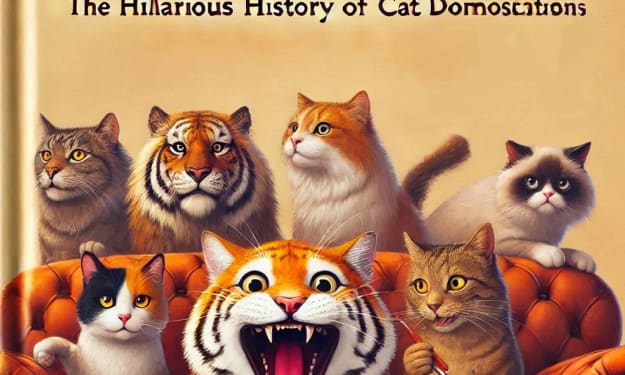
Once upon a time, in a world long before Instagram cat stars and viral kitty memes, our feline friends were wild, fierce, and wholly undomesticated. This is the thrilling and curious tale of how humans and cats went from wary cohabitants to inseparable companions. The Great Mouse Chase Begins Our story begins some 10,000 years ago in the Fertile Crescent, a region that stretches across parts of modern-day Middle East. This area was the cradle of agriculture where humans first settled into farming communities. With the advent of farming came the storage of surplus crops—and with crops came a big problem: pests. Enter the rodent army. Just when humans were at their wit’s end, seeking a solution to the rodent invasion, a group of wildcats—our story’s unsung heroes—noticed the abundance of easy prey. These wildcats, known as Felis silvestris lybica, found the granaries to be a buffet worth fighting over. The Unlikely Alliance: Cats and Humans Initially, the relationship between humans and cats was purely transactional. Humans needed help controlling pests, and wildcats found an all-you-can-eat rodent buffet. It was a win-win scenario—until the first cat decided to saunter into a human settlement. Imagine a prehistoric farmer waking up to find a sleek, stealthy predator lounging in his granary. The initial reaction? Probably a mix of fear and curiosity. But as the farmer noticed fewer pests and the wildcat showing no signs of aggression, a truce of sorts began. From Tolerance to Trust: The Bond Strengthens As time passed, a curious transformation occurred. Wildcats who were more tolerant of human presence—and perhaps even a bit curious themselves—began to spend more time around human settlements. These cats, with their laid-back attitudes, were more likely to survive and reproduce. Slowly but surely, natural selection favored the friendlier, more social cats. Humans, on their part, began to appreciate these feline freeloaders. They might have offered scraps or leftovers to the cats, further strengthening the budding bond. This mutual tolerance eventually blossomed into a more trusting relationship. The First Domesticated Cats: Egyptian Allies Fast forward to ancient Egypt, where the relationship between humans and cats hit a new milestone. The Egyptians didn’t just tolerate cats—they revered them. Cats were associated with Bastet, the goddess of home, fertility, and protection. This sacred status granted cats a special place in Egyptian households. Imagine walking through an ancient Egyptian village and seeing cats lounging in luxury, adorned with jewelry, and even being mummified alongside their human companions. The Egyptians’ adoration for cats spread across the ancient world, solidifying the bond between humans and felines. Cats Go Global: The Grand Expansion As trade routes expanded, so did the reach of our feline friends. Cats traveled with traders, explorers, and merchants, spreading across continents. They adapted to various cultures and climates, cementing their status as valuable pest controllers and beloved companions. The Romans, for Instance, admired cats for their hunting prowess and kept them on ships to control rats. By the Middle Ages, cats had spread across Europe, Asia, and beyond. Their reputation as skilled hunters and enigmatic companions only grew. The Dark Ages: Superstition and Survival However, our tale takes a dark turn during the Middle Ages. In Europe, superstition and fear cast a shadow over our feline heroes. Cats, especially black ones, were often associated with witchcraft and the devil. This led to widespread persecution and killing of cats, ironically worsening the rodent problem. But the resilient cats endured. Their survival was, once again, tied to their relationship with humans. When the Black Death (plague) ravaged Europe, cats made a comeback as essential allies in controlling the rodent population, which helped curb the spread of the disease. The Modern Era: Cats in the Lap of Luxury As we zoom into the modern era, the story of domesticated cats becomes one of comfort, companionship, and celebrity status. Gone are the days of mere pest control; today’s cats enjoy pampered lives, complete with gourmet food, cozy beds, and social media stardom. Imagine a modern home with a cat perched regally on a windowsill, basking in the sunlight. Cats have become symbols of independence, mystery, and elegance. They maintain a certain aloofness that only adds to their charm, making them the perfect subjects for internet adoration. The Science of Domestication: What Makes a Cat, a Cat? Behind this thrilling tale of domestication lies some fascinating science. Genetic studies have shown that domestic cats retain many of their wild traits. Unlike dogs, whose domestication involved significant behavioral and physical changes, cats have remained relatively unchanged. This is partly because their role as pest controllers didn’t require the same level of human intervention as other domesticated animals. Domestic cats still possess the keen hunting instincts of their wild ancestors. They’re skilled predators, capable of extraordinary feats of agility and precision. However, through thousands of years of coexistence with humans, they’ve developed behaviors that endear them to us—like purring, kneading, and those adorable head-butts. The Curious Case of Cat Behavior One of the most curious aspects of domesticated cats is their behavior. Cats are known for their independence, often appearing aloof and mysterious. Yet, they’re also capable of deep affection and loyalty. This duality makes them endlessly fascinating to cat lovers. Consider the cat’s “slow blink,” a gesture that signifies trust and affection. When a cat slowly blinks at you, it’s akin to a human giving a warm smile. Or the "kneading" behavior, where cats press their paws into soft surfaces—this harks back to kittenhood when they kneaded their mother’s belly for milk. These behaviors, rooted in their wild past, create a unique bond between cats and their human companions. The Future of Feline Domestication As we look to the future, the bond between humans and cats shows no signs of waning. In fact, it’s growing stronger. With advances in veterinary care, nutrition, and understanding of feline behavior, our ability to care for and connect with cats continues to improve. Imagine a world where cats have their own apps, designed to keep them entertained while their humans are away. Or where genetic research helps us understand and preserve the diversity of feline breeds. The possibilities are endless, and the future of our relationship with cats looks brighter than ever. Conclusion: The Tale Continues And so, the thrilling and curious tale of how we domesticated cats comes to a close—or does it? In reality, this is an ongoing story, with new chapters being written every day. Each purr, each playful pounce, and each affectionate nuzzle adds to the rich tapestry of our shared history. From wild hunters to cherished companions, cats have woven themselves into the fabric of human life. So, the next time you see your cat lounging in the sun or playfully chasing a toy, remember the incredible journey that brought them to your home. It's a tale of survival, adaptation, and above all, a testament to the unbreakable bond between humans and their feline friends. I hope you enjoyed this paws-itively thrilling tale as much as I enjoyed crafting it! What are your thoughts?
By Vishnu venugopal about a year ago in Earth
The Heat We Inherited
Long before satellites circled the Earth and scientists measured carbon in the sky, humanity lived closely with nature, reading its moods through wind, water, and fire. The changing of seasons guided harvests. The rhythm of rain shaped survival. Today, however, that rhythm is faltering. The planet’s climate—once steady enough to nurture civilizations—is shifting in ways both subtle and catastrophic. Global warming is no longer a distant warning whispered by experts; it is the defining story of our era.
By LUNA EDITH4 days ago in Earth


Comments
There are no comments for this story
Be the first to respond and start the conversation.