
The Invisible Crisis: Climate Change and Soil Health
A critical review


Introduction: The Role of Soil in Climate Resilience
Soil is often overlooked, yet it is one of the planet’s most critical resources. It serves as the foundation for agriculture, supports biodiversity, and regulates essential cycles like water and nutrients. More importantly, soil acts as a major carbon sink, holding more carbon than the atmosphere and all vegetation combined. Healthy soil plays a vital role in mitigating climate change by sequestering carbon dioxide (CO2) and ensuring agricultural productivity for a growing population.
However, climate change is pushing this natural system to its limits. Rising global temperatures, erratic rainfall patterns, and extreme weather events are degrading soil health at an alarming rate. The consequences extend far beyond soil itself—affecting food security, water availability, and efforts to combat climate change. Recognizing the intricate relationship between soil and the climate is essential for building a resilient future.
Impact of Climate Change on Soil Health
1. Soil Erosion and Degradation
Climate change amplifies soil erosion through heavier and more frequent rainfall events. Intense storms wash away the nutrient-rich topsoil that sustains crops, leaving behind barren land. According to a report by the Food and Agriculture Organization (FAO, 2019), an estimated 75 billion tonnes of soil are lost globally each year due to erosion. This degradation not only reduces agricultural productivity but also increases sedimentation in rivers, disrupting ecosystems downstream. In arid and semi-arid regions, rising temperatures exacerbate desertification. Prolonged droughts dry out soils, causing them to lose structure and become more prone to wind erosion. This is particularly evident in regions like Sub-Saharan Africa, where desertification threatens livelihoods dependent on agriculture.
2. Loss of Soil Organic Matter (SOM)
Soil organic matter (SOM) is crucial for maintaining soil fertility, water retention, and microbial activity. However, climate change accelerates SOM loss by speeding up the decomposition of organic materials. Higher temperatures stimulate microbial activity, releasing stored carbon as CO2 into the atmosphere. This creates a feedback loop: soil releases more carbon, contributing to global warming, which further degrades soil health. Research published in Nature Climate Change (Crowther et al., 2016) estimates that soils could release up to 55 billion tonnes of carbon by 2050 due to global warming, undermining efforts to limit temperature rise to 1.5°C.
3. Impact on Soil Carbon Sequestration
Healthy soils are essential for carbon sequestration—capturing and storing atmospheric carbon. However, climate change is disrupting this balance. In peatlands, which are among the most efficient natural carbon stores, rising temperatures and human activities like draining and agriculture are causing significant carbon release. Similarly, the thawing of permafrost in Arctic regions is releasing methane and CO2, further contributing to global warming.
4. Microbial Community Disruption
The soil microbiome, consisting of bacteria, fungi, and other microorganisms, is vital for nutrient cycling, nitrogen fixation, and organic matter decomposition. Changes in temperature, moisture, and pH due to climate change alter microbial diversity and activity. For instance, droughts can lead to the dominance of stress-tolerant microbes, reducing the overall functionality of the soil ecosystem. Studies, such as those by Delgado-Baquerizo et al. (2018), have shown that shifts in microbial populations can impact soil’s ability to store carbon and support plant growth, further compromising its resilience.
5. Water Retention and Soil Structure
The erratic rainfall patterns associated with climate change have a dual impact on soil. On one hand, prolonged droughts lead to soil compaction and cracking, making it less capable of holding water. On the other hand, heavy rainfall causes waterlogging, eroding soil particles and washing away nutrients. This imbalance disrupts soil structure and its ability to support plant life. For example, in tropical regions like India, where monsoon patterns are becoming increasingly unpredictable, agricultural lands suffer from alternating periods of drought and flooding. This reduces crop yields and threatens food security for millions.
These impacts highlight the vulnerability of soils to a changing climate and underscore the urgency of protecting this vital resource. In the next section, we will explore solutions and strategies to mitigate these effects and harness soil's potential in the fight against climate change.
Solutions and Strategies to Mitigate the Impact
Addressing the effects of climate change on soil health demands a comprehensive approach that integrates scientific innovation, sustainable practices, and active community participation. One crucial strategy involves the adoption of climate-smart agriculture (CSA), which encompasses a range of practices aimed at protecting soil while improving agricultural resilience. Conservation tillage, for instance, minimizes soil disturbance, retaining organic matter and preventing erosion. Similarly, cover cropping with plants like legumes during off-seasons shields soil from erosion, enhances fertility, and sequesters carbon. Crop rotation, by diversifying nutrient demands, ensures soil health remains intact over time. Agroforestry, the integration of trees and shrubs into agricultural systems, not only improves soil stability but also boosts carbon sequestration and provides additional income for farmers. According to the Food and Agriculture Organization (FAO), CSA practices have the potential to increase crop yields by up to 50% while simultaneously reducing greenhouse gas emissions, making them indispensable in the fight against climate change.
Restoring degraded lands is another critical intervention. Large-scale restoration efforts have proven successful in reversing soil erosion and fertility loss. Initiatives like the Great Green Wall in Africa combat desertification by implementing tree planting and sustainable land management techniques. In India, watershed restoration projects using contour bunding and reforestation have revitalized degraded landscapes, improved water retention, and increased agricultural productivity. These initiatives not only restore soil health but also support biodiversity and generate livelihood opportunities for local communities, showcasing how environmental restoration can have far-reaching socio-economic benefits.
Biochar application has emerged as a promising solution for enhancing soil health and combating climate change. This carbon-rich material, produced from organic waste, improves soil fertility and water retention while sequestering carbon for long periods. Research in Global Change Biology Bioenergy (Lehmann et al., 2011) has demonstrated that biochar can increase crop yields by 25–50% in degraded soils, underscoring its efficacy. Furthermore, biochar serves as a sustainable tool for waste management by converting agricultural residues into valuable soil amendments, addressing both soil degradation and waste challenges simultaneously.
Policy interventions also play a pivotal role in safeguarding soil health. Governments must incorporate soil conservation into climate policies through measures such as subsidies or incentives for farmers who adopt sustainable practices. Enforcing regulations to curb deforestation and overgrazing is essential to prevent further land degradation. Moreover, integrating soil health indicators into national carbon accounting systems would prioritize soil conservation as a key component of climate action. Countries like Australia and members of the European Union have already implemented soil carbon credits within their carbon trading schemes, motivating landowners to actively improve soil health while contributing to climate goals.
Educating farmers and local communities about sustainable soil management is vital for long-term impact. Capacity-building programs, such as India’s National Mission for Sustainable Agriculture (NMSA), focus on promoting resource-efficient farming techniques, ensuring that knowledge about sustainable practices reaches the grassroots level. Empowering farmers with this knowledge enables them to adopt methods that protect soil and enhance agricultural resilience.
Harnessing technology and data-driven solutions is another powerful tool for addressing soil health challenges. Precision agriculture technologies, including GPS, drones, and sensors, optimize inputs like water and fertilizers, ensuring sustainable land use and minimizing degradation. Remote sensing and artificial intelligence (AI) can monitor soil health in real-time, providing early warnings of issues like erosion or nutrient depletion. Open-access soil databases foster collaboration among scientists, policymakers, and farmers, enabling informed decision-making and targeted interventions.
By combining these strategies, we can mitigate the effects of climate change on soil health, ensuring that this invaluable resource continues to sustain ecosystems, agricultural productivity, and global food security.

The Way Forward: Investing in Soil for a Resilient Future
Healthy soil is not just an environmental necessity; it is the backbone of sustainable development. Protecting and restoring soil must become a global priority in the fight against climate change. This requires collective action from governments, industries, and individuals. Supporting scientific research to develop innovative soil management techniques is essential for addressing soil degradation and enhancing its resilience. Financial resources must be allocated to large-scale restoration projects that can rejuvenate degraded lands and mitigate the impacts of climate change. Empowering communities with the knowledge and tools to adopt sustainable practices is equally vital for long-term success. As the world grapples with the dual challenges of climate change and food insecurity, investing in soil health provides a solution that benefits both people and the planet. By treating soil as a renewable resource and leveraging its potential for carbon sequestration, we can build a more resilient and sustainable future for generations to come.
About the Creator
Shreyansh Singh
A passionate green writer ⭐
Keep reading
More stories from Shreyansh Singh and writers in Earth and other communities.
A Love Beyond Time
February 13, 1798 My Dearest Cecilia, As I sit at my writing desk, the candle’s flame wavers, casting long, restless shadows upon the walls—shadows that mirror the tumult in my heart. My quill hesitates, hovering above this parchment, for how does one capture love so vast, so consuming, within mere words? How can ink and paper possibly convey the depth of devotion that I hold for you, the ache that grips my soul in your absence?
By Shreyansh Singh12 months ago in History
When the Sky Splits Open: Living Through the Next Polar Vortex Collapse
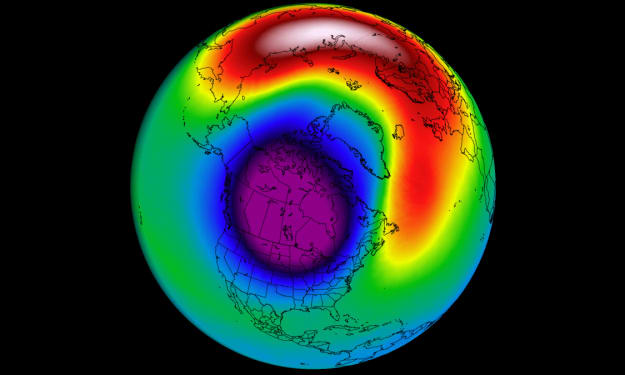
I remember the first time I learned what a “polar vortex” actually was. It was during that brutal winter of 2014, when the air outside made sound brittle and breathing almost felt like swallowing glass. The term had just entered the mainstream — a sleek, scientific label for a phenomenon that had been happening for eons but suddenly carried the power to dominate headlines and freeze half a continent in place. Now, a decade later, every forecast of a potential “vortex collapse” sets off the same chain reaction: social media panic, clickbait maps glowing blue, and a quiet dread that this time might be worse.
By Trend Vantage2 days ago in Earth
Canadian Backpacker’s Death Raises Hard Questions for Queensland’s K’gari
The tragic death of a Canadian backpacker on K’gari, the world-heritage-listed island off Queensland’s coast formerly known as Fraser Island, has reignited a difficult and emotional debate: can humans and dingoes safely coexist in a shared tourist space?
By Muhammad Hassan2 days ago in Earth
Affection and Healing for Yourself
During the night of the last quarter moon, I gathered my ritual supplies. I carefully handled the chunk of black tourmaline that would protect me from your overall negative and narcissistic energy. I carefully walked the house with my stick of selenite in hand, asking the universe to cleanse our working space.
By Alisha Wilkins ✒️🦋🖋️6 days ago in Fiction



Comments
There are no comments for this story
Be the first to respond and start the conversation.