
The Insect That Builds Its Own Cage—Then Lives Inside It
This insect collects debris, dead prey, and sand to build a spiny cage on its back—and hides inside it like a walking fortress.

A Deadly Hunter in Disguise
In the quiet underworld of leaves, where tiny creatures crawl and fight to survive, the lacewing larva has mastered the art of hiding in plain sight. While the adult lacewing is delicate, with soft green wings and a peaceful nature, its baby form is something else entirely. The larva is fierce, fast, and ruthless. But what really sets it apart is not how it kills—but how it disappears.
After hunting its prey, the lacewing larva gathers the leftovers. It doesn’t leave the battlefield behind. Instead, it wears it. With curved, hook-like bristles on its back, the larva piles debris—dust, sand, tiny leaves, even the dry bodies of the insects it just killed. Slowly, it builds a rough, uneven cage on top of its body.
This isn’t just some messy accident. It’s a calculated, instinctive move for survival.
Building a Fortress, Bit by Bit
The lacewing larva doesn’t have hands. It doesn’t have tools. But it still manages to build a mobile home that rivals the best armor in nature.
Using its mandibles, it grabs small pieces of material and lifts them onto its back. It doesn’t just throw them there. The larva carefully arranges each fragment so that the cage becomes dense, well-covered, and stable. As it grows, it keeps adjusting the structure—adding more debris to keep its disguise intact.
From a distance, you’d never guess a predator hides inside. It just looks like a tiny pile of dirt moving slowly across a leaf.
But beneath that pile, the lacewing larva waits. Watching. Hunting.
Why Build a Cage?
In the insect world, size matters. The lacewing larva is small, soft, and vulnerable. Bigger insects, spiders, and even birds could easily make a meal of it.
That’s why the cage is so important.
First, it works as camouflage. When a predator scans the leaves, it’s looking for movement, shiny bodies, or legs. The larva’s cage hides all of that. The uneven, dull materials blend perfectly into the forest floor or plant surface. To most eyes, the lacewing disappears.
Second, the cage acts as physical protection. If a predator does notice something, it still has to fight through the messy pile on top. Ants, for example, may try to bite, but they often fail to reach the soft body hidden underneath the sharp, dry shield.
Some lacewing larvae take it further. They add chemical protection by including dead bugs that release bad smells or irritating chemicals. It’s like spraying bug repellent—but with body parts.
So this cage isn't just decoration. It’s a multi-layered defense system: camouflage, armor, and chemical weapon—all in one.
Hunting Without Being Seen
The lacewing larva is a stealth hunter. It feeds on soft-bodied insects like aphids, scale insects, and even small mites. These prey animals are often found in clusters on the underside of leaves or near plant stems.
Thanks to its disguise, the lacewing larva can approach without alarming its target. It blends into the background, creeping slowly, carefully, without making a sound. Then—when it's close enough—it strikes with lightning speed.
The larva’s mandibles are curved and sharp. They pierce the prey, inject digestive enzymes, and suck out the liquefied insides. It’s not pretty. But it’s effective.
And once it’s done feeding?
It recycles the body into the next layer of its cage.
A Mobile Home with No Brain
What makes this behavior even more amazing is that it happens without planning.
The lacewing larva isn’t thinking about strategy. It doesn’t have a brain like humans do. Its behavior is driven entirely by instinct. Every action—collecting, building, adjusting, hunting—is hardwired into its tiny nervous system.
And yet, the result looks like the work of a clever designer.
This is what scientists call emergent intelligence. Complex behavior that comes from simple rules, repeated over and over.
The lacewing doesn’t know why it does what it does. But it works. And that’s all nature cares about.
Transformation and Letting Go
The lacewing larva carries its self-made cage through most of its juvenile life. But when it’s time to change, everything stops.
The larva attaches itself to a safe surface—usually the underside of a leaf or branch—and begins the process of pupation. Inside a silken cocoon, the cage is abandoned. The body melts, reforms, and re-emerges as a soft, winged adult.
The adult lacewing has no need for a cage. It now relies on flight, not hiding. The camouflage of dirt and bones is left behind, like an old shell, a past life.
The deadly hunter becomes a peaceful drifter.
Not the Only Architect in the Insect World
Nature is full of strange builders. Caddisfly larvae make underwater cases from sand and sticks. Assassin bugs pile dead ants on their backs. But none of them quite match the lacewing larva’s mix of camouflage, armor, and stealth hunting.
What makes the lacewing unique is how it turns everything around it into a tool—without needing to think.
It doesn’t need to understand strategy to be a strategist.
It doesn’t need to be intelligent to outsmart its enemies.
It just needs to follow its nature.
Nature’s Most Unexpected Armor
In a world where most animals run, bite, or fly to survive, the lacewing larva takes a quieter approach. It hides in plain sight. It builds its world around itself, piece by piece. And it turns the bodies of its victims into protection for the next hunt.
This insect doesn’t just live in the wild—it builds the wild around itself.
And that’s what makes it one of the strangest, smartest, and most surprising survivors in nature.
About the Creator
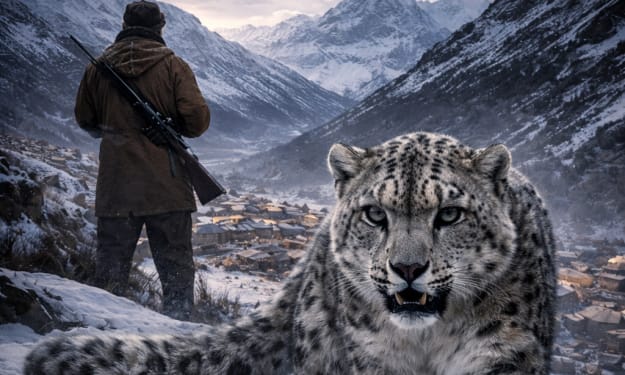
Human Revenge: A Hidden Cause Behind the Decline of Snow Leopards
High in the rugged mountains of Central and South Asia lives one of the world’s most mysterious and beautiful big cats—the snow leopard. Known for its thick grey-white fur, long tail, and incredible ability to blend into rocky landscapes, this elusive predator has fascinated scientists and wildlife lovers for decades. Yet despite its beauty and ecological importance, the snow leopard faces a growing threat: human revenge.
By Irshad Abbasi 5 days ago in Earth



Comments
There are no comments for this story
Be the first to respond and start the conversation.