
The Heaven & Earth Grocery Store: A Story of Courage, Community, and Hidden Histories
An In-Depth Summary and Analysis of James McBride’s Acclaimed Novel
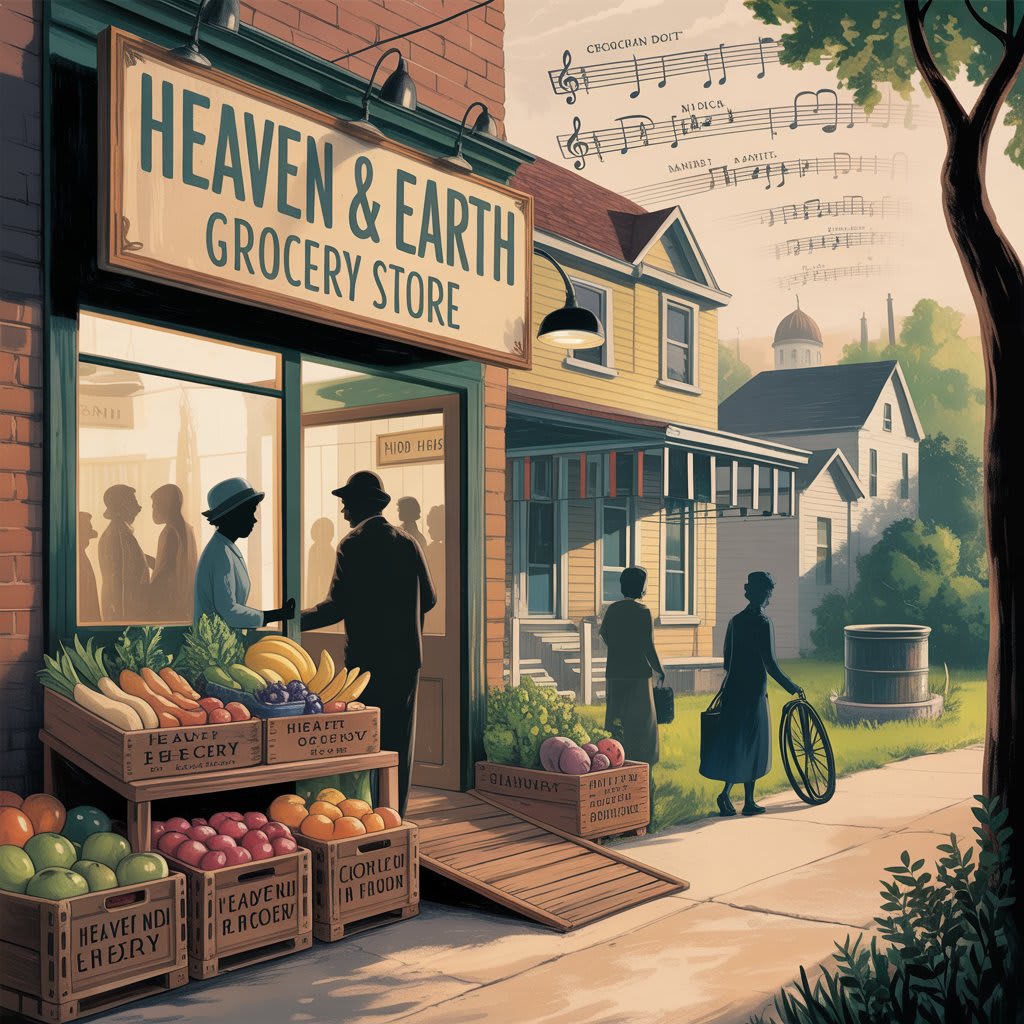
Summary and Analysis of The Heaven & Earth Grocery Store by James McBride
Overview
James McBride’s The Heaven & Earth Grocery Store is a rich, layered novel set in the 1920s and 30s in Chicken Hill, a small, racially and culturally diverse neighborhood in Pottstown, Pennsylvania. Through a cast of vibrant, complex characters, the novel explores how marginalized people—Black, Jewish, disabled, and poor—form bonds of solidarity in a hostile world. It's a novel about community, quiet heroism, systemic injustice, and the small acts of love that change lives.
Plot Summary
The story opens in 1972 with the discovery of a skeleton in a well during the demolition of a long-abandoned property in Pottstown. This mysterious death sets off an investigation that acts as a framing device for the rest of the novel, which unfolds decades earlier in Chicken Hill.
We are soon transported to the 1930s, where Moshe Ludlow, a Jewish theater owner, lives with his wife Chona above the Heaven & Earth Grocery Store—a small but vital shop that caters to the diverse residents of Chicken Hill. Chona, physically disabled from polio, is beloved in the community for her generosity and fierce sense of justice. The Ludlows, though financially well-off compared to their neighbors, are socially outcast by the wealthier white Jews who live uptown. They remain committed to their multicultural community.
One of the central plots involves Dodo, a young Black, deaf boy whose parents have died. The state wants to institutionalize him under the guise of “help,” but in reality, it is a cruel, racist system of confinement and abuse. Chona, upon learning about Dodo, refuses to allow this. With Moshe’s help and the cooperation of the Black and immigrant communities in Chicken Hill, they hide Dodo in the storage space behind their grocery store.
But protecting Dodo isn’t easy. The threat comes not only from the authorities but also from within the community, where resentments, suspicions, and betrayals lurk. A new Black janitor at Moshe’s theater, Nate Timblin, and his wife Addie, become key allies. Their daughter Malachi befriends Dodo, and a quiet, unlikely resistance begins to form.
As the community struggles to shield Dodo, deeper themes of betrayal and courage surface. Chona, in particular, becomes a symbol of moral clarity, standing against not just racism, but also the inertia and cowardice of her own Jewish peers. Her courage ultimately costs her dearly—her health declines, and she becomes a martyr of sorts in the fight for justice.
The novel’s ending circles back to the skeleton in the well. As the truth emerges, we see how different members of the community contributed—some heroically, some shamefully—to Dodo’s story. What seems like a murder mystery becomes a reckoning with a town’s collective conscience.
Major Characters
Chona Ludlow: Disabled by polio, Chona is the novel’s moral center. Her kindness and bravery make her a quiet hero in the fight against systemic injustice.
Moshe Ludlow: Chona’s husband, a Jewish theater owner who walks the line between accommodating the power structure and rebelling against it.
Dodo: A young deaf Black boy, whose vulnerability and innocence spark the community’s resistance against oppressive systems.
Nate and Addie Timblin: Black community leaders who represent strength, loyalty, and resilience.
Malachi: Nate and Addie’s son, who befriends Dodo and symbolizes hope for a more inclusive future.
Themes and Analysis
1. Community vs. Institutional Power
A major theme in the novel is the contrast between grassroots community solidarity and impersonal, often brutal institutions. The state-run asylum, framed as “care,” is a place of cruelty and dehumanization. In contrast, the ad hoc coalition of Black and Jewish neighbors demonstrates what real care and protection look like, even if it's illegal or dangerous.
2. Racism, Ableism, and Anti-Semitism
McBride doesn’t flatten identity. He shows how different forms of discrimination intersect. The Ludlows are discriminated against by more assimilated Jews; Black characters face both racial and class-based oppression; and Dodo faces ableism and racism simultaneously. The novel critiques not just white supremacy but also internal divisions within marginalized groups.
3. Moral Courage
Chona’s actions embody the theme of moral courage—doing what is right despite personal risk. Her stance inspires others and sets the moral tone of the novel. McBride suggests that heroism isn't loud; it's quiet, persistent, and rooted in love.
4. Silence and Voice
Dodo’s deafness is symbolic. In a world that seeks to silence the marginalized, he becomes both voiceless and the emotional core of the story. Similarly, the town’s silence about its past (revealed through the framing device) becomes a metaphor for suppressed guilt and forgotten courage.
5. Memory and History
By beginning in 1972 and flashing back to the 1930s, McBride structures the novel to emphasize how history lingers—and how the truth must be excavated. The bones in the well are not just literal; they are the bones of forgotten stories, covered by layers of institutional denial.
Style and Structure
McBride's prose is rich with musicality, dialogue-driven, and packed with sharp humor and pathos. He juggles multiple characters with ease and brings Chicken Hill vividly to life. His background as a musician shows in the rhythm of the writing and the intricate ensemble feel of the cast.
Conclusion
The Heaven & Earth Grocery Store is a novel about the power of community in the face of oppressive systems. It’s a call to remember the quiet, brave acts that don’t make headlines but change lives. Through Chona and those around her, McBride crafts a story that is both specific and universal, historical and urgently contemporary.
About the Creator
Keep reading
More stories from Muhammad Huzaifa and writers in Earth and other communities.
"Here and Now: A Mindful Path to Inner Calm"
Practical Tools to Quiet the Mind, Reduce Stress, and Live Fully in the Present Introduction: Why Mindfulness Now? We live in a world that never stops moving. Notifications buzz, deadlines loom, and even rest feels like another item on our to-do lists. Many of us are constantly doing, achieving, and reacting — rarely taking a moment to simply be. But underneath all the noise is a quieter, more grounded space that is always available to us. That space is the present moment. And the path to it is mindfulness.
By Muhammad Huzaifa9 months ago in Petlife
At Least 22 Dead as Crane Collapses Onto Train in Thailand
Thailand has been plunged into mourning after a devastating accident in which a construction crane collapsed onto a moving passenger train, killing at least 22 people and injuring dozens more. The incident, described by officials as one of the deadliest infrastructure-related accidents in recent years, has raised urgent questions about construction safety, urban development, and oversight in the country.
By Aarif Lashari6 days ago in Earth


Comments
There are no comments for this story
Be the first to respond and start the conversation.