
At Least 22 Dead as Crane Collapses Onto Train in Thailand
Introduction: A Tragic Morning Shocks the Nation
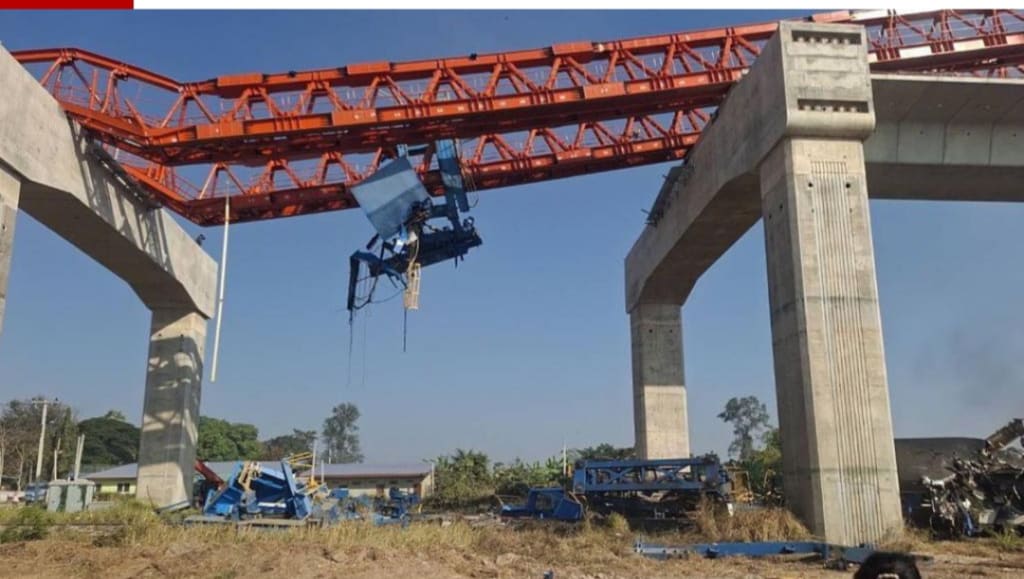
Thailand has been plunged into mourning after a devastating accident in which a construction crane collapsed onto a moving passenger train, killing at least 22 people and injuring dozens more. The incident, described by officials as one of the deadliest infrastructure-related accidents in recent years, has raised urgent questions about construction safety, urban development, and oversight in the country.
The tragedy unfolded suddenly, leaving commuters trapped, families grieving, and authorities racing to understand how such a catastrophic failure could occur.
What Happened: The Moment of Collapse
According to initial reports from Thai authorities, the crane was part of an ongoing construction project near a railway line. As the train passed beneath the site, the crane reportedly lost stability and toppled, crashing directly onto several carriages.
Passengers described hearing a loud crash followed by chaos as metal tore through the train. Emergency brakes were activated, but the impact had already caused severe damage. Several carriages were crushed, trapping passengers inside and making rescue operations extremely challenging.
Casualties and Injuries
Officials confirmed that at least 22 people lost their lives in the accident, with dozens more suffering serious injuries. Many of the injured were transported to nearby hospitals, some in critical condition.
Emergency responders worked for hours to extract survivors from the wreckage, using heavy equipment to cut through twisted metal. Medical teams described scenes of trauma and shock, as survivors struggled to comprehend what had happened.
Authorities warned that the death toll could rise as rescue and identification efforts continued.
Rescue and Emergency Response
Thailand’s disaster response teams, police, firefighters, and medical personnel were deployed immediately. The area around the crash site was sealed off to allow emergency crews to operate safely.
Rescuers faced significant obstacles, including unstable debris and the risk of further structural collapse. Despite these challenges, teams worked through the day and night to reach trapped passengers.
Government officials praised the bravery of first responders, while acknowledging that the scale of the disaster tested emergency response capabilities.
Investigation Launched Into the Cause
Thai authorities quickly announced a full investigation into the crane collapse. Preliminary assessments suggest possible mechanical failure, improper installation, or violations of safety protocols, though officials emphasized that conclusions would only be drawn after a thorough review.
The construction company responsible for the crane has been ordered to halt operations pending the investigation. Inspectors are examining maintenance records, safety certifications, and whether the site complied with regulations regarding construction near active railway lines.
Experts have noted that cranes operating close to transport infrastructure require strict safeguards, and any lapse can have deadly consequences.
Questions Over Construction Safety
The tragedy has reignited debate over construction safety standards in Thailand, particularly in rapidly developing urban areas. As cities expand, large-scale construction projects often operate close to public spaces, roads, and railways.
Critics argue that enforcement of safety regulations has not kept pace with development. Labor unions and civil society groups have long warned about inadequate inspections, cost-cutting measures, and pressure to meet tight deadlines.
The crane collapse has become a grim reminder of what can happen when safety is compromised.
Impact on Rail Travel
Rail services along the affected route were suspended immediately following the accident. Transport authorities are working to assess damage to the tracks and ensure the structural integrity of the railway before resuming operations.
Thousands of passengers have been affected by delays and cancellations, adding to the disruption caused by the tragedy. Officials stated that restoring service would only occur once safety could be guaranteed.
For many commuters, the incident has shaken confidence in the safety of public transport infrastructure.
Government and Public Reaction
Thailand’s prime minister expressed condolences to the victims’ families and promised accountability. In a public statement, the government pledged to support those affected and ensure that those responsible are held to account.
Public reaction has been marked by grief and anger. Social media has been flooded with messages mourning the victims and demanding stricter safety enforcement. Many users questioned how a crane could be allowed to operate in such close proximity to an active train line.
The incident has also sparked calls for greater transparency in the construction industry.
Legal and Financial Consequences
Legal experts say the companies involved could face criminal charges, fines, and civil lawsuits if negligence is proven. Compensation for victims and their families is expected to be a key issue in the coming weeks.
Past industrial accidents in Thailand have often led to promises of reform, but critics argue that sustained enforcement is needed to prevent future tragedies.
A Broader Pattern of Infrastructure Risks
This disaster is not an isolated incident. Across Southeast Asia, rapid urbanization has increased pressure on infrastructure and safety systems. Similar accidents involving construction equipment and public transport have occurred in recent years, highlighting regional challenges.
Analysts warn that without stronger oversight, training, and investment in safety, such incidents may continue as cities grow denser and projects become more complex.
Remembering the Victims
As investigations proceed, attention has turned to honoring those who lost their lives. Memorials have been set up near the crash site, with flowers, candles, and messages of condolence left by members of the public.
For families, the loss is immeasurable. Many are calling not only for justice but for meaningful change to ensure that no other families endure similar grief.
Conclusion: A Call for Accountability and Reform
The crane collapse onto a train in Thailand is a stark reminder of the human cost of infrastructure failures. With at least 22 lives lost, the tragedy has exposed serious questions about safety, regulation, and accountability.
As the nation mourns, the focus must shift toward ensuring that lessons are learned and reforms implemented. Only through rigorous investigation, transparent accountability, and stronger safety standards can Thailand hope to prevent such a devastating accident from happening again.
About the Creator
Keep reading
More stories from Aarif Lashari and writers in Earth and other communities.
DoJ Attorneys Resign Over Decision Not to Investigate Agent in Minneapolis ICE Shooting
A Justice Department Decision Sparks Fallout Several US Department of Justice (DoJ) attorneys have resigned following an internal decision not to pursue a criminal investigation into a federal immigration agent involved in a shooting in Minneapolis, according to multiple officials familiar with the matter. The resignations have intensified scrutiny of the DoJ’s handling of the case and fueled public debate over law enforcement accountability, particularly when federal agents are involved. The shooting, which occurred during an Immigration and Customs Enforcement (ICE) operation in Minneapolis, has already drawn local outrage and national attention. The decision not to open a formal investigation has now added a new layer of controversy—this time from within the Justice Department itself. What Is Known About the Minneapolis ICE Shooting Details surrounding the incident remain limited, as authorities have not released a full public account. What has been confirmed is that an ICE agent discharged a firearm during an operation, resulting in a civilian being shot. The condition of the victim has not been fully detailed in official statements, though local officials confirmed the individual survived. Local law enforcement initially responded to the scene, but jurisdictional authority shifted quickly due to the involvement of a federal agent. Under standard procedure, incidents involving federal officers are typically reviewed by the DoJ to determine whether a civil rights or criminal investigation is warranted. It was this review—and its outcome—that ultimately triggered internal dissent. Why DoJ Attorneys Walked Away According to sources familiar with the resignations, multiple attorneys—some with experience in civil rights and public integrity cases—objected strongly to the decision not to open a formal investigation. They argued that the shooting met the threshold for independent review, regardless of whether charges were ultimately brought. One former official described the decision as “a dangerous precedent,” warning that declining to investigate could erode public trust. Others reportedly felt that political considerations, rather than legal standards, influenced the outcome. While the DoJ has not publicly confirmed the number of resignations, officials acknowledged that departures occurred and said they were handled in accordance with internal procedures. The Justice Department’s Position In a brief statement, the Department of Justice said it had conducted an initial assessment of the incident and concluded that there was insufficient basis to proceed with a criminal investigation at this time. Officials emphasized that such decisions are made after reviewing available evidence, including use-of-force policies and witness statements. The department rejected claims that the decision was politically motivated, insisting that prosecutors follow established legal thresholds rather than public pressure. However, the DoJ declined to provide further details, citing the sensitive nature of law enforcement operations and personnel matters. Minneapolis Officials and Community Reaction In Minneapolis, the reaction has been swift and critical. City leaders and community advocates have called for greater transparency, arguing that federal agents operating within city limits should be subject to the same level of scrutiny as local police. “This isn’t about politics—it’s about accountability,” said a local civil rights advocate. “When someone is shot, there must be an independent investigation, regardless of the badge involved.” Protests and community meetings have followed, with residents demanding the release of body camera footage, operational details, and a clearer explanation for the DoJ’s decision. ICE Operations Under Renewed Scrutiny The shooting and subsequent fallout have reignited broader concerns about ICE enforcement tactics. Critics argue that immigration operations often take place with limited oversight, creating conditions where accountability gaps can emerge. Advocacy groups note that ICE agents are armed and authorized to use force, yet incidents involving shootings are relatively rare—and therefore require especially careful review when they occur. Supporters of ICE counter that agents operate in dangerous environments and must make split-second decisions, warning against rushing to judgment without full facts. Political Pressure and the Rule of Law The resignations have also raised questions about political pressure within federal law enforcement agencies. While no direct evidence has been made public, former prosecutors say internal disagreement of this magnitude is unusual and concerning. “When career attorneys resign over a single decision, it signals a serious breakdown of trust,” said a former federal prosecutor. “That doesn’t happen lightly.” Lawmakers from both parties have begun asking questions, with some calling for congressional oversight hearings into the incident and the DoJ’s decision-making process. Legal Standards vs Public Expectations At the heart of the controversy is a long-standing tension in US justice: the gap between legal thresholds for prosecution and public expectations of accountability. Opening an investigation does not imply guilt, but declining to investigate can be perceived as preemptively closing the door on transparency. Civil rights experts argue that even if prosecutors believe charges are unlikely, a formal investigation can still serve an important public interest. “The process matters as much as the outcome,” said one legal scholar. “Especially when federal authority is involved.” What Happens Next While the DoJ has indicated it will not revisit its decision at this time, pressure is mounting. Civil lawsuits, independent reviews, or congressional inquiries could still follow. Meanwhile, the resignations themselves may become part of a broader reckoning inside the Justice Department, as leaders assess how internal dissent is handled—and how public confidence can be restored. For the attorneys who resigned, the decision appears to have been a matter of principle. For the public, the unanswered questions surrounding the Minneapolis shooting remain unresolved. Conclusion: A Case That Won’t Fade Quietly The resignations of DoJ attorneys over the decision not to investigate an ICE agent involved in a Minneapolis shooting have turned a single law enforcement incident into a national flashpoint. Beyond the specifics of the case, the episode raises fundamental questions about accountability, transparency, and the independence of the justice system. Whether through further investigation, legal action, or political oversight, the issue is unlikely to disappear—and the consequences may shape how similar cases are handled in the future.
By Aarif Lashari4 days ago in Earth
Inside Trump's $11 Billion Health Plan to Replace “Neo-Colonial” USAID
In the landscape of global health aid, few proposals have stirred as much debate as former President Donald Trump’s ambitious plan to restructure American assistance abroad. Dubbed an $11 billion health initiative aimed at replacing USAID’s current framework, the plan seeks to pivot away from what Trump and his allies have criticized as the “neo-colonial” approach of U.S. foreign aid. While the plan promises greater efficiency and impact, experts are split on whether it is a practical solution or a politically driven gamble. Trump’s Critique of USAID The United States Agency for International Development (USAID) has long been a central pillar of American foreign assistance, distributing billions in aid annually to address health crises, food insecurity, and development challenges worldwide. However, Trump’s administration and its supporters have often described USAID’s approach as bureaucratic, inefficient, and reflective of a “neo-colonial” mindset. In public statements, Trump argued that the U.S. was spending taxpayer dollars on programs that benefited foreign governments or contractors more than the intended local communities. Critics of the plan say that while USAID has flaws—as any large bureaucracy does—its extensive networks and decades of experience provide an unmatched capacity to deliver aid efficiently and safely. The Core of the $11 Billion Proposal At the heart of Trump’s proposal is an $11 billion fund designed to consolidate, modernize, and streamline U.S. health aid. Unlike the traditional USAID model, which relies heavily on long-term partnerships with governments and NGOs, the new plan emphasizes: Direct Impact Funding: Allocating resources to frontline health workers and local initiatives rather than intermediaries. Data-Driven Investments: Using real-time health data to target outbreaks and crises more efficiently. Private Sector Partnerships: Leveraging U.S. pharmaceutical companies, tech firms, and healthcare startups to deliver vaccines, treatments, and medical infrastructure. Shorter Program Cycles: Moving away from multi-year funding commitments in favor of more flexible, results-oriented programs. Proponents argue that this approach could reduce bureaucratic overhead and ensure U.S. aid reaches communities faster. By “cutting out the middlemen,” Trump supporters claim, America can avoid the pitfalls of slow-moving aid programs that sometimes fail to adapt to crises. Reactions from the Global Health Community Global health experts, however, have expressed concern about both the logistics and philosophy of the plan. Dr. Melissa Ortega, a senior researcher at the Global Health Policy Institute, explained, “The idea of bypassing established structures like USAID may sound appealing on paper, but in practice, it risks undermining decades of institutional knowledge. Health systems are complex, and short-term projects cannot replace long-term capacity building.” Some critics have also questioned the characterization of USAID as “neo-colonial.” While U.S. foreign aid has historically been tied to geopolitical interests, many programs today are designed collaboratively with recipient countries and local organizations. Reducing oversight could unintentionally increase the risk of misuse, corruption, or health inequities. On the other hand, supporters of Trump’s plan point to examples of inefficiency in USAID programs, citing cases where aid was delayed or mismanaged. By introducing more direct funding models, they argue, U.S. taxpayer dollars could achieve a higher “return on health outcomes.” Political Implications Trump’s health aid overhaul proposal is not just about international development—it is also deeply political. Framing USAID as a “neo-colonial” institution resonates with a populist narrative that America should prioritize its own citizens and assert greater control over how taxpayer money is spent abroad. Domestically, the $11 billion plan faces scrutiny from Congress. Lawmakers from both parties have questioned whether dismantling USAID’s systems could destabilize ongoing health programs in countries where the U.S. has long-term commitments. The potential impact on global health security—including the fight against pandemics like COVID-19—adds another layer of concern. Internationally, U.S. allies and partner nations are watching closely. Sudden shifts in aid delivery could disrupt health programs in low- and middle-income countries, many of which rely on predictable funding cycles to maintain vaccination campaigns, maternal health services, and disease surveillance. Possible Benefits and Risks If executed carefully, the Trump-backed model could bring several benefits: Faster Response Times: Direct funding could accelerate delivery of vaccines, treatments, and emergency support. Innovation Boost: By partnering with private sector companies, the plan could accelerate development of new health technologies. Accountability: With performance-based metrics, the plan may better measure the impact of U.S. aid. However, the risks are equally significant: Disruption of Existing Programs: Abrupt changes could destabilize ongoing health projects. Loss of Expertise: USAID’s decades of experience in navigating local governance, supply chains, and community engagement may be hard to replace. Geopolitical Fallout: Allies accustomed to collaborating with USAID might see the move as destabilizing, reducing cooperation on global health initiatives. Looking Ahead As Trump and his allies continue to advocate for this $11 billion overhaul, the debate over the future of U.S. health aid is intensifying. Proponents view it as a necessary modernization of an outdated system, while critics fear it could undercut decades of carefully built infrastructure and global partnerships. Ultimately, the success of this plan will hinge on its ability to balance efficiency with stability, innovation with oversight, and political objectives with humanitarian needs. For now, the proposal remains controversial, representing a dramatic departure from traditional approaches to U.S. foreign aid. Whether it will reshape global health for the better—or simply create more uncertainty—remains to be seen. In the end, the Trump health plan is as much about ideology as it is about dollars. It challenges the conventional wisdom of international development and asks whether a more streamlined, results-focused approach can truly replace a system built over decades. As the world watches, the stakes could not be higher: the future of U.S. global health aid—and the lives it touches—hangs in the balance.
By Muhammad Hassan3 days ago in Earth
Nitrogen is necessary for young tropical rain forests to combat climate change.
By absorbing carbon dioxide from the atmosphere and storing it in wood, tropical rainforests contribute to the slowing of climate change. Forests that develop quickly are even more important because they absorb carbon more quickly.
By Francis Damia day ago in Earth




Comments
There are no comments for this story
Be the first to respond and start the conversation.