
The Gruesome World of Parasitoid Wasps
Unraveling the Horrifying Strategies of Nature's Masters of Manipulation

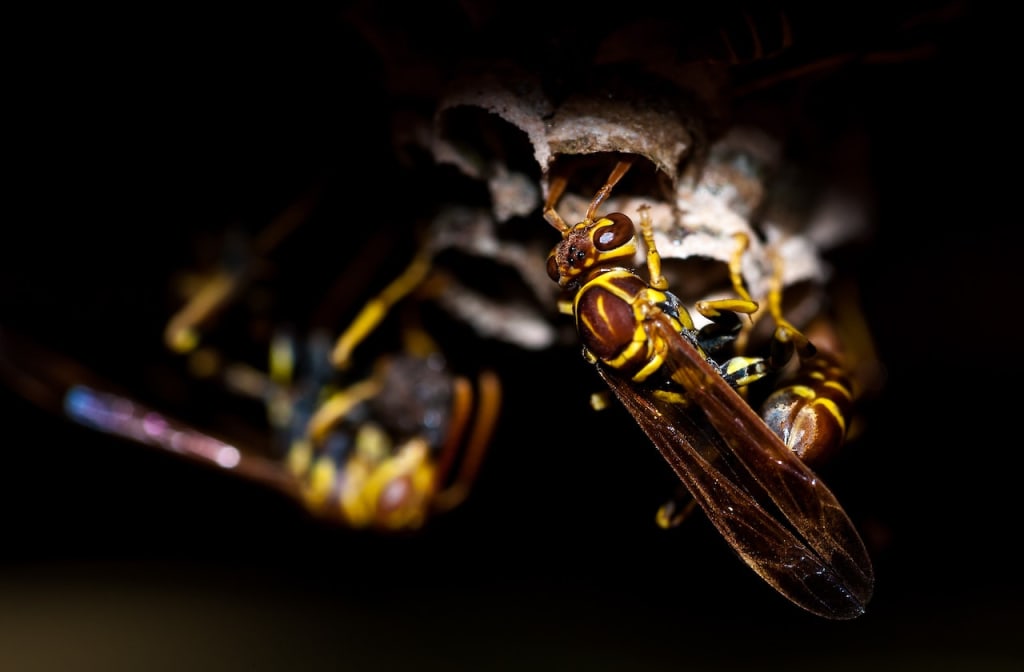
In the hidden corners of the natural world, a disturbing dance unfolds between parasitoid wasps and their unsuspecting hosts. These tiny, but formidable insects have perfected the art of manipulation, using venom and cunning tactics to turn their victims into living zombies, nurseries for their young, and battlegrounds for survival. As scientists continue to explore this macabre realm, they uncover the astonishing diversity and longevity of these master manipulators—parasitoid wasps, nature's most sinister strategists, have been honing their skills for over 247 million years to give their offspring the best chances of life. Here, we delve into the gruesome and astonishingly complex world of these nightmarish creatures.
The Macabre Process of Parasitoidism
A macabre tale begins when a jewel wasp targets a cockroach. The wasp carefully paralyzes the cockroach's legs and then proceeds to sting its brain, rendering it a helpless zombie. The wasp uses broken antennae as straws to feed off the cockroach's blood-like hemolymph before leading it into a subterranean lair. There, she lays an egg on the victim, sealing the burrow, which becomes both her offspring's nursery and the cockroach's crypt. Over the following weeks, her larva hatches, consuming the living cockroach, pupates inside its carcass, and emerges as an iridescent adult. This gruesome tale exemplifies the parasitoidism, an evolutionary strategy employed by most wasps, where they feed off other animals as they develop, ultimately killing their hosts.
A Variety of Dreadful Demises
The parasitoid wasp's repertoire of horror extends beyond cockroaches. They target ladybugs, planting eggs inside their bodies, leading to the consumption of the beetle's body fat and a semi-paralyzed state. The ladybug unwittingly becomes the guardian of the wasp's cocoon, fending off predators while being incapacitated. Many creatures avoid the ladybug altogether due to its bright coloration, which signals its toxicity.
Another victim of the parasitoid wasp is the gall wasp larvae, which feeds on an oak tree in a hidden chamber. The crypt-keeper wasp injects its egg into the gall wasp, leading to a gruesome fate. The gall wasp develops as usual but becomes trapped while trying to exit its pupa. The crypt-keeper larva then consumes the gall wasp's corpse, pupates within it, and emerges by crawling out of the dead wasp's head.
Polyembryony and the Caterpillar's Nightmare
A caterpillar that could have become an owlet moth experiences a chilling twist of fate. A wasp injects an egg into the developing caterpillar, and in a process called polyembryony, the wasp spawn divides repeatedly within it. A second type of wasp also lays its eggs on the caterpillar, leading to the development of two distinct castes. The caterpillar becomes both a feast and a battleground for the wasp larvae, with the reproductive ones consuming its insides and the soldiers eliminating the other parasitoids. Ultimately, the caterpillar's fate is grim, serving as a host for the wasp larvae.
The Prolific Province of Parasitoid Wasps
Parasitoid wasps have evolved an astonishing array of strategies and tactics to ensure their survival and that of their offspring. Some venture underwater to find their hosts, while others target other parasitoid wasps as hyperparasitoids. Researchers are continually unveiling the secrets of these creatures, though their diminutive size and the challenges of collection make the task arduous. Some suspect that parasitoid wasps may be among the most diverse animal groups on the planet. Despite many unknowns, one thing is clear: parasitoid wasps have mastered their brand of parasitism over millions of years, ensuring their lineage's success and giving their offspring the very best opportunities life has to offer.
In the dark recesses of nature, where horror and fascination intertwine, parasitoid wasps reign supreme. Their grisly methods of manipulation and exploitation inspire awe and terror, pushing the boundaries of what we understand about the intricate web of life. These master strategists have honed their skills over millions of years, leaving a trail of hapless victims and intriguing mysteries for scientists to unravel. As we peer into the prolific province of parasitoid wasps, we gain a glimpse of the astonishing diversity and resilience of nature's most sinister architects.
Henrik Leandro
About the Creator
Henrik Leandro Laukholm Solli
Free thinker, traveler and humanist <3
Keep reading
More stories from Henrik Leandro Laukholm Solli and writers in Earth and other communities.
Continental Drift and the Future of Supercontinents: Unveiling Earth's Dynamic Evolution
In the early 20th century, Alfred Wegener, a meteorologist, made a groundbreaking observation. He noticed remarkable similarities between the coastlines of Africa and South America, leading him to propose the controversial theory of Continental Drift. This theory challenged the prevailing belief that Earth's continents had remained stationary for millennia. However, it took nearly half a century for Wegener's advocates to convince the broader scientific community of its validity. Today, we understand an even more remarkable truth—Pangea, the supercontinent, was just one chapter in an ancient saga of interconnected landmasses, and there are more to come.
By Henrik Leandro Laukholm Solli3 years ago in Earth
A Sound Has Been Echoing From the Bottom of the Ocean for 25 Years — And No One Knows What Made It
It started with a sound no one expected to hear. In 1997, deep in the Pacific Ocean, underwater microphones picked up something strange—something powerful enough to travel thousands of miles through the water. The signal was so loud that multiple sensors across the ocean detected it at the same time.
By Noman Khan about 9 hours ago in Earth


Comments
There are no comments for this story
Be the first to respond and start the conversation.