

The wonder that is the Serengeti is something not easily described with words, or even through pictures. When I returned home and attempted to convey my experiences, the closest I came to explaining it was that it feels as if the beginning and the end of the world is there. Every colour, sound, and texture in existence seems to coalesce in that great expanse of land.
As is to be expected when venturing out in the Serengeti, there are many different groups on tours, all hoping to catch a glimpse of something special. My group was one of many – far too many to count – and we had spent the last two days with our trusted and skilled tour guide roaming through the savannah, witnessing one majestic scene after another.

Even though there is no shortage of the impala in the Serengeti, the privilege of seeing one up close for more than a brief second is not afforded to everyone. We were lucky to be the only vehicle in the area because, since the impala are a notoriously cautious species, usually the mere presence of unfamiliar or unwanted company is enough for them to leap into the air and bounce away to safety. This behaviour is known as ‘stotting’, and is clearly displayed when other species are preying upon them: they will distinctly leap in the air through a series of jumps and kick their hindlegs mid-air, before landing on all fours and then bounding away. There are a number of potential explanations for this behaviour, since the action of springing into the air increases the visibility of the prey while also exerting additional energy that could be used trying to escape. Some possible theories include that this behaviour may signal to their predator that they would be challenging to catch and therefore a waste of time; that they are alerting the rest of their herd to the looming danger; or that they are alerting their predator that it has been seen and therefore does not have the benefit of a surprise attack.
As we quietly approached, we were mindful of maintaining a respectful distance and were fortunate to spend a few magical moments in the presence of a juvenile male impala. I was transfixed by the fibres of his glossy, silky fur, which somehow seemed to absorb and reflect light all at once. By the black speckles on his mouth, the delicate eyelashes, the tips of his ears, the ridges of his horns. Though their gentle characteristics seem to resemble that of a deer, they are actually part of the antelope family. Of the two main types of impala – the common impala and the black-faced impala – it was the former of the two that I saw and of which there are an abundance of, and the latter that are classified as vulnerable, with less than 1000 remaining in the wild.
When we first encountered him, he was alone and grazing in the high grass. Our driver indicated that it was likely that the rest of the herd wasn’t far away but out of our line of sight.
As we settled ourselves, I took a few slow shots with my camera aimed at my feet in order to get a feel for his reaction to the sound of the shutter, with every intention of stowing my camera away if it seemed to frighten him in any way. To this day, I am still surprised by his fearlessness and apparent disinterest in our presence and the clicks of the cameras. I managed to take four photos during our time together before he casually walked off into the distance to carry on with his day.

From my perspective, it’s often quite rare for the true grace and beauty of something as you experience it in the flesh, to be fully captured and conveyed in a two-dimensional photo. It wasn’t until later that night when I reviewed the photos in my tent that I was struck by just how arresting this young guy was, because in those photos, I could see absolutely everything I saw and felt in his presence earlier that day.
About the Creator
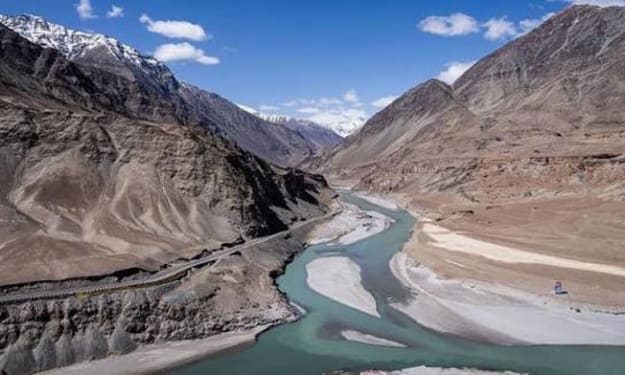
Himalayas Bare and Rocky After Reduced Winter Snowfall, Scientists Warn
The Himalayas, often described as the world’s “Third Pole,” are facing a dramatic and worrying transformation. Scientists are warning that reduced winter snowfall is leaving vast stretches of the mountain range bare, rocky, and increasingly vulnerable to long-term environmental damage. Once known for their thick snow blankets and powerful glaciers, parts of the Himalayas are now showing exposed rock earlier than ever before—an alarming sign of climate stress in one of Earth’s most critical ecosystems. A Visible Change in the World’s Highest Mountains Winter snowfall plays a vital role in the Himalayan climate system. Snow acts as a protective layer, insulating glaciers and regulating the slow release of meltwater into rivers during warmer months. However, researchers monitoring satellite data and ground stations report that recent winters have brought significantly less snowfall across large areas of the range. As a result, snowlines are rising higher up the slopes, leaving lower and mid-altitude regions exposed. This has turned once-white mountain landscapes into expanses of dark rock, which absorb more heat from the sun, accelerating warming in a dangerous feedback loop. Why Reduced Snowfall Matters Snow is more than a scenic feature—it is essential to the health of Himalayan glaciers. When snowfall declines, glaciers lose their main source of replenishment. At the same time, exposed ice and rock melt faster under direct sunlight. Scientists warn that this imbalance is speeding up glacier retreat across the Himalayas. Many glaciers are now shrinking at rates not previously recorded, threatening the long-term stability of water systems that support nearly two billion people across South and Southeast Asia. Impact on Asia’s Major Rivers The Himalayas feed some of the world’s most important rivers, including the Indus, Ganges, Brahmaputra, Yangtze, and Mekong. These rivers depend on seasonal snow and ice melt to maintain consistent flow throughout the year. Reduced snowfall means less stored water for the dry season. In the short term, faster melting can cause floods and landslides. In the long term, however, shrinking glaciers could lead to water shortages, affecting agriculture, hydropower, and drinking supplies across multiple countries. A Growing Risk of Disasters Bare, rocky slopes are far more unstable than snow-covered ones. Snow helps bind loose material together, while exposed rock and soil increase the likelihood of landslides and avalanches. Scientists have already observed a rise in slope failures and glacial lake outburst floods in the region. As glaciers retreat, meltwater often accumulates in fragile lakes dammed by loose rock and ice. These lakes can burst suddenly, releasing destructive floods that threaten mountain communities and downstream infrastructure. Climate Change at the Core Researchers agree that climate change is the primary driver behind the declining snowfall. Rising global temperatures are altering weather patterns, causing more winter precipitation to fall as rain rather than snow. Even small temperature increases at high altitudes can drastically change how moisture behaves. Additionally, warming oceans and shifting atmospheric circulation are affecting the timing and intensity of winter storms that traditionally brought snow to the Himalayas. Effects on Local Communities and Wildlife Mountain communities that rely on predictable snowfall for farming, tourism, and water storage are already feeling the effects. Farmers report changes in planting cycles, while winter tourism has declined in some regions due to unreliable snow conditions. Wildlife is also under pressure. Species adapted to cold environments are losing habitat as snow cover shrinks. Plants that depend on snowmelt are struggling to survive in drier, warmer conditions, disrupting fragile alpine ecosystems. Scientists Call for Urgent Monitoring and Action Experts stress the importance of improved monitoring of snowfall, glacier health, and water flows across the Himalayan region. Better data can help governments plan for future water management challenges and disaster risks. At the same time, scientists emphasize that local adaptation alone is not enough. Reducing global greenhouse gas emissions remains critical to slowing temperature rise and preserving what remains of the Himalayan snow and ice. What the Future Holds If current trends continue, large parts of the Himalayas could see permanent changes within decades. Reduced snowfall and accelerating glacier loss may reshape landscapes, ecosystems, and human livelihoods on an unprecedented scale. The sight of bare, rocky Himalayan slopes is more than a visual change—it is a warning signal. The world’s highest mountains are responding rapidly to a warming planet, and the consequences will extend far beyond the peaks themselves.
By Fiazahmedbrohi 3 days ago in Earth
Biochar: Unlocking the Potential for Climate Change Mitigation and Carbon Markets
Biochar is created through the process of pyrolysis, where organic materials such as agricultural waste, wood, or even certain types of plastic are heated in the absence of oxygen. This process breaks down the biomass into three main products: gas, liquid (bio-oil), and solid carbon-rich residue—biochar. Unlike organic matter that decomposes naturally, releasing carbon dioxide (CO₂) into the atmosphere, biochar locks carbon in a stable form that can persist in the soil for hundreds or even thousands of years.
By Bestonpyrolysis5 days ago in Earth



Comments
There are no comments for this story
Be the first to respond and start the conversation.