
The Garden at the End of the Street
How One Man Planted Hope in a Neighborhood That Had Forgotten How to Grow


There’s a quiet little neighborhood on Maple Street, the kind with tidy lawns and mailboxes that lean just slightly from years of use. If you walked to the very end of that street a year ago, you’d find a patch of land no one talked about anymore.
It was wild—overgrown, forgotten. Rusty cans and broken glass poked out from tall weeds, and a chain-link fence leaned like it had given up trying to stand straight. Everyone just passed by it, eyes forward, pretending it wasn’t there.
Then Mr. Langston moved in.
He wasn’t flashy. In fact, most people barely noticed him at first. An older man, probably in his sixties, quiet, with a soft step and a deep love for corduroy jackets—he always wore the same one, no matter the weather. He moved into the peeling blue duplex next to the lot, carrying nothing but a worn-out rucksack and a few ceramic birds wrapped in newspaper.
At first, the neighbors just nodded politely when they saw him. You know how it is—busy lives, quiet streets. But a few weeks after he moved in, something odd happened.
Someone stuck a shovel right into the middle of that overgrown lot.
Next to it: three compost bags, some seed packets, and a wooden sign that looked like it had been made by hand. It read:
“Community Garden Coming Soon – Everyone Welcome.”
Naturally, people were skeptical.
“No one’s gardening in that jungle,” muttered Mr. Reeves, who hadn’t smiled in recent memory.
“Probably some idealist trying to fix the world with tomatoes,” said Mrs. Halvorsen, sipping tea behind her lace curtains.
But Mr. Langston didn’t seem to care. He just started digging.
One weed at a time.
He worked alone at first. Digging, pulling, clearing. It was slow, hard work. But every day, he was out there. Humming, sometimes whistling, always waving at people who passed by. And then something small shifted.
One day, a couple of kids wandered over. He handed them gloves and showed them how to pull weeds without snapping the roots. The next day, another neighbor brought a rake. Before long, José from two houses down—retired teacher with a thousand stories—started bringing tomato seedlings.
And just like that, it grew. Not just the garden, but the feeling of something...new.
People who had lived next to each other for years—barely speaking—suddenly started chatting over garden beds. Swapping stories and recipes. Trading seeds. Laughing. Laughing, on Maple Street! It had been a while.
The garden itself was a patchwork of everything—beans climbing broomstick trellises, sunflowers nodding in the breeze, herbs growing out of old paint cans. Someone painted a mural on the back fence. A teen fixed up an old bench and painted it sky-blue.
It wasn’t perfect.
It was better.
That summer, they had a potluck right there between the rows of veggies. Everyone brought something from the garden. Zucchini fritters, mint tea, roasted carrots with fresh rosemary. There were no speeches, no rules—just neighbors finally sharing a meal, some for the first time ever.
And Mr. Langston? He just sat at the edge, smiling quietly, watching it all unfold. When someone asked why he started it, he just said, “I like planting things. It reminds people they’re still alive.”
Then autumn came, and something changed again.
One morning, Mr. Langston didn’t show up.
At first, no one thought much of it. But then a day passed. Then two. Maya—the little girl who used to help him water the cucumbers—knocked on his door. No answer.
He’d had a fall in his kitchen. They took him to the hospital.
For a moment, everything seemed to pause. The garden kept growing, but it felt...quieter. Emptier. Like something important was missing.
But instead of letting it fade, the neighborhood stepped up.
They built a new compost bin. They took turns weeding and watering. Maya painted a new wooden sign:
“Mr. Langston’s Garden.”
They brought photos of the garden to the hospital. Fresh mint. A jar of jam. Little things to remind him of what he started.
When he finally came home—in a wheelchair, moving slower—he looked at what they’d done and cried.
“It’s more than I ever hoped,” he said softly.
Later that year, the city gave the garden an award. Just a little plaque and a grant, but to Maple Street, it felt like a gold medal. Proof that something beautiful had grown out of nothing. That they had, too.
Time passed. Seasons came and went. And when Mr. Langston passed away peacefully the following spring, the garden didn’t stop. In fact, it flourished.
His ashes were scattered among the wildflowers at the back of the lot, in the spot where the sun always hit just right. A small plaque was placed by the bench he once painted:
“In loving memory of Martin Langston – He Planted More Than Seeds.”
And every spring, people still return.
Some are new to the neighborhood. Some grew up helping pull weeds and now bring their own kids. But they all come, and they keep planting.
Because Mr. Langston gave them something more than vegetables. He gave them a reason to slow down. To connect. To care.
And in a world that sometimes forgets how to do those things, that garden still reminds them.
---
The End.
About the Creator
M.SUDAIS
Storyteller of growth and positivity 🌟 | Sharing small actions that spark big transformations. From Friday blessings to daily habits, I write to uplift and ignite your journey. Join me for weekly inspiration!”
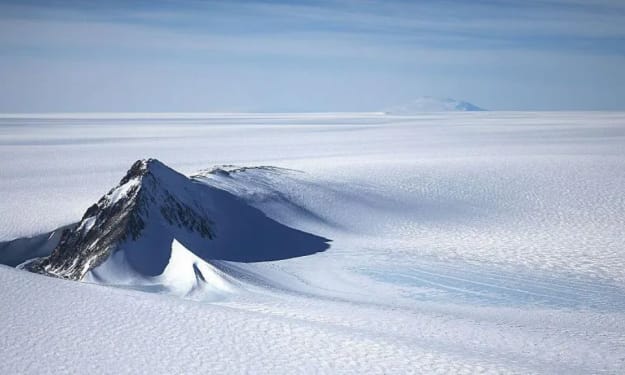
Landscape Beneath Antarctica's Icy Surface Revealed in Unprecedented Detail
For decades, Antarctica has been the Earth’s ultimate mystery — a vast expanse of ice covering almost 14 million square kilometers, hiding secrets beneath its frozen surface. Now, thanks to advanced radar technology and satellite mapping, scientists have produced the most detailed map yet of the continent’s hidden landscape, revealing mountains, valleys, subglacial lakes, and river systems that were previously invisible. This discovery is more than just a scientific curiosity. Understanding Antarctica’s topography beneath the ice is critical for predicting ice sheet stability, global sea-level rise, and climate change impacts. The new data could also shed light on Earth’s geological history and the ways in which life may survive in extreme environments. How Scientists Mapped the Hidden Terrain For years, researchers have relied on a combination of methods to peek beneath the ice: Ice-penetrating radar: Devices mounted on aircraft or satellites send radio waves through ice layers, which bounce back when they hit bedrock, revealing contours beneath kilometers of frozen water. Satellite gravimetry: Small variations in Earth’s gravitational field help infer the presence of mountains, valleys, and subglacial lakes. Seismic surveys: Explosions or controlled vibrations allow scientists to detect underground structures by measuring the way seismic waves travel through different materials. Using these techniques, a consortium of international researchers created a high-resolution map of Antarctica’s sub-ice topography, revealing features that rival the landscapes of continents that have been visible for millions of years. What’s Beneath the Ice? The map reveals a striking variety of features: Mountain ranges: Peaks rise more than 4,000 meters above the surrounding terrain, hidden beneath miles of ice. Some of these ranges may be older than the Rockies or the Alps. Deep valleys: Vast troughs and gorges, carved by ancient rivers or tectonic activity, provide clues about how the continent evolved over millions of years. Subglacial lakes: Scientists have identified hundreds of liquid water lakes trapped beneath the ice, including the famous Lake Vostok. These lakes remain liquid due to pressure and geothermal heat and may host microbial life isolated for millions of years. Subglacial river networks: Surprisingly, water flows beneath the ice in channels and rivers, slowly carving pathways that affect ice sheet movement. This intricate landscape challenges the perception of Antarctica as a flat, featureless ice sheet. Instead, it is a dynamic and complex environment, where hidden topography influences everything from ice flow to global sea levels. Why This Discovery Matters The importance of understanding what lies beneath Antarctica’s ice cannot be overstated: Predicting Ice Sheet Stability: Ice sheets move more quickly over smooth surfaces than over rugged terrain. Knowing where mountains and valleys lie helps scientists predict which areas of ice may collapse first, potentially raising sea levels faster than anticipated. Climate Change Models: Subglacial lakes and water channels lubricate the ice from below, influencing melting rates. Incorporating these features into models improves accuracy in forecasting future sea-level rise. Earth’s Geological History: The newly revealed landscape offers a window into Antarctica’s past — from tectonic shifts to ancient rivers and climates. This data helps reconstruct how continents drifted and climates evolved over millions of years. Search for Extreme Life: Subglacial lakes may harbor microbial life isolated for millions of years, providing insights into life in extreme environments, potentially even on other planets. Global Implications Antarctica may feel distant, but its ice sheets hold the key to global sea-level stability. Even small changes beneath the ice can have profound consequences for coastal cities around the world. With melting accelerated by climate change, understanding the terrain under the ice is crucial for planning and mitigation. Governments, scientists, and environmental organizations are now using this information to: Improve climate models for sea-level rise predictions Identify vulnerable regions of the ice sheet Guide future research missions to subglacial lakes and mountains The discovery also strengthens the case for continued international collaboration in Antarctica, where research and environmental protection are governed by treaties emphasizing peaceful scientific study. Challenges Ahead Mapping Antarctica is far from complete. Extreme weather, thick ice sheets, and logistical difficulties make the continent one of the hardest places to study. While radar and satellite technologies have advanced, field validation and deeper exploration remain difficult and expensive. Researchers also face ethical and environmental concerns. Drilling into subglacial lakes to sample microbial life, for instance, must be done carefully to avoid contamination. Antarctica’s fragile ecosystem demands that scientific progress balances discovery with protection. Looking to the Future The detailed map of Antarctica’s hidden landscape opens new possibilities for exploration and understanding: Ice Flow Predictions: With accurate topography, scientists can model how ice sheets will respond to warming climates more precisely. Resource Insights: While exploitation is restricted by international agreements, understanding subglacial mineral deposits can inform potential future uses. Extreme Environment Biology: Studying subglacial lakes could reveal new species adapted to cold, dark, and high-pressure environments, broadening our understanding of life on Earth. The data also strengthens international scientific cooperation, as multiple countries share findings and resources to better understand a continent that belongs to no single nation. Final Thoughts Antarctica’s ice may appear static and endless, but beneath it lies a vibrant and rugged landscape filled with mountains, valleys, lakes, and rivers. The new detailed mapping of this hidden world is a landmark achievement in Earth science, combining advanced technology, international collaboration, and the human drive to explore. By uncovering what lies beneath the ice, scientists are not just satisfying curiosity — they are equipping humanity with the knowledge to protect our planet, anticipate climate challenges, and understand the deep history of Earth itself. Antarctica’s secrets, once locked beneath kilometers of ice, are finally being revealed, and what we learn could reshape our understanding of the planet and our place within it.
By Muhammad Hassan3 days ago in Earth
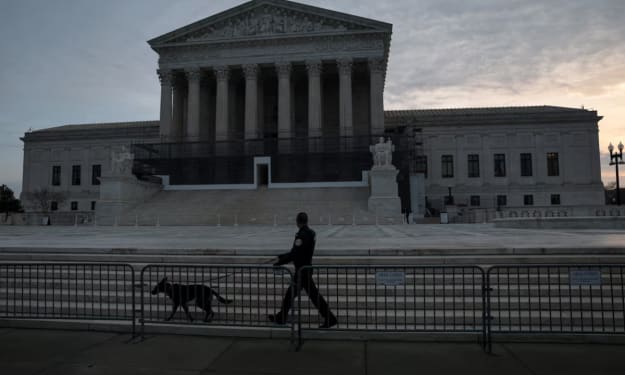
Supreme Court Set to Issue Rulings, with Trump Tariffs Case Still Pending
The U.S. Supreme Court is gearing up for a series of critical rulings that could have far-reaching effects on American politics, the economy, and ongoing legal controversies involving former President Donald Trump. Among these high-profile cases is the long-awaited decision on the Trump tariffs case, which remains unresolved and continues to draw national attention. A Pivotal Moment for the Supreme Court The Supreme Court, as the highest judicial body in the United States, has the power to shape not only legal precedent but also economic and political landscapes. Every term, the Court issues decisions that can influence everything from civil liberties to federal policies. This session, observers are particularly focused on cases involving trade, executive power, and regulations implemented during Trump’s administration. The Trump tariffs case, in particular, highlights the tension between presidential authority and congressional oversight. The case challenges certain tariffs imposed by Trump on imports from countries like China, Mexico, and the European Union, arguing that they exceeded the executive branch’s authority and bypassed proper legislative procedures. What the Trump Tariffs Case Is About During his presidency, Donald Trump frequently used tariffs as a tool to bolster U.S. manufacturing, address trade imbalances, and pressure foreign governments into renegotiating trade deals. While some praised these measures for protecting domestic industries, critics argued that they overstepped legal boundaries and caused economic strain on American consumers. The case currently pending before the Supreme Court examines whether Trump acted within his executive authority when imposing these tariffs. Legal analysts note that a ruling against Trump could set a precedent limiting future presidents’ power to unilaterally impose trade restrictions without congressional approval. Conversely, a ruling in his favor could reinforce broad executive powers in trade matters. Broader Implications for Trade and the Economy The Supreme Court’s decision is more than just a legal formality—it has significant economic implications. If the Court rules that the tariffs were unlawful, the U.S. could face demands to refund millions in duties collected, impacting businesses and international trade relations. Companies that relied on protective tariffs to compete in global markets might also face increased competition from foreign imports. On the other hand, upholding the tariffs could embolden future administrations to take aggressive action in trade disputes, potentially triggering new tensions with other countries. Investors, trade associations, and policymakers are closely monitoring these developments, as the ruling could influence stock markets, trade negotiations, and long-term economic strategies. Political Stakes Remain High Beyond economics, the Trump tariffs case has political dimensions. Donald Trump’s legal and political team is watching the case closely, as the outcome could influence his broader legal battles and political ambitions. While the case focuses on trade, it also touches on questions of executive authority, a topic central to debates about checks and balances in the U.S. government. Democrats and Republicans alike are analyzing the case for its potential impact on future administrations. Some lawmakers have expressed concern that a broad interpretation of executive power could set a dangerous precedent, allowing presidents to implement sweeping economic measures without sufficient legislative oversight. Other Supreme Court Decisions to Watch While the Trump tariffs case is the most high-profile, the Supreme Court is expected to issue rulings on several other major issues this session, including voting rights, environmental regulations, and federal agency authority. Each decision could have ripple effects across the nation, shaping laws and policies for years to come. Observers are particularly interested in cases that intersect with current political debates. With midterm elections approaching, the timing of these rulings could influence public opinion, political campaigns, and legislative priorities. What Comes Next For now, all eyes remain on the Supreme Court. Legal experts are divided on the likely outcome of the Trump tariffs case, with some predicting a narrow decision and others expecting broader implications. Regardless of the verdict, the ruling will be closely studied by policymakers, businesses, and citizens alike. In the meantime, companies affected by tariffs, trade advocates, and political analysts continue to prepare for potential scenarios. Whether the Court sides with Trump or challenges his administration’s actions, the ruling will shape the legal landscape for presidential authority and U.S. trade policy for years to come. Final Thoughts The Supreme Court’s upcoming rulings, particularly on the Trump tariffs case, underscore the enduring tension between executive authority, congressional oversight, and judicial interpretation. These decisions will not only influence the immediate legal battle but could also redefine the boundaries of presidential power and trade policy in the United States. For citizens, investors, and policymakers, understanding the implications of these rulings is crucial. As the nation waits for the Court’s verdict, one thing is clear: the outcome will resonate far beyond the courtroom, affecting politics, economics, and the balance of power in Washington, D.C.
By Muhammad Hassan5 days ago in Earth


Comments (1)
This story's got me thinking. Mr. Langston's determination to turn that neglected lot into a garden is inspiring. It makes me wonder how often we pass up opportunities to make a positive change in our own neighborhoods. I bet there are lots of places like that patch on Maple Street, just waiting for someone to take the first step. What would you do if you had an overgrown lot near you? And it's cool how he got the kids involved right away. That shows the power of a simple invitation. Do you think more people would've joined in if he'd waited to build a big plan first? Or was it better to just start digging and let the community grow organically?