
The Formation of the Atlantic Ocean:
A Deep Dive into Earth's Greatest Geological Transformation

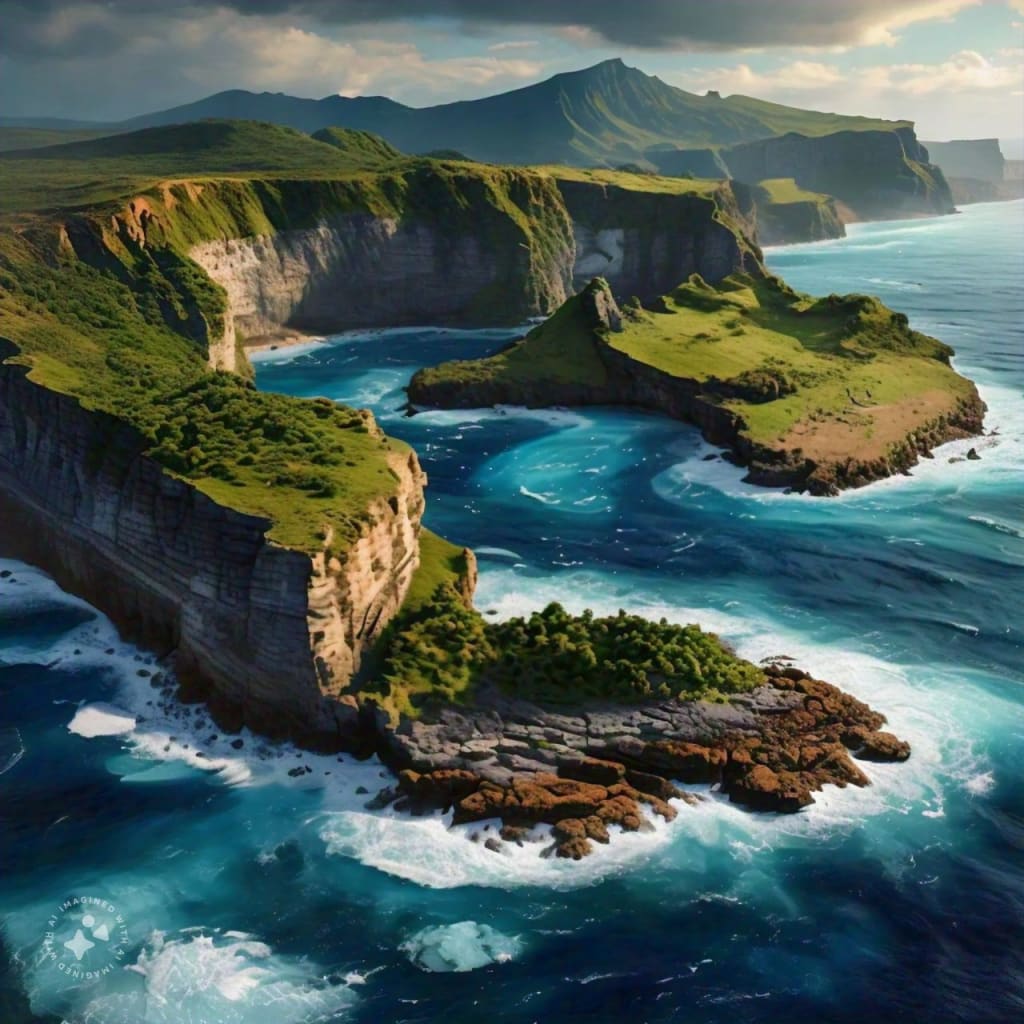
At the bottom of the Atlantic Ocean lies a geological marvel: the Mid-Atlantic Ridge. This immense chain of volcanoes stretches almost the entire north-south length of our planet and forms the longest mountain range in the world. While the eruptions from these volcanoes are usually benign today, they were once responsible for monumental changes that reshaped our world. The story of how these eruptions gave birth to the Atlantic Ocean, and the profound impacts they had on life on Earth, is a fascinating chapter in our planet's history.
The Supercontinent Pangaea and Its Disruption
About 320 million years ago, most of the Earth’s landmasses were joined together in a supercontinent known as Pangaea. This vast landmass existed for nearly 150 million years, during which time plants and animals spread across regions now separated by vast oceans. But the stability of Pangaea was not to last forever.
By the late Triassic period, around 230 million years ago, tectonic forces began to disrupt the supercontinent. A rift started to form in central Pangaea, initiating a slow but relentless process of continental fragmentation. Over the next 30 million years, this rift grew, stretching approximately 5,000 kilometers, and heat accumulated beneath the supercontinent.
The Great Volcanic Eruption: The Central Atlantic Magmatic Province
Around 201 million years ago, a massive volcanic eruption occurred, now known as the Central Atlantic Magmatic Province (CAMP). This eruption was among the largest in Earth’s history, releasing lava flows that covered an area equivalent to the size of Canada. The lava, composed mainly of basalt, flowed smoothly across the landscape, creating extensive new layers of volcanic rock.
Scientists began piecing together the story of CAMP in the 1970s, noting the similarities between rock formations in Florida and those in West Africa. These rocks, dating back to the formation of the Atlantic Ocean, suggested that the eruption played a crucial role in Pangaea's breakup.
The CAMP eruption was not just a geological event; it had profound effects on the climate and biosphere. Volcanic activity released vast amounts of sulfur dioxide into the atmosphere, creating acid rain that would have severely impacted terrestrial ecosystems. Higher in the atmosphere, volcanic ash and sulfur aerosols reflected sunlight, causing a "volcanic winter" that dramatically cooled the planet.
The Mass Extinction Event
The climatic and environmental upheavals triggered by CAMP were catastrophic. The eruption led to the release of carbon dioxide and other gases, contributing to a significant rise in atmospheric CO2 levels. This warming effect was further compounded by a potential feedback loop involving methane clathrates—ice-bound methane deposits on the seafloor. As temperatures rose, these clathrates may have thawed, releasing methane, a potent greenhouse gas, which intensified global warming.
The impact of these changes was devastating. The combination of volcanic winter, acid rain, and ocean acidification caused severe disruptions to ecosystems. Coral reefs, crucial to marine biodiversity, suffered massively, with 96% of coral genera going extinct. The oceans absorbed some of the excess CO2, leading to acidification and the collapse of marine ecosystems.
On land, the extinction event severely affected many species. Marine life saw the extinction of nearly half of all marine genera, including ammonites and bivalves, while amphibians and reptiles also faced significant losses. However, dinosaurs, which had begun to thrive towards the end of the Triassic, benefited from the extinction of their competitors. This extinction event set the stage for the rise of dinosaurs during the Jurassic and Cretaceous periods.
The Formation and Future of the Atlantic Ocean
The eruption that created the Mid-Atlantic Ridge and opened the Atlantic Ocean was the beginning of a new geological era. Today, the Atlantic Ocean continues to widen as new seafloor forms at the Mid-Atlantic Ridge and spreads outward. The ocean plays a crucial role in influencing global climate patterns, including moderating temperatures in Europe through the Gulf Stream and affecting global ocean circulation.
However, the Atlantic Ocean’s story is part of a larger cycle known as the Wilson Cycle, which describes the life cycle of oceans and continents. This cycle suggests that oceans eventually close as tectonic plates shift and converge, leading to the formation of new supercontinents. Scientists predict that in about 100 million years, the Atlantic Ocean may start to close as the oceanic plate subducts beneath Europe, potentially leading to the creation of a new supercontinent.
In conclusion, the formation of the Atlantic Ocean was a monumental event that reshaped the Earth’s geology, climate, and biological history. From the initial volcanic eruptions that began the breakup of Pangaea to the ongoing processes that continue to shape our planet, the story of the Atlantic Ocean is a testament to the dynamic and ever-changing nature of Earth’s geological forces.
If you enjoyed this exploration of Earth’s history, check out our related content on YouTube, where you can dive deeper into the fascinating world of geology and paleontology. For more insights and educational content, visit the Study Hall Channel and explore a range of college courses and academic resources.
About the Creator
Keep reading
More stories from Mercia Wippenaar Davids and writers in Earth and other communities.
The Mystic of Blue:
When you think of the colors in the animal kingdom, blue might not immediately come to mind. Blue tigers? Not a thing. Blue squirrels? Nope. Even blue whales aren’t truly blue; their name is more poetic than accurate. In fact, blue is remarkably rare in nature. But when it does appear, it’s nothing short of spectacular. Let’s dive into why this is and explore the fascinating science behind the rarest color in the animal kingdom.
By Mercia Wippenaar Davids2 years ago in Earth
Seven Earth-Sized Planets Discovered Beyond Our Solar System
In one of the most exciting breakthroughs in modern astronomy, scientists have discovered a system of seven Earth-sized planets orbiting a distant star. This extraordinary finding has captured global attention because several of these planets exist in the “habitable zone,” where conditions may allow liquid water to exist. The discovery not only expands our understanding of planetary systems but also strengthens the possibility that life might exist beyond our solar system.
By Irshad Abbasi 4 days ago in Earth
A More Human Vocal
When we launched Vocal nearly a decade ago, the world was a very different place. LLMs did not exist, and stories were created one at a time by people sitting down to write, revise, and share something personal. Many of our assumptions about publishing, trust, and participation were built for a world where effort and output were inseparable.
By Justin @ Vocal7 days ago in Resources




Comments (1)
Awesome