
The first time Aarav saw Maya,
t was early morning—when the dew still clung to the leaves like secrets not yet told. He had just moved to the hillside town of D


arjeeling, escaping a past too heavy for the plains. Maya, on the other hand, had always belonged to the mist.She walked with quiet confidence, like the silence before snowfall. Aarav saw her across the tea garden, her fingers brushing against the bushes as if greeting old friends. She didn’t notice him at first. But he noticed everything—how she paused to look at the sky, how her smile seemed private, like a letter she hadn’t decided to send.He learned her name from the shopkeeper who sold both cigarettes and stories.“Maya?” the man said, handing Aarav his morning tea. “She’s the daughter of the late Mr. Das. Teaches music now, helps at the library. Everyone here knows Maya.”That was all Aarav needed to know.They began speaking over borrowed books and accidental meetings at the market. Aarav was quiet, sometimes too quiet, but Maya liked the way he listened. He was a man building a new life one word at a time. She gave him music—piano notes at the end of a day, songs she’d written but never sung aloud. He gave her stories—of cities that blurred together, of wounds that made him leave them behind.Their first real moment happened in the rain.It came suddenly, as it often did in the hills. They ran for shelter, ducking under the narrow porch of the old bookshop. The air smelled of wet pages and pine. She laughed—really laughed—and it was the most honest sound Aarav had heard in years.“You don’t like the rain?” she teased.“I like the quiet after,” he replied.She looked at him then, properly. “You carry a lot of quiet, Aarav.”He didn’t deny it.For months, they met without naming what grew between them. It was slow, like the mist that swallowed the hills every dawn—never sudden, never rushed. They drank coffee in silence, wandered the foggy streets, and read to each other on lazy afternoons. It was not dramatic, but it was deep, and both of them knew it.One evening, as the sun melted into the ridges, Maya led him to a small hilltop with a view of the valley. She had brought her harmonica. Aarav sat beside her on the grass, the dew cold under their hands. She played a melody she’d written when she was thirteen, when her mother had first fallen ill. It was gentle and broken in places.When she stopped, he said, “That’s the most beautiful thing I’ve ever heard.”Maya didn’t answer. Instead, she reached out and took his hand. They sat that way until the stars came out.---Not all love stories are meant to be easy.When Aarav received the letter about his father’s illness, he didn’t know what to do. He hadn’t spoken to his family in over three years—not since he walked away from a business he didn’t believe in and a life they had chosen for him.“I have to go back,” he told Maya the night before he left.She nodded, the same way the trees nod when the wind passes through them. “You should.”“I don’t know when I’ll return.”“You will.”He kissed her forehead, a silent promise made of hope and uncertainty.---The city felt different. Louder. Colder. But Aarav stayed. His father recovered but needed help. Slowly, painfully, Aarav stitched together a fragile peace with his family. Months passed. Then a year. Then two.They wrote letters at first. Long ones. She told him about the kids she taught and the way the library cat had grown fat and lazy. He told her about the way the city never stopped buzzing. But the letters became shorter. Life had a way of creeping in between words.Then one day, they stopped.---It was five years later when Aarav returned. His father had passed, and his ties to the city loosened again. He thought of Maya as he stepped off the train, heart heavy with memory.Darjeeling was the same, yet not. The air still smelled like tea leaves and rain, but there were new buildings and new people. At the bookshop, the owner remembered him.“You’re back,” he said. “Go see her. She’s still here.”The hilltop was unchanged. The grass is still damp with dew. And there she was—Maya, older, softer, the same light in her eyes.“I wasn’t sure you’d come,” she said.“I wasn’t sure you’d be here.”She smiled. “I always was. Just like the mist.”They sat again, side by side, no words needed.He reached into his coat and took out the harmonica she had once left in his room. It had traveled with him like a talisman.“Play me that song,” he said.She did. This time, the melody was complete.
About the Creator
Vocal media
Start writing...
Keep reading
More stories from Vocal media and writers in Earth and other communities.
World Record: A Story of CourageHis name was Raiyan
. Born in a small town called Rajshahi in Bangladesh, Raiyan was different from other kids from the beginning. While most children were busy with school and play, Raiyan had a mind that asked deeper questions. “Why does the sky change color?” “Why does a kite fly?” He had a curiosity that couldn’t be contained by textbooks.One day, when Raiyan was in 7th grade, he was browsing the internet in the local library when he came across something interesting—the world record for the longest continuous kite flying: 8 hours and 12 minutes, held by a British boy. His eyes lit up. That very moment, he whispered to himself, “One day, I’ll break this record.”At first, everyone laughed. “You? Break a world record?” his friends mocked. Even his teachers smiled and said, “Raiyan, you’re a dreamer. Focus on your studies.” But Raiyan didn’t argue. He just smiled and kept quiet, holding his dream close to his heart.From that day on, Raiyan made the open field near his house his second home. Every day after school, he went there with a kite and some string. The wind wasn’t always kind—sometimes it was still, sometimes too strong. His hands blistered, his eyes burned under the sun, and more than once, his kite crashed and tore. But Raiyan never gave up.His parents were worried at first. “What will you do with this kite?” they asked. But as they saw his determination, they slowly began to support him. His mother made him snacks for his practice days, and his father helped him build stronger kites.Two years passed. By then, Raiyan had mastered the art of flying a kite. He knew how to read the wind, control the tension, and switch hands to reduce fatigue. That’s when he decided it was time to attempt the record.They contacted Guinness World Records, submitted all the required documents, and got approval for the official attempt. A date was set: March 15th, 2023.The morning of the event, the field was decorated with flags and banners. A team of volunteers was there, including a doctor, a videographer, and a group of school students who came to cheer. Raiyan wore a plain T-shirt and jeans, but his eyes carried a spark.At exactly 7:00 AM, he launched the kite into the air. The crowd clapped. The kite soared high, its tail dancing in the blue sky. Raiyan stood still, both hands on the string, feeling the wind through his fingers.After two hours, the sun began to rise higher. His arms began to ache. Volunteers brought him water with a straw so he wouldn’t let go. At five hours, the heat became intense. His shirt was soaked, and his fingers had cuts. But he refused to sit.His parents watched nervously. Every hour felt like a lifetime.By hour eight, Raiyan was exhausted. But the kite was still flying strong. He had already broken the old record—but to make it official, he had to go beyond. The goal was clear: 9 hours.At 9 hours and 13 minutes, Raiyan finally reeled in the kite. As it touched the ground, a loud cheer exploded across the field. He had done it.Tears filled his eyes as his mother hugged him tightly. The volunteers clapped. The school principal declared, “You’ve made all of Rajshahi proud.” The local news aired his story that night, calling him “The Boy Who Touched the Sky.”Weeks later, Guinness World Records officially recognized his achievement. Raiyan’s name was now in the book. He was the world record holder for the longest continuous kite flying.But Raiyan wasn’t done.---The Journey BeyondAfter the record, Raiyan began receiving invitations from across the country. Schools asked him to speak to students, and TV shows wanted interviews. People began to see kite flying not just as a child’s game but as an art, a passion.Inspired by the response, Raiyan founded "SkyWeavers," a small club to teach kids how to fly kites and dream big. His goal was simple: help others discover joy in simple things, just like he did.With a few donations and help from his community, SkyWeavers grew fast. They organized kite festivals, invited experts, and even built a website where people could learn the basics of kite flying. Raiyan became a youth icon—not because he was a celebrity, but because he proved that a simple dream, pursued with dedication, could become a global achievement.One day, Raiyan got an email that changed his life again. The International Kite Festival in Gujarat, India, one of the biggest in the world, invited him as a guest speaker. It was his first time leaving Bangladesh.In Gujarat, Raiyan saw thousands of kites of all shapes and colors. Dragons, birds, fish, stars—kites that danced like fire and glowed in the night sky. He gave a speech in front of an audience of thousands.He said,"Kites taught me patience, focus, and
By Vocal media 8 months ago in History
Global Aerosol Paints Market Forecast 2025–2033
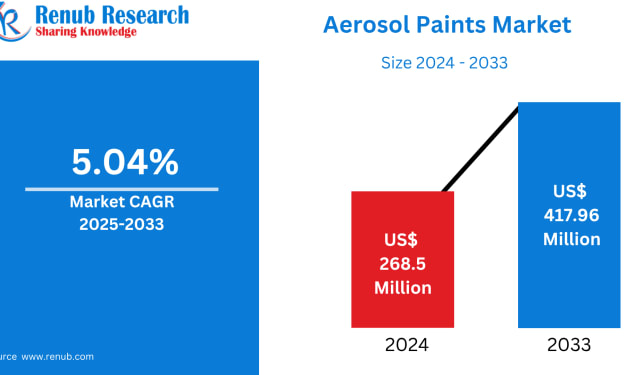
Introduction The global aerosol paints market is steadily transforming from a niche convenience product into a mainstream coating solution used across industries, homes, and creative spaces. In 2024, the market was valued at USD 268.5 million, and it is projected to reach USD 417.96 million by 2033, expanding at a CAGR of 5.04% during 2025–2033, according to Renub Research. This growth is driven by the convergence of DIY culture, automotive customization, construction activity, and industrial maintenance needs, alongside innovation in eco-friendly formulations and application technologies.
By Aaina Oberoi4 days ago in Earth
15 Years After Fukushima, Japan Prepares to Restart the World’s Biggest Nuclear Plant
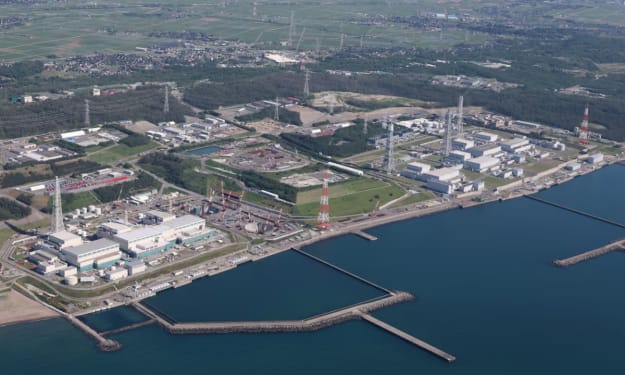
Fifteen years after the catastrophic Fukushima disaster, Japan is preparing to restart the world’s largest nuclear power plant. The decision marks a significant turning point in the country’s energy policy, reflecting both the urgent need for stable energy sources and the ongoing concerns about safety, environmental impact, and public trust. The move underscores Japan’s complex relationship with nuclear energy—a technology that has fueled the nation’s economic growth but also caused one of the worst nuclear disasters in history. The Fukushima Legacy In March 2011, a massive earthquake and tsunami triggered a meltdown at the Fukushima Daiichi Nuclear Power Plant, releasing radioactive material and forcing the evacuation of tens of thousands of residents. The disaster exposed flaws in safety regulations and emergency preparedness, reshaping public perception of nuclear energy in Japan and around the world. Following the incident, Japan shut down nearly all its nuclear reactors, relying heavily on imported fossil fuels to meet energy demand. The decision led to increased energy costs and heightened greenhouse gas emissions, creating pressure to diversify energy sources. Why Japan is Restarting Nuclear Reactors The restart of nuclear plants, including the world’s largest facility, is driven by several factors: Energy Security: Japan imports over 90% of its energy needs. Restarting nuclear plants reduces dependence on foreign fossil fuels and helps stabilize electricity supply. Climate Goals: Nuclear power generates electricity with minimal carbon emissions. As Japan commits to reducing greenhouse gases, nuclear energy offers a low-carbon alternative to coal and natural gas. Economic Considerations: Importing fossil fuels is expensive. Nuclear energy provides a relatively cheaper source of electricity in the long term, helping households and industries manage costs. The government emphasizes that advanced safety measures and rigorous inspections are in place, aiming to restore public confidence and prevent another disaster. Safety Measures and Upgrades Since 2011, Japan has invested heavily in upgrading nuclear infrastructure. Lessons from Fukushima have led to stricter regulations and improved disaster preparedness: Reinforced Reactor Buildings: Structures are now designed to withstand larger earthquakes and tsunamis. Advanced Cooling Systems: Redundant and automated cooling systems reduce the risk of overheating. Emergency Response Planning: Local governments and plant operators coordinate evacuation drills and disaster simulations. Regulatory Oversight: Japan’s Nuclear Regulation Authority (NRA) conducts independent inspections to ensure compliance with safety standards. Despite these measures, skepticism remains. Many citizens fear that no system can fully eliminate the risks associated with nuclear power, especially given the unpredictable nature of natural disasters in Japan. Public Opinion and Controversy The decision to restart the world’s biggest nuclear plant has sparked debate across Japanese society. Supporters argue that nuclear energy is essential for economic stability, energy security, and climate goals. They point out that without nuclear power, Japan would struggle to meet rising electricity demand and climate commitments. Opponents, however, raise concerns about safety, environmental impact, and long-term waste management. Memories of Fukushima remain vivid, and surveys indicate that a significant portion of the population is uneasy about returning to nuclear energy. Local communities near nuclear plants have voiced particular concern, fearing potential accidents and contamination. Economic and Energy Implications Restarting nuclear plants could have broad economic benefits. Stable electricity supply reduces the risk of blackouts, supports industrial activity, and helps control electricity prices for households. From an energy policy perspective, nuclear power allows Japan to balance its energy mix more sustainably. It complements renewable sources like solar and wind, which can fluctuate depending on weather conditions. Nuclear plants provide a steady “baseload” supply that renewables alone cannot guarantee. However, challenges remain: the disposal of radioactive waste, decommissioning older plants, and ensuring consistent regulatory oversight are all long-term concerns that Japan must address to maintain credibility and safety. Global Perspective Japan’s decision is being watched closely worldwide. The Fukushima disaster reshaped global nuclear policy, leading countries like Germany to phase out nuclear energy while others, including China and South Korea, continue to invest in it. Restarting the world’s largest nuclear plant sends a signal about Japan’s commitment to energy self-sufficiency and low-carbon power. It also raises questions about how other nations handle the balance between energy security and safety, especially as climate change increases the urgency for reliable, low-emission energy sources. Lessons Learned Fifteen years after Fukushima, Japan’s experience provides key lessons for the global community: Preparedness is Crucial: Robust safety standards and disaster response systems are essential for operating nuclear plants in seismically active regions. Public Trust Matters: Long-term energy policy must consider public perception and involve communities in decision-making. Diversified Energy Strategy: Nuclear power should be part of a broader energy mix, complemented by renewables to reduce risk and emissions. Continuous Oversight: Independent regulatory bodies and transparent operations are critical for maintaining safety and credibility. These lessons are not only relevant for Japan but also for any country considering nuclear power as part of its energy transition strategy. Conclusion The restart of Japan’s largest nuclear plant, fifteen years after the Fukushima disaster, represents both hope and caution. It promises more stable energy, lower carbon emissions, and economic benefits. At the same time, it reminds the world of the inherent risks of nuclear power and the need for rigorous safety, transparent governance, and public engagement. Japan’s journey reflects a broader challenge faced by many nations: how to meet growing energy demand and climate goals while ensuring safety, sustainability, and public trust. The coming years will reveal whether this bold step strengthens Japan’s energy future or reignites debate over the role of nuclear power in a post-Fukushima era.
By Muhammad Hassan7 days ago in Earth
Autonomy Is The Real Privilege
Good morning, freedom-seekers! Today we’re gonna be looking at autonomy. A strange word, I know; one many would probably look at blankly and run away from on sight. We’re gonna figure out what it actually means, consider how it’s achieved, and decipher just how deeply most of us are tangled up in dependence without realising it.
By That ‘Freedom’ Guy6 days ago in Humans


Comments (1)
Wow