
The Fascinating Theory of Time Travel: Can We Move Through Time?
Time Travel theory

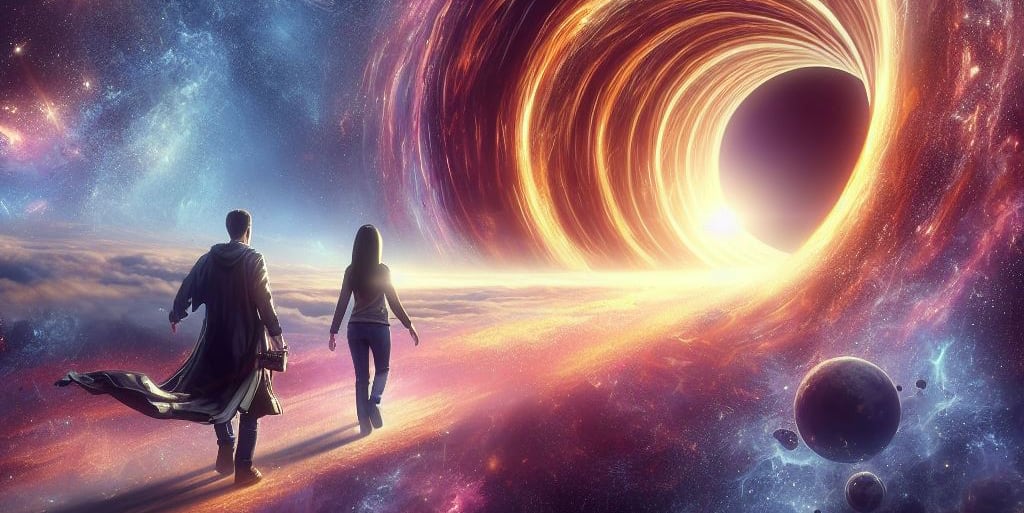
Time travel has captured our imaginations for centuries. From movies and books to scientific theories, the idea of moving backward or forward in time continues to intrigue us. But is time travel really possible? While it's still a concept mostly found in science fiction, some scientific theories suggest that, under certain conditions, traveling through time might be more than just a dream.
What is Time Travel?
Time travel means moving between different points in time, much like we move through space. Imagine hopping into a machine that could take you to the past or the future in an instant. In everyday life, time only seems to move forward, like an arrow. However, certain theories in physics suggest that time might not be as rigid as it appears.
Einstein’s Theory of Relativity
The most famous theory supporting the possibility of time travel comes from Albert Einstein. In 1905, Einstein proposed his **Theory of Special Relativity**, which introduced the idea that time is not constant. According to this theory, time and space are linked together in what scientists call "spacetime."
One of the key ideas from this theory is that time moves slower the faster you go. This means that if you could travel at or near the speed of light (the fastest thing in the universe), time would pass differently for you compared to someone standing still. For example, if an astronaut were to travel into space at light speed and return to Earth, they might only have aged a few years, while decades could have passed for everyone else on Earth.
This effect is called **time dilation**, and it has been proven through experiments. However, it only affects time in small ways because we can't yet travel anywhere near the speed of light.
Black Holes and Wormholes
Another possible way to travel through time is connected to **black holes** and **wormholes**. A black hole is a region in space where gravity is so strong that not even light can escape. According to Einstein’s equations, the intense gravity of a black hole can bend time and space in extreme ways. Some scientists think that, near a black hole, time might slow down so much that it could allow someone to see far into the future.
Wormholes, on the other hand, are theoretical tunnels in spacetime that could link two different points in time and space. If wormholes exist (we haven't found one yet), they might work like shortcuts, allowing someone to jump from one point in time to another. Think of it as cutting through a folded piece of paper to get from one end to the other faster.
The Paradoxes of Time Travel
While these ideas sound exciting, they also come with problems. One famous issue is the **grandfather paradox**. Imagine you traveled back in time and accidentally stopped your grandfather from meeting your grandmother. If that happened, you wouldn't be born, but if you weren’t born, you couldn’t have traveled back in time to stop them. This paradox shows how tricky time travel to the past can be.
Some scientists think that the laws of the universe might prevent time travel to the past to avoid such paradoxes. Others suggest that if you traveled to the past, you would enter an alternate timeline or universe, which means you wouldn't affect your original timeline.
Time Travel in the Future?
Right now, time travel remains a theory, with no real evidence that humans can move through time in any significant way. Even though experiments have shown that time can be bent and slowed down, we are still far from building a time machine.
But that doesn’t mean it’s impossible. Just as flight and space travel once seemed like fantasy, the future may bring new discoveries that change the way we think about time. Until then, time travel will remain one of the most exciting ideas in science and fiction, fueling our dreams of exploring both the past and the future.
Conclusion
Time travel might be one of the most complex topics in science, but it’s also one of the most fascinating. While we don’t yet know if we’ll ever be able to move through time like we do through space, the theories that suggest it’s possible open up a world of possibilities. Whether it’s speeding up time by traveling at incredible speeds or finding shortcuts through wormholes, the journey of understanding time travel has only just begun.
About the Creator
Keep reading
More stories from Parth Iataliya and writers in Earth and other communities.
The Jurassic Period: A Time of Giants
The Jurassic Period, a fascinating era in Earth's history, took place between 201 and 145 million years ago. It’s best known for the incredible dinosaurs that roamed the planet, but many other exciting changes were also happening during this time. The Jurassic was part of the larger Mesozoic Era, also known as the "Age of Reptiles," and it came right after the Triassic Period. It was a time when life on Earth truly flourished.
By Parth Iataliyaabout a year ago in Earth
Met Office Names All the UK Areas Facing Snow This Weekend
The Met Office has issued fresh forecasts warning that snow is set to affect large parts of the UK this weekend, with wintry conditions expected to develop from Saturday and persist into Sunday. As colder air moves south and meets bands of moisture, forecasters say a mix of snow, sleet, and freezing rain could disrupt travel and daily life across multiple regions.
By Aarif Lashari3 days ago in Earth
Met Office Names All the UK Areas Facing Snow on Saturday and Sunday
The Met Office has confirmed that snow is likely to affect multiple parts of the UK this weekend, with cold air sweeping southwards and increasing the risk of wintry conditions on both Saturday and Sunday. Forecasters say a combination of falling temperatures and incoming weather systems could bring snow, sleet, and icy conditions, particularly across northern and central regions.
By Aarif Lashari3 days ago in Earth



Comments
There are no comments for this story
Be the first to respond and start the conversation.