
The Jurassic Period: A Time of Giants
jurassic period

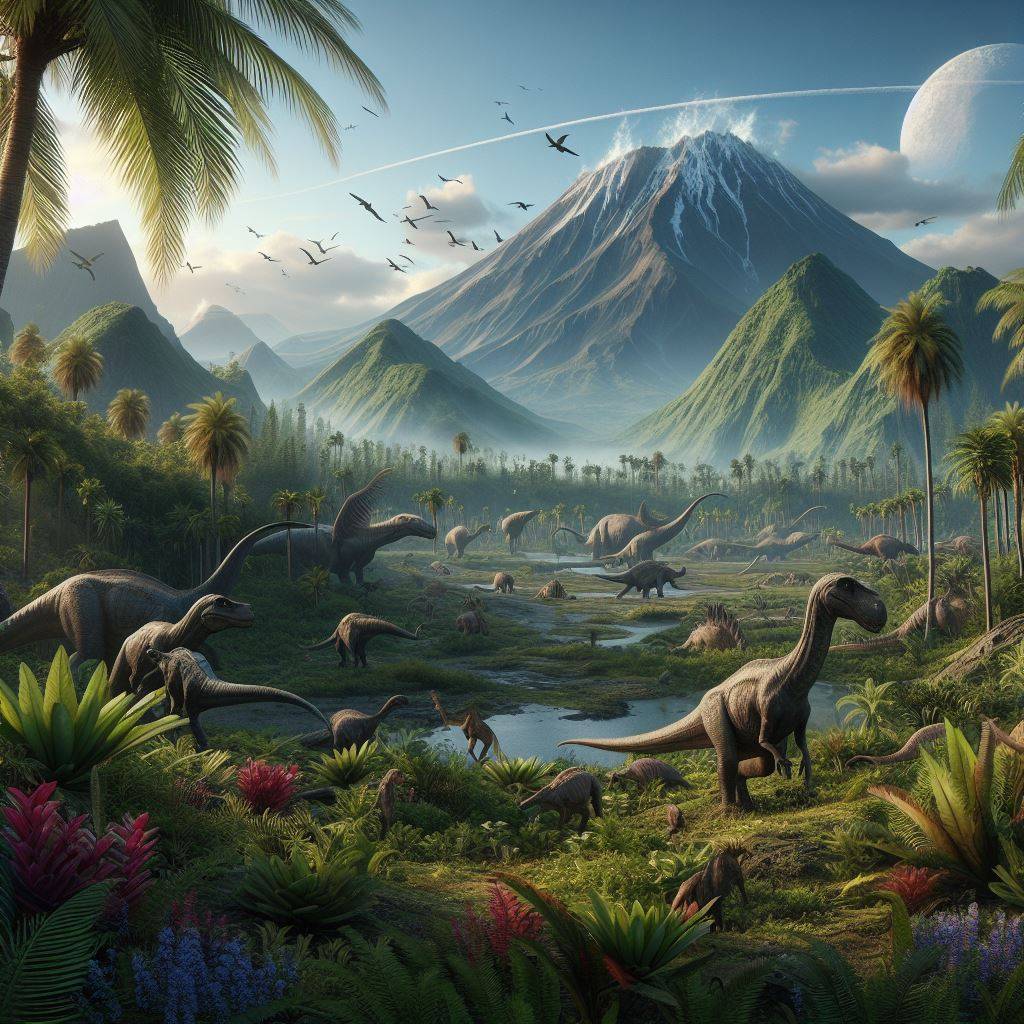
The Jurassic Period, a fascinating era in Earth's history, took place between 201 and 145 million years ago. It’s best known for the incredible dinosaurs that roamed the planet, but many other exciting changes were also happening during this time. The Jurassic was part of the larger Mesozoic Era, also known as the "Age of Reptiles," and it came right after the Triassic Period. It was a time when life on Earth truly flourished.
The Land of Dinosaurs
When people think of the Jurassic Period, they often picture massive dinosaurs, and for good reason. During this time, dinosaurs ruled the land, growing larger and more diverse than ever before. Some of the most famous dinosaurs, like **Brachiosaurus** and **Stegosaurus**, lived during this period. The plant-eating Brachiosaurus was one of the largest land animals to ever exist, with a long neck that allowed it to reach the tallest trees. On the other hand, Stegosaurus, with its distinct plates along its back and spiky tail, used its tail for defense against predators.
Speaking of predators, this was also the time of **Allosaurus**, a large, fierce carnivore that hunted smaller dinosaurs. Though not as famous as the later Tyrannosaurus rex, Allosaurus was one of the top predators of the Jurassic.
A Changing World
The Earth itself was very different during the Jurassic Period. The supercontinent Pangaea, which had formed earlier in the Mesozoic Era, was starting to break apart. This split created new oceans and reshaped the land. The separation of the continents created new coastlines, which brought about changes in climate and geography. Warmer temperatures and a more tropical climate covered much of the planet. This allowed lush forests and vast vegetation to spread, providing plenty of food for plant-eating dinosaurs.
Along with the dinosaurs, the Jurassic Period saw the rise of other creatures. **Flying reptiles**, like the **Pterosaurs**, soared in the skies. These weren’t dinosaurs, but they were close relatives. Some, like the famous **Pterodactyl**, had long wingspans and sharp beaks to catch fish and other prey.
In the oceans, marine reptiles, like **Ichthyosaurs** and **Plesiosaurs**, dominated. Ichthyosaurs looked somewhat like dolphins, with streamlined bodies perfect for fast swimming. Plesiosaurs had long necks and powerful flippers, making them fearsome hunters in the water.
Early Birds and Mammals
The Jurassic Period also marked the first appearance of **birds**. One of the earliest known birds, **Archaeopteryx**, lived during this time. It had feathers and wings, but also had sharp teeth and a long tail, traits similar to its dinosaur relatives. These early birds were small and would have looked more like feathered reptiles than the birds we see today.
While dinosaurs and reptiles were the stars of the Jurassic, small mammals also began to evolve during this time. These early mammals were tiny, often no larger than a squirrel. They likely stayed out of sight, avoiding the giant dinosaurs that dominated the land.
Plants and Forests
The Jurassic landscape was covered in rich forests, mainly made up of **conifers**, which are trees that produce cones, like modern-day pines and firs. There were no flowering plants yet, but **ferns** and other primitive plants were abundant, providing food for many herbivorous dinosaurs. These plants thrived in the warm and humid conditions of the time.
The End of the Jurassic
The Jurassic Period ended about 145 million years ago, giving way to the Cretaceous Period. While there wasn’t a sudden mass extinction at the end of the Jurassic, changes in the environment and continued evolution meant new species of dinosaurs and other animals would rise in the Cretaceous, leading to even more remarkable developments.
In summary, the Jurassic Period was an extraordinary time in Earth's history. It was a period of gigantic dinosaurs, evolving birds, and lush, tropical forests. Though it ended millions of years ago, the Jurassic’s legacy lives on through the fossils we find today, and the era continues to capture the imaginations of people worldwide.
About the Creator
Keep reading
More stories from Parth Iataliya and writers in Earth and other communities.
The Mysterious Phenomenon of Black Holes
Black holes, one of the most fascinating and enigmatic phenomena in the universe, have captivated scientists and astronomers for decades. These cosmic entities, defined by their immense gravitational pull, are so strong that nothing, not even light, can escape their grasp. This leads to their name, as they appear completely black against the backdrop of space. Though once a theoretical concept, black holes have since become a pivotal subject of astrophysical research, leading to groundbreaking discoveries that shape our understanding of the cosmos.
By Parth Iataliyaabout a year ago in Earth
Disappeared Bodies, Mass Burials and ‘30,000 Dead’
For years, reports emerging from Iran have painted a grim and often confusing picture of death tolls tied to political unrest, state violence, pandemics, and human rights abuses. Allegations of disappeared bodies, mass burials, and claims of “30,000 dead” have circulated widely among activists, exiled communities, and international media. Yet, inside Iran, official figures often tell a very different story.
By Aarif Lashari6 days ago in Earth
Tributes Pour In for Beloved Actress Catherine O’Hara
Tributes are pouring in from fans, fellow actors, and filmmakers celebrating the career and influence of Catherine O’Hara, one of the most beloved figures in film and television comedy. Known for her unforgettable roles, sharp wit, and emotional range, O’Hara has built a legacy that spans decades and generations of audiences.
By Aarif Lashari2 days ago in Earth


Comments
There are no comments for this story
Be the first to respond and start the conversation.