
The Fascinating Evolution of Life on Earth
From Origins to Modern Humans

Introduction
The evolution of life on Earth is a complex and fascinating topic that has captivated the imagination of scientists and non-scientists alike for centuries. The story of how life arose and diversified on our planet over billions of years is one of the greatest mysteries of all time, and it has been the subject of much scientific research and debate.
In this article, we will take a comprehensive look at the evolution of life on Earth, beginning with the origins of life and ending with the emergence of modern humans.
Origins of Life
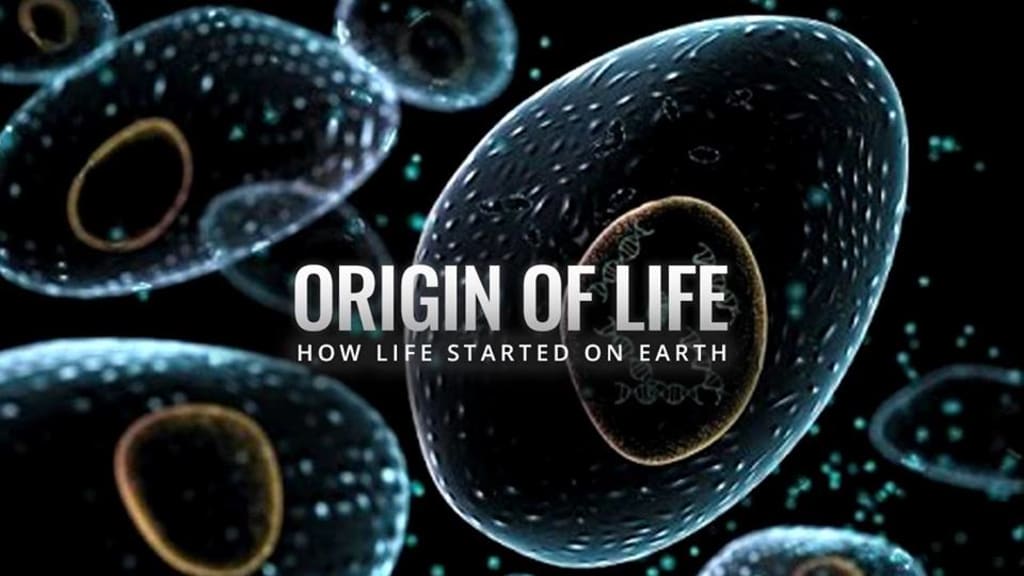
The origins of life on Earth are still shrouded in mystery, and scientists continue to debate the exact mechanisms that led to the emergence of the first living organisms. However, most researchers agree that life on Earth likely arose from simple organic molecules that formed spontaneously in the early Earth's atmosphere and oceans.
One leading hypothesis, known as the "RNA world" hypothesis, suggests that RNA (ribonucleic acid) may have been the first self-replicating molecule. RNA is similar in structure to DNA (deoxyribonucleic acid), which carries genetic information in all living organisms, and it can also catalyze chemical reactions like enzymes. This suggests that RNA could have served as a template for the formation of more complex molecules and eventually led to the development of living cells.
Another hypothesis suggests that life may have originated around hydrothermal vents on the ocean floor. These vents release hot, mineral-rich water that may have provided the energy and chemical building blocks necessary for life to emerge.
The first known fossil evidence of life on Earth dates back to around 3.5 billion years ago, in the form of microbial mats found in Western Australia. These microbial mats are thought to have been formed by photosynthetic bacteria, which were able to use sunlight to convert carbon dioxide and water into energy and organic molecules.
The Rise of Oxygen
One of the most significant events in the evolution of life on Earth was the rise of oxygen in the atmosphere, which occurred around 2.4 billion years ago. Prior to this event, the Earth's atmosphere was largely composed of carbon dioxide, nitrogen, and other gases.
The rise of oxygen was likely due to the emergence of photosynthetic organisms that were able to produce oxygen as a byproduct of their metabolic processes. Over time, the accumulation of oxygen in the atmosphere led to the development of the ozone layer, which protects life on Earth from harmful ultraviolet radiation.
The emergence of oxygen also had a significant impact on the evolution of life itself. Oxygen is a highly reactive molecule that can be toxic to many organisms, and it likely drove the evolution of new metabolic pathways that were able to use oxygen to produce energy.
The Evolution of Eukaryotes
One of the most significant steps in the evolution of life on Earth was the emergence of eukaryotic cells, which are characterized by the presence of a nucleus and other membrane-bound organelles.
Eukaryotes likely emerged through a process known as endosymbiosis, in which one bacterium is engulfed by another and eventually evolves into an organelle within the host cell. For example, mitochondria, which are responsible for producing energy in eukaryotic cells, are thought to have originated from free-living bacteria that were engulfed by early eukaryotic cells.
The emergence of eukaryotes likely had a significant impact on the evolution of life on Earth, as it allowed for the development of more complex multicellular organisms.
The Cambrian Explosion
One of the most significant periods in the evolution of life on Earth was the Cambrian explosion, which occurred around 540 million years ago. During this period, there was a rapid diversification of life forms, including the emergence of many of the major animal phyla that exist today.
The causes of the Cambrian explosion are still the subject of much debate among scientists. One hypothesis suggests that it may have been driven by a sudden increase in atmospheric oxygen levels, which allowed for the evolution of more complex and energy-intensive organisms.
Another hypothesis suggests that the Cambrian explosion was the result of ecological interactions between organisms, such as the development of predator-prey relationships and the emergence of new niches in the ecosystem.
Regardless of the exact cause, the Cambrian explosion marked a significant milestone in the evolution of life on Earth, as it led to the emergence of many of the complex, multicellular organisms that exist today.
The Age of Dinosaurs
One of the most iconic periods in the evolution of life on Earth was the age of dinosaurs, which lasted from around 245 million years ago to 66 million years ago. During this period, the Earth was dominated by large, reptilian creatures like Tyrannosaurus rex and Triceratops.
The evolution of dinosaurs is thought to have been driven by a combination of factors, including environmental changes, competition between species, and the development of new adaptations.
One of the most significant events in the evolution of dinosaurs was the emergence of birds, which are thought to have evolved from small, feathered theropod dinosaurs around 150 million years ago. Today, birds are one of the most diverse and successful groups of animals on Earth, with over 10,000 known species.
The Rise of Mammals
Following the extinction of the dinosaurs around 66 million years ago, mammals began to diversify and occupy many of the ecological niches that were previously dominated by reptiles. Over time, mammals evolved a wide range of adaptations that allowed them to survive and thrive in a variety of environments.
One of the most significant adaptations of mammals was the development of the placenta, which allows for the nourishment and protection of developing offspring within the mother's body. This adaptation allowed mammals to give birth to live young and provided a significant advantage in terms of reproductive success.
Today, mammals are one of the most diverse and successful groups of animals on Earth, with over 5,000 known species ranging from tiny shrews to massive elephants.
The Emergence of Humans
The evolution of humans is a relatively recent event in the history of life on Earth, with the first members of our genus, Homo, appearing around 2.5 million years ago. Over time, humans evolved a wide range of adaptations that allowed them to survive and thrive in a variety of environments.
One of the most significant adaptations of humans was the development of large brains, which allowed for the development of language, culture, and technology. These adaptations allowed humans to develop complex societies and dominate many of the ecological niches on Earth.
Today, humans are the most dominant species on Earth, with a population of over 7 billion individuals spread across the globe. However, the impact of human activities on the planet and its ecosystems has raised concerns about the long-term sustainability of our species and the survival of many other organisms.
Conclusion
The evolution of life on Earth is a complex and fascinating topic that has captivated the imagination of scientists and non-scientists alike for centuries. From the origins of life in simple organic molecules to the emergence of complex multicellular organisms and the domination of the planet by humans, the story of life on Earth is one of the greatest mysteries of all time.
While there is still much to learn and discover about the evolution of life on Earth, scientists have made significant progress in unraveling the mysteries of our planet's past. By studying the fossil record, analyzing genetic data, and exploring the ecology of modern organisms, researchers continue to shed new light on the origins and diversification of life on our planet.
About the Creator
Keerthana Thirumalairaj
An Independent Solitude girl, who recently found the interests in writings and converts Facts and imaginations into writings.
Keep reading
More stories from Keerthana Thirumalairaj and writers in Earth and other communities.
The Formation and Evolution of Earth: From the Big Bang to Life Emergence
Introduction The formation of the Earth is a complex process that occurred over billions of years. Understanding how our planet came into existence requires a deep understanding of the early universe and the processes that led to the formation of our solar system.
By Keerthana Thirumalairaj3 years ago in Earth
Relativistic Colour and the Physics Behind Gold's Golden Glow
Pick up a piece of gold jewellery and hold it near a window. That warm, unmistakable yellow glow catches the light in a way that feels almost alive. It is not simply pretty. It is, as it turns out, physically extraordinary.
By CurlsAndCommas5 days ago in Earth



Comments
There are no comments for this story
Be the first to respond and start the conversation.