
The Evolution of Modern Science
"Unraveling the Tapestry of Modern Science: Tracing the Threads that Led to Today's Scientific Advancements"
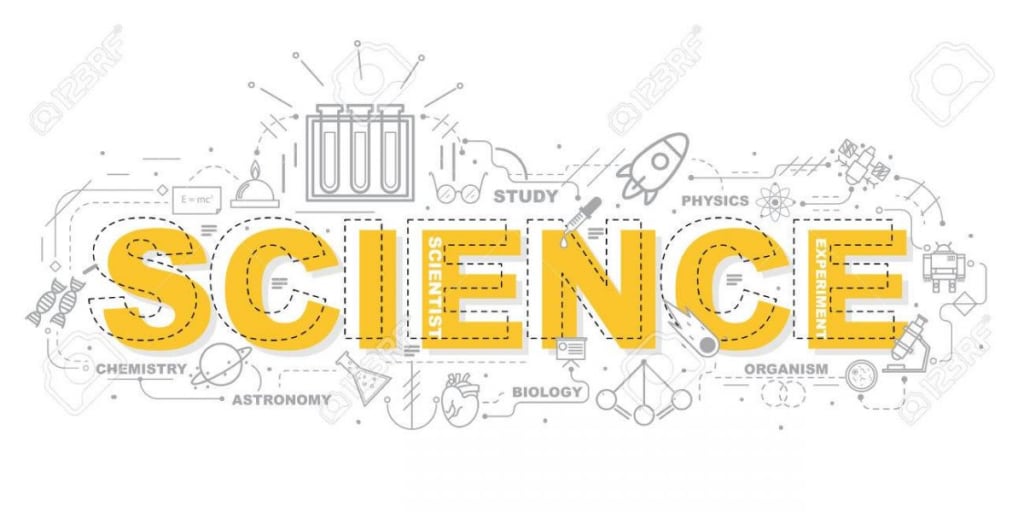
The evolution of modern science can be traced back to the beginning of the scientific revolution in the 16th and 17th centuries. During this period, there was a great change in the worldview of society, and the traditional Aristotelian approach to science was replaced by more empirical and experimental methods.
One of the main figures of the scientific revolution was Galileo Galilei, who is considered the father of modern science. Galileo's work on astronomy and physics challenged the ideas that existed at the time and helped create new scientific methods based on observation, experimentation, and mathematical applications.
Another important figure in the scientific revolution is Sir Isaac Newton, who developed the laws of motion and universal gravitation. Newton's work was instrumental in the development of modern physics and had a profound impact on our understanding of nature.
The Scientific Revolution also gave rise to a new scientific community that included figures such as Robert Boyle, Francis Bacon, and René Descartes. These scientists work together to develop new techniques and ideas and establish institutions such as the Royal Society in England to promote scientific research and collaboration.
The 18th and 19th centuries saw the advancement of science, such as the discovery of new elements and the development of the theory of evolution by Charles Darwin. These discoveries led to a greater understanding of nature and the development of new technologies that transformed society.
In the 20th century, science continued to grow at an unprecedented rate, with great advances in fields such as physics, chemistry, biology, and medicine. These discoveries include the development of quantum mechanics, the discovery of the structure of DNA, and the development of antibiotics and other life-saving drugs.
Today advances in fields such as artificial intelligence, robotics, and renewable energy continue to play an important role in our scientific community, shaping the world around us. As we continue to explore new frontiers in science and technology and work to create a better future for all, it is important to remember the contributions and build on the legacy of the great scientists who came before us.
One of the main characteristics of modern science is its dependence on empirical evidence and experiments. This approach is different from the traditional Aristotelian approach, which is based on logical deduction and a set of predetermined principles. The scientific method, as it is known today, involves a systematic approach to observation, hypothesis testing, and experimentation. This approach has been instrumental in the development of modern science and has allowed scientists to make significant progress in our understanding of the natural world.
Another key feature of modern science is its interdisciplinary nature. Many of the most important discoveries in science are the result of the collaboration of scientists from different fields. For example, the development of the theory of relativity includes the contribution of physicists and mathematicians, while the discovery of the structure of DNA is the result of cooperation between biologists and chemists.
In addition to its international character, modern science is also characterized by its global reach. The progress of science and technology is not only in a certain country or region but it is divided and distributed throughout the world. This global reach plays an important role in the development of new technologies and allows scientists to work together to solve the world's most pressing problems.
Despite the many achievements of modern science, there are also some challenges faced by scientists. One of the biggest challenges is the public perception of science and its role in society. Many people are skeptical of scientific claims and often have a misunderstanding of the scientific method and how it works.
Another challenge facing scientists is the increasing complexity of scientific problems. As science and technology advance, the problems faced by scientists become more complex and require an interdisciplinary approach. This can be difficult for scientists
About the Creator
Keep reading
More stories from noman dhudhi and writers in Earth and other communities.
The challenges and opportunities of space exploration in the 21st century.
Introduction: Since the beginning of time, humans have gazed at the stars. Space exploration has always been a fascinating topic, and the idea of exploring the unknown has captured our imaginations for centuries. With the advancement of modern technology, space exploration has become a reality and mankind has made significant progress in this field in recent decades. Space exploration in the 21st century presents both challenges and opportunities, which will be explored in detail in this article.
By noman dhudhi3 years ago in Earth
When Two Young Stars Collided: A Cosmic Catastrophe from 500 Years Ago
About 500 years ago, a dramatic event unfolded in our galaxy when two young stars violently collided and destroyed each other. Although it happened centuries ago, astronomers have only recently been able to piece together the evidence of this cosmic catastrophe. The discovery has provided scientists with rare insights into how stars interact, evolve, and sometimes meet explosive ends.
By Irshad Abbasi 2 days ago in Earth



Comments (1)
Good