
The challenges and opportunities of space exploration in the 21st century.
"Exploring the Final Frontier: Navigating Challenges and Embracing Opportunities in 21st Century Space Exploration"
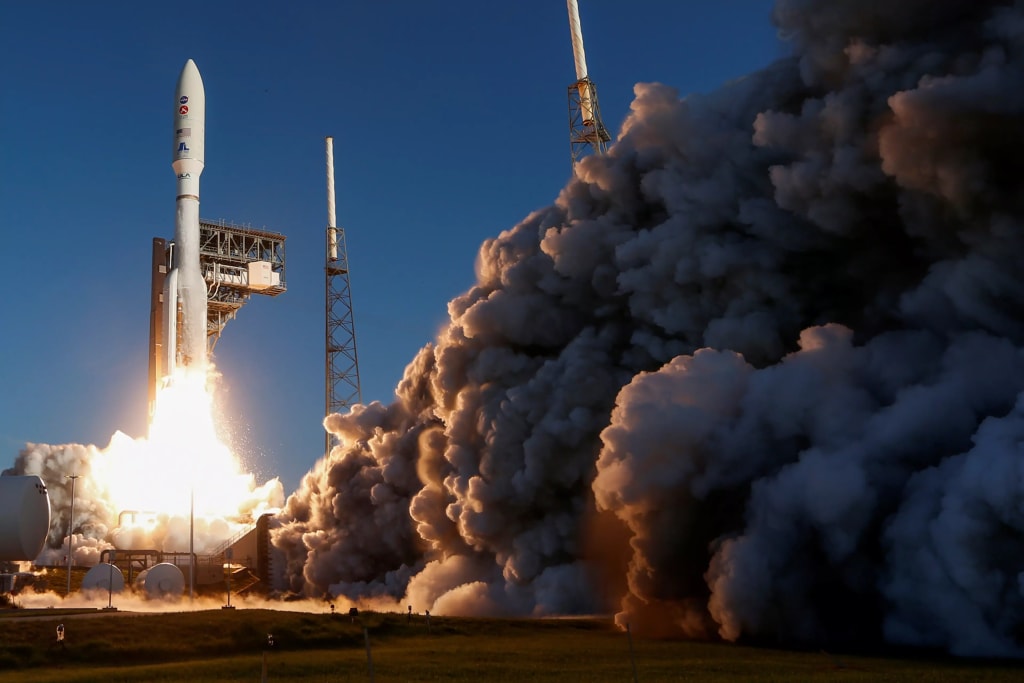
Introduction:
Since the beginning of time, humans have gazed at the stars. Space exploration has always been a fascinating topic, and the idea of exploring the unknown has captured our imaginations for centuries. With the advancement of modern technology, space exploration has become a reality and mankind has made significant progress in this field in recent decades. Space exploration in the 21st century presents both challenges and opportunities, which will be explored in detail in this article.
The challenge of space exploration
Price:
One of the main challenges of space exploration is the high cost associated with it. Building and flying spaceships is a complex and expensive endeavor that requires enormous resources. Governments around the world have invested billions of dollars in space exploration, but the high costs also limit the number of missions that can be carried out.
Technological limitations:
Space exploration requires advanced technology that can withstand the harsh conditions of space. Developing such technology is time-consuming, requiring extensive research and testing. In addition, technological limitations often limit the scope of space exploration activities. For example, we cannot travel to other galaxies because of the current distance.
Risk to human health:
Space travel poses significant risks to human health, including exposure to radiation and microgravity. These risks can lead to long-term health problems such as muscle and bone loss, cardiovascular problems, and even cancer. In addition, long-term space travel can also cause psychological effects on astronauts, such as isolation, stress, and depression.
Space debris:
In recent years, the amount of space debris orbiting the Earth has increased significantly, posing a significant risk to spacecraft and satellites. This dust is often created by explosions of ancient satellites or collisions with extraterrestrial objects. As the number of satellites in space increases, so does the risk of collisions, making space travel increasingly dangerous.
Opportunity for space exploration
Scientific discoveries:
Space exploration has the potential to make new scientific discoveries and advance our understanding of the universe. For example, studying other planets and moons can help us understand how our planet formed and evolved. In addition, space exploration can lead to the discovery of new resources, such as minerals and water, which can be used to support life on Earth or for future space missions.
Technological progress:
Space exploration requires the development of advanced technologies that can have practical applications on Earth. For example, the development of materials that can withstand the extreme conditions of space can also be used in various sectors on Earth. In addition, space exploration can lead to advances in fields such as robotics, artificial intelligence, and telecommunications.
International cooperation:
Space exploration has the potential to unite nations towards a common goal. International cooperation can lead to the sharing of resources, expertise, and funding that can help accelerate space exploration. In addition, international cooperation can lead to the development of new partnerships and collaborations that can benefit countries in other areas.
Inspiration for future generations:
Space exploration has captured the imagination of people around the world, inspiring future generations to pursue careers in science, technology, engineering, and mathematics (STEM). Advances in space exploration have inspired people to think big and dream of the possible, leading to the development of new ideas and innovations.
The Future of space exploration:
Despite the challenges associated with space exploration, there is no doubt that it will be a major focus of the 21st century. NASA's Artemis program, which aims to land the first woman and the next man on the moon by 2024, is a clear example of this. In addition, private companies such as SpaceX, and Blue Origin are also investing heavily in space exploration.
About the Creator
Keep reading
More stories from noman dhudhi and writers in Earth and other communities.
Tourism Of pakistan
Pakistan is a country rich in cultural heritage, natural beauty, and a diversity of landscapes that make it an ideal destination for tourists. Despite facing challenges due to security concerns and the COVID-19 pandemic, the tourism industry in Pakistan has been steadily growing in recent years, and there is much to explore in this fascinating country.
By noman dhudhi3 years ago in Earth
Nuclear Transmutation: The Accidental Dream of Making Gold
Picture a laboratory humming with quiet intensity, banks of instruments blinking in the low light, and somewhere inside a shielded reactor chamber, something almost magical is happening. An element is changing. One thing is becoming another. What was mercury is now, atom by atom, becoming gold.
By CurlsAndCommas6 days ago in Earth


Comments
There are no comments for this story
Be the first to respond and start the conversation.