
The Era of Soilless Growing Medium| Coco Substrates
Coco peat is revolutionizing the Horticulture Industry!
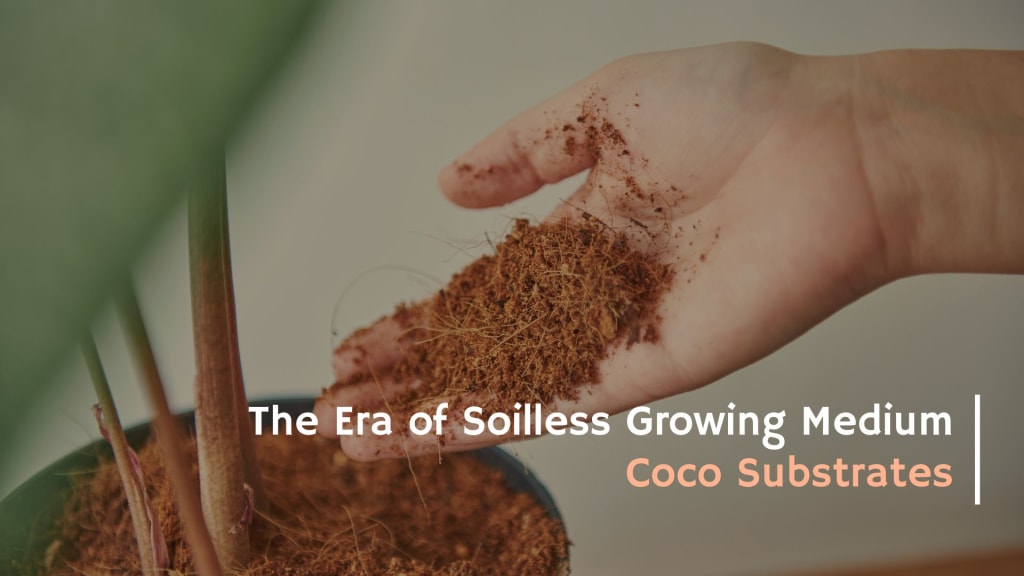
As more and more people are becoming interested in sustainable gardening practices, the use of coco substrates as an alternative to soil is gaining popularity.
If you’re an avid gardener or farmer, you know that the quality of your growing medium can make all the difference in the success of your crops. While traditional soil-based substrates have long been the go-to option, there’s a new player in town that’s worth considering: coco substrates.
Coco substrates, the new player!
Made from the fibrous husks of coconut shells, coco substrates offer a sustainable and environmentally friendly alternative that’s gaining popularity among growers worldwide. And for good reason. Not only do coco substrates provide excellent aeration and drainage, but they also contain natural plant hormones and nutrients that can help your plants thrive.
But that’s not all. Coco substrates are also a renewable resource that’s widely available, making them an excellent choice for those looking to reduce their environmental footprint. And unlike soil-based substrates, coco substrates are free from pests, diseases, and weeds, which means less work and hassle for you.
So, whether you’re an urban gardener, a hobbyist farmer, or a commercial grower, coco substrates are worth exploring for your next growing project. In this blog post, we’ll take a closer look at what coco substrates are, how they work, and why they’re a great choice for all kinds of growers. So, let’s dive in!
Advantages of Coco Substrates:
1. Sustainable: Coco substrates are an eco-friendly alternative to peat moss, which is often harvested from fragile wetlands. Coconut husks are a waste product of the coconut industry, and using them as a growing medium helps to reduce waste and promote sustainable practices.
2. pH Neutral: Coco substrates have a neutral pH, which means that they do not need to be amended with lime or sulfur-like soil. This makes it easier to maintain the optimal pH range for your plants.
3. Excellent Water Retention: Coco substrates have excellent water retention properties, which means that they can hold onto moisture for longer periods of time than traditional soil. This makes them a great choice for plants that require consistent moisture levels.
4. Good Aeration: Coco substrates have good aeration properties, which means that air can flow freely through the substrate, providing oxygen to plant roots. This helps to prevent root rot and other problems that can occur when plants are grown in soil that is too dense.
5. Nutrient Rich: Coco substrates contain natural plant growth hormones and micronutrients, which can help to promote healthy plant growth. They also have a high cation exchange capacity (CEC), which means that they can hold onto nutrients and release them to plants as needed.
How to Use Coco Substrates?
Coco substrates can be used as a standalone growing medium, or they can be mixed with other materials like perlite or vermiculite to improve aeration and drainage. They are also commonly used in hydroponic systems.
When using coco substrates, it is important to soak them in water for several hours before planting to allow them to absorb moisture. This will also help to rinse away any excess salt or other impurities that may be present in the substrate.
Getting Started with the Coco Substrates
Getting started with Coco coir substrates is relatively easy. If you are looking for getting bulk coco substrates, find a high-quality coco substrate manufacturer in the industry. Make sure that their coco peat is acquired from the source coco peat. These kind of coco peats are free from contaminants and has been properly treated to remove any excess salts. There are many different types of coco coir substrates available, including compressed coco peat blocks, coco bricks, coco husk blocks, loose coco peats as bales, and it also available in all sorts of blends.
The choice of substrate will depend on the specific needs of your plants and the growing conditions. Bricks and blocks are compressed coco substrates that need to be soaked in water before use, while loose fibers can be used straight out of the bag.
Once you have selected your coco coir substrate, it is essential to properly hydrate it before use. This can be done by adding water and allowing the substrate to expand fully. After hydrating the substrate, it can be mixed with other growing media or used on its own. Coco coir substrates can be used for a wide range of plants, including vegetables, herbs, and ornamental plants.
Bottom line
In conclusion, coco substrates are a sustainable, pH-neutral, and nutrient-rich alternative to traditional soil-based growing mediums. They have excellent water retention and aeration properties and can be used in a variety of gardening applications. Give them a try and see how they can improve the health and vitality of your plants!
About the Creator
Karthik
A budding enthusiast on plants and soil-less growing mediums.
Keep reading
More stories from writers in Earth and other communities.
We Outpaced the Soil
We learned how to move faster than the ground beneath us. At first, it felt like progress. Roads unrolled like promises, machines hummed with the confidence of certainty, and cities rose as if the earth itself had agreed to carry our weight. We measured time in minutes saved, distances conquered, yields multiplied. We learned to outpace the seasons, to outsmart rain, to hurry seeds into obedience. We learned to treat the soil like a resource instead of a relationship.
By Jhon smith7 days ago in Earth
China Lagging in AI Is a ‘Fairy Tale,’ Mistral CEO Says
For years, a familiar narrative has circulated in Western tech circles: China is falling behind in artificial intelligence, constrained by sanctions, limited access to advanced chips, and a supposedly weaker innovation ecosystem. But according to the CEO of Mistral AI, one of Europe’s most prominent AI startups, that story is nothing more than a “fairy tale.”
By Muhammad Hassan3 days ago in Earth



Comments