
The Earth did not have oxygen from the beginning; will it disappear in the future?
Possible

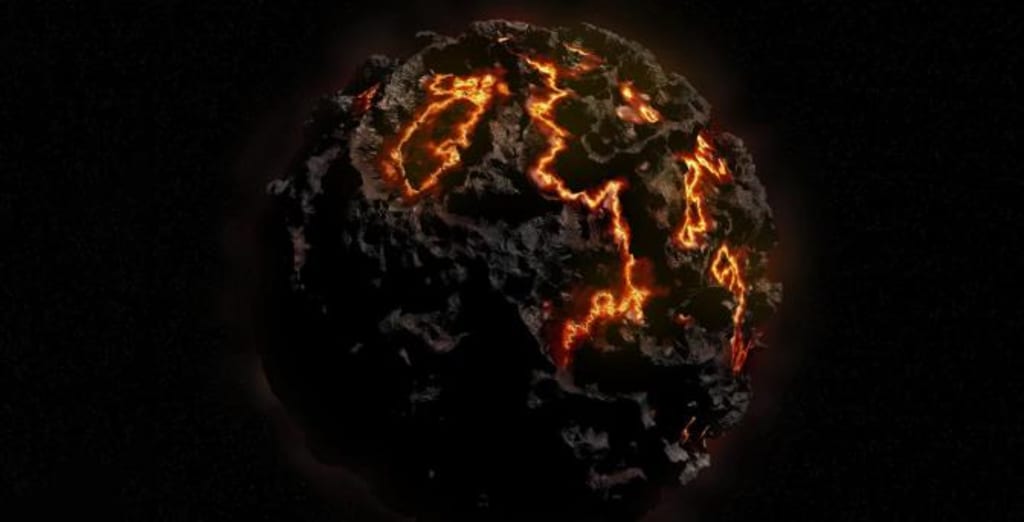
Earth is a habitable planet, and the key to its habitability is the presence of oxygen.
Of course, life does not have to have oxygen to survive, but only with oxygen can more advanced forms of life evolve. Because the more complex life forms, the greater the energy consumption, and oxygen itself can release a lot of energy, knowing how to use oxygen is the key to the evolutionary development of life. After billions of years of evolution, "aerobic organisms" have been able to leave the Earth to explore the universe, while "anaerobic organisms" are still bacteria. Oxygen is good, but it did not exist on the Earth from the beginning, in the early formation of the Earth, there is no oxygen on the Earth. During that period, the Earth was still extremely unstable, volcanic eruptions can be said to be the daily landscape of the planet, and a large number of volcanic activities released a large number of harmful gases.
As volcanoes erupted, gases such as carbon dioxide, sulfur dioxide, and methane gushed out, which naturally became the original components of the early Earth's atmosphere.
Slowly, the Earth began to cool, volcanic activity became less frequent, and subtle changes occurred in the Earth's atmosphere. No one knows how they formed spontaneously, and to this day, it remains the most difficult mystery of all. These tiny cyanobacteria can release oxygen through photosynthesis, so the Earth's atmosphere began to change. I don't know when or why, but the number of cyanobacteria began to explode, and a large amount of oxygen was released into the air.
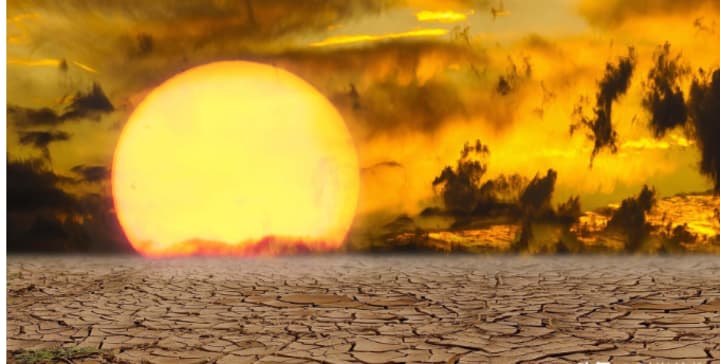
The appearance of oxygen caused the earth's atmosphere to undergo a radical change.
The first change that began to occur was in the Earth's atmosphere itself, as the appearance of oxygen quickly curbed the accumulation of volcanic gases and the structure of the atmosphere changed rapidly. Immediately afterward, the massive appearance of oxygen also affected the earth's material structure. Oxygen is oxidizing, and many substances can react with it, such as various phosphorus-containing substances that react with oxygen and are deposited in the soil and oceans, where they are rare nutrients for plant growth. The whole process from the absence of oxygen to the appearance of large quantities of oxygen on Earth lasted about 500 million years, a period that scientists call the "Great Oxidation Event". After the Earth had oxygen, it entered a virtuous cycle, life began to evolve rapidly, and the Earth became more and more incredible.
Although oxygen is good, it did not exist on the Earth from the beginning, which led scientists to think about another question, "Will oxygen always exist on the Earth?
The University of Tokyo and the Georgia Institute of Technology have conducted simulations on this issue through computer modeling, and the results show that oxygen will eventually disappear from the Earth. Why will oxygen disappear from the earth? This is a complex question, just as complex as how oxygen came to be on Earth. The Earth is a habitable planet, in addition to oxygen, there is an important factor, that is, the sun, and the sun as a star is not static, it will gradually evolve, simply put, the sun will get hotter over time. The warming of the Sun will directly affect the temperature of the Earth's atmosphere, and the increase in atmospheric temperature will affect the level of carbon dioxide in the atmosphere.
The increase in the Earth's temperature will lead to the breakdown of carbon dioxide in the atmosphere, and the decrease in carbon dioxide levels will directly affect those plants and bacteria that produce oxygen.
The plants and bacteria that carry out photosynthesis are reduced by the decrease in carbon dioxide levels, which in turn affects the oxygen levels in the atmosphere, thus entering a vicious cycle. Of course, this vicious cycle is not triggered by the evolution of the sun alone, but more importantly by the Earth itself. Scientists through the model analysis that the Earth's plate will gradually sub duct into the mantle rock layer, which will accelerate the release of volcanic gases, and the release of these gases will greatly enhance the rate of oxygen consumption, thus promoting the further reduction of the Earth's oxygen content.
The computer simulations conducted by scientists used two different sets of scenarios, one with the biosphere, and the other without the biosphere, but the final results are the same, it seems that the absence of biological participation will not affect the eventual disappearance of the Earth's oxygen.
And scientists also believe that once the Earth's atmosphere into the rapid decay of oxygen phase, then the whole process will be very rapid, probably only need 10,000 years, oxygen will be able to completely disappear from the Earth. But this process does not come too soon, according to computer simulations predict that all this should happen a billion years later, so we do not need to worry about it now. And even if the Earth's oxygen disappears, the Earth will not become a dead silence, because those anaerobic bacteria will still survive on top of the Earth, but the Earth to enter a new cycle should be no time, because the late stage of evolution of the sun will make the Earth less habitable.
About the Creator
Sue Torres
Is there any other reason to live to change the world?
Keep reading
More stories from Sue Torres and writers in Earth and other communities.


Comments
There are no comments for this story
Be the first to respond and start the conversation.