
The documentary Elizabeth Bathory: The Blood Countess Part 3.
Roman Empire, defender of the Orthodox Catholic religion and of the entire Balkan region had been disturbed. To maintain Hungary's power, King Matthias had assembled the Black Army, a mercenary force.

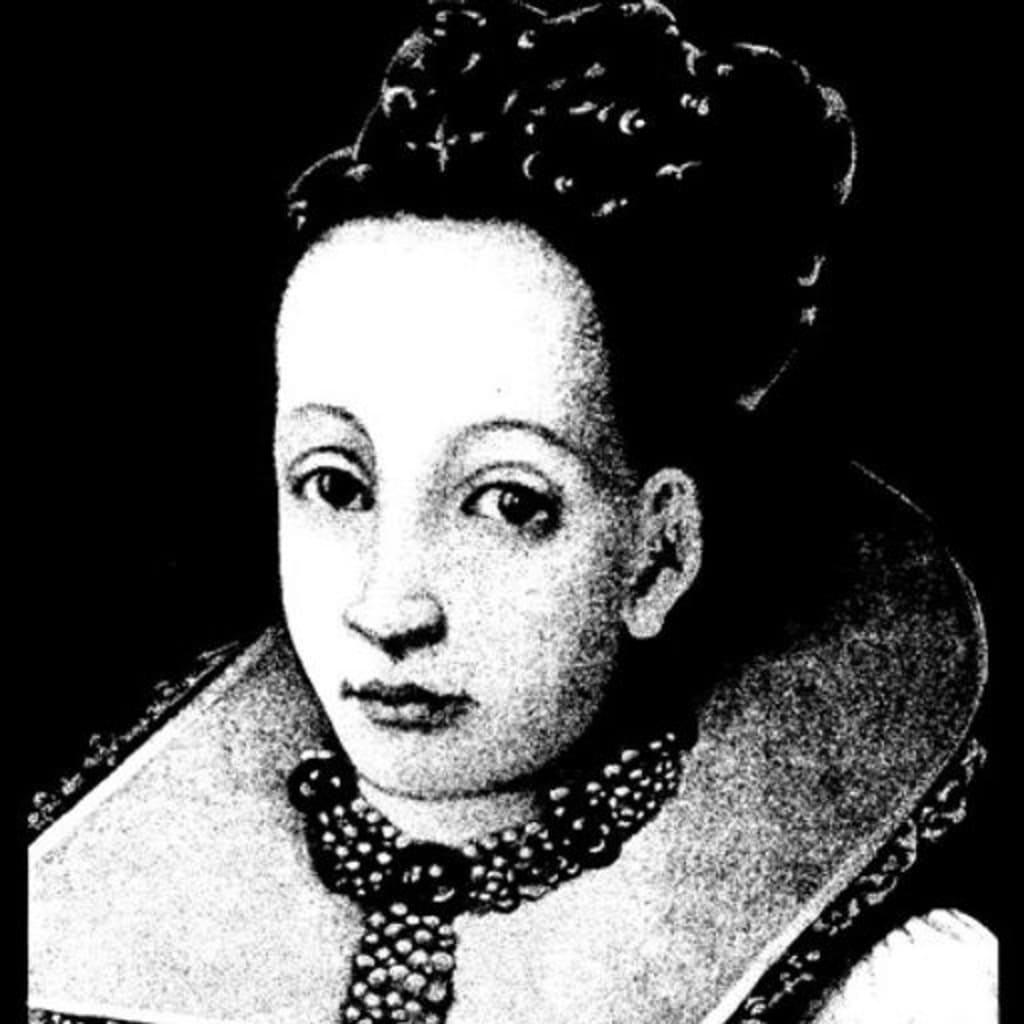
The **Habsburgs**, one of Europe’s most powerful dynasties, ruled parts of **Hungary** for an extended period and eventually took control of the entire country, maintaining authority until **1918**. Despite the turbulent political environment, the region of **Transylvania**, where much of the **Báthory family’s** influence was concentrated, prospered under a stable governance structure. The Báthory family played a significant role in Transylvania's development, and their wealth and political standing contributed to the region’s relative stability.
One of the critical reasons for the prosperity of **Transylvania** during this period was the presence of a **constitution** that safeguarded the authority of the **Transylvanian princes**. These princes were regarded as representatives of the three "historic nations" of the region: the **Hungarians**, the **Saxons**, and the **Szeklers**, an ethnic group with a strong presence in Transylvania. This framework ensured that local governance maintained a degree of autonomy and independence from external pressures, particularly from the **Habsburgs** and the **Ottoman Turks**.
Despite being caught between the **Catholic Habsburgs** to the west and the **Muslim Ottoman Turks** to the east, **Transylvania** managed to avoid the severe religious conflicts that were rampant throughout much of Europe during the period. One of the factors contributing to this peaceful coexistence was the region’s **princes**, who often encouraged religious tolerance. While the **Habsburgs** were staunchly Catholic and the **Ottomans** adhered to Islam, the rulers of Transylvania fostered a spirit of tolerance among their diverse population. This allowed various religious groups to coexist, though it should be noted that not everyone benefited equally from these policies.
For example, **Catholics**, **Lutherans**, and **Calvinists** were granted religious freedom under the **Edict of Torda** in **1568**, which was a groundbreaking moment in Christian Europe. The edict marked the first formal guarantee of religious freedom in the region, offering protection for different Christian denominations and allowing them to worship freely without fear of persecution. However, the **Romanian** or **Vlach** people, who followed the **Greek Orthodox** faith, were not included in this edict, highlighting the limits of religious tolerance at the time.
Transylvania's unique political and religious conditions allowed it to avoid much of the religious strife that plagued the rest of Europe during the Reformation and the **Thirty Years’ War**. The **Báthory family**, particularly **Stephen Báthory**, was instrumental in ensuring the region's growth and stability. **Stephen Báthory**, Elizabeth’s uncle, initially reigned as a **Voivode** (prince) before becoming the **Prince of Transylvania** in **1576**. Under his leadership, the **Principality of Transylvania** became a semi-independent state, balancing its allegiance between the **Ottoman Empire** to the east and the **Habsburgs** to the west.
Though **Stephen Báthory** himself was a devout **Roman Catholic**, his rule was marked by efforts to manage the complex religious landscape of Transylvania. His tolerance toward various Protestant denominations, such as **Lutheranism** and **Calvinism**, was crucial in maintaining peace and stability within his domain. The **Edict of Torda** was a direct result of his policies, which aimed at reducing religious tensions and promoting unity among the different factions within the region.
In **1571**, **Stephen Báthory** also established the **Royal House of Báthory**, which further solidified the family’s political and economic power in the region. Although his reign began under **Ottoman** influence, it later transitioned to **Habsburg** administration, making Transylvania a semi-independent principality with shifting allegiances. This transition was part of the broader struggle for control in **Central Europe**, where power was constantly contested between the Ottoman Empire and the Habsburgs.
Under **Báthory’s** leadership, **Transylvania** saw significant growth in terms of both its economy and political structure. The region's semi-autonomous status allowed it to thrive while navigating the complex and often dangerous geopolitics of the time. It became a haven for a diverse range of religious and ethnic groups, with the nobility and many of its princes playing an essential role in maintaining this peace. However, not all were in agreement with these policies, and the influence of the **Habsburgs** and the growing **Ottoman** threat continued to loom over the region throughout the 16th and 17th centuries.
One of the significant factors that ensured **Transylvania's** relative success in this period was the region’s ability to adapt to the changing power dynamics between the Catholic and Protestant powers in Europe. While much of the continent was embroiled in religious wars, Transylvania managed to maintain a fragile balance. The region’s **princes**, including **Stephen Báthory**, continued to navigate this delicate balance by encouraging tolerance and embracing a policy of religious pluralism that allowed different sects to coexist, at least for a time.
However, the tensions between the **Habsburgs**, **Ottomans**, and local factions in **Transylvania** were not entirely resolvable. The eventual absorption of **Transylvania** into the **Habsburg Empire** after **Elizabeth Bathory’s** death marked the end of the principality’s semi-independence. The complex and often shifting alliances between the Ottomans and Habsburgs eventually left the region under Habsburg control, and the Báthory family's influence waned.
In conclusion, the **Báthory family**, especially under **Stephen Báthory**, played a crucial role in shaping the history of **Transylvania** during the 16th century. Despite the challenges of religious conflict, Ottoman incursions, and Habsburg ambitions, Transylvania managed to prosper under a system that valued religious tolerance and political autonomy. While the region's independence eventually succumbed to external pressures, the legacy of the **Báthory family’s** rule continues to be an important chapter in the history of **Central Europe**.
About the Creator
Nora Ariana
Empowering through stories and sound igniting purpose, sparking growth, and awakening the power within.
Keep reading
More stories from Nora Ariana and writers in Earth and other communities.
A goal is a dream with a deadline
A goal is a dream with a deadline. This powerful quote reminds us that without action, dreams remain just that wishes floating in our imagination. But when we set a timeline and commit to achieving them, they evolve into goals, bringing clarity, direction, and purpose. Many people go through life holding on to dreams, hoping they will come true someday. But someday is not a day on the calendar. Dreams without structure often fade with time or get buried under the weight of daily responsibilities. Turning a dream into a goal is what separates those who achieve from those who continue to wish.
By Nora ArianaExclusive • 11 months ago
The Fiery Circle: Understanding the Pacific Ring of Fire
The **Pacific Ring of Fire** is not a literal ring of flames, but it is undoubtedly the most geologically volatile region on Earth. Stretching approximately 40,000 kilometers (25,000 miles) in a massive horseshoe shape, it traces the coasts of the Pacific Ocean—from the southern tip of South America, up along the coast of North America, across the Bering Strait, down through Japan, and into Southeast Asia and New Zealand.
By Irshad Abbasi 6 days ago in Earth


Comments
There are no comments for this story
Be the first to respond and start the conversation.