
The Deepest Holes on Earth: A Journey to the Planet's Unexplored Depths
From Pharaohs' Tombs to the Mariana Trench: Exploring Humanity's Descent into the Earth's Crust

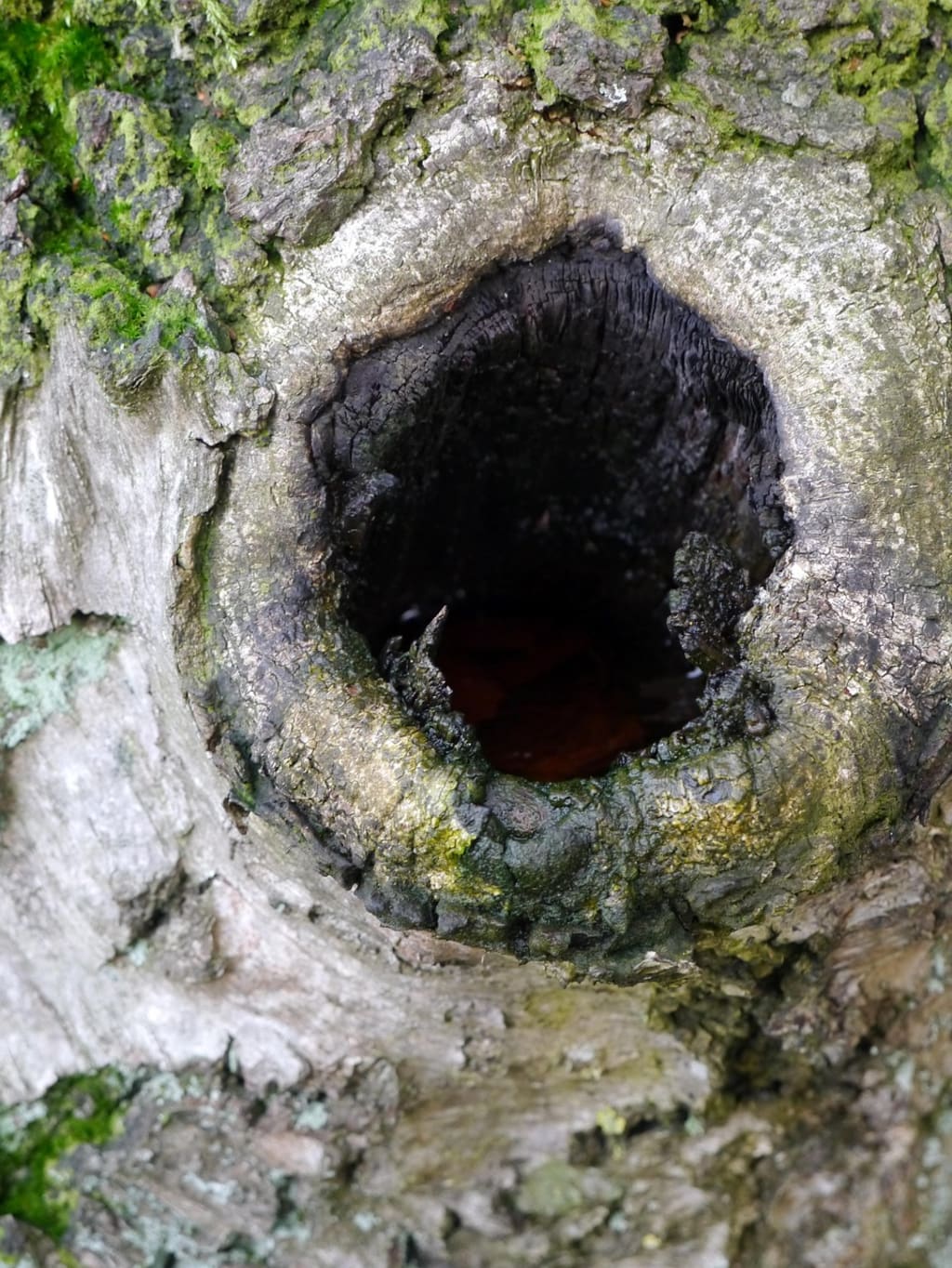
Despite humanity's advanced technology, no one has ever dug a hole all the way through the Earth's crust. This raises an intriguing question: if we made digging as deep as possible the ultimate goal of humanity, how far down could we go with modern technology? Let’s take a journey from the surface of the Earth and descend layer by layer to uncover the deepest points ever reached.
Starting on the surface, we only need to go down 1.8 meters to reach the standard grave depth in Western culture. For those worried about zombie uprisings, this is how far they would have to claw their way out. At 4 meters, we hit the depth of the tomb of Pharaoh Tutankhamun, where the famous Egyptian ruler's burial chamber was discovered. At 6 meters, metal detectors can still pick up signals, and at 12 meters, we encounter the deepest burrows ever dug by animals—by the Nile crocodile.
At 20 meters, we find ourselves at the depth of the Paris Catacombs, an underground ossuary beneath the streets of Paris that holds the remains of more than 6 million people. Twice as deep, at 40 meters, lies the world's deepest swimming pool. If drained, a fall from the surface to the bottom would take almost 3 seconds.
Digging deeper, at 100 meters, we encounter the standard burial depth for nuclear waste. Just a little further down, at 105.5 meters, is the deepest metro station in the world, located in Kyiv, Ukraine. At 122 meters, we find the deepest known roots of any plant: a fig tree in South Africa. Below that, at 220 meters, flows the Congo River, the deepest river in the world. Continuing to 240 meters, we reach the Seikan Tunnel in Japan, the world’s deepest railway tunnel, connecting the islands of Honshu and Hokkaido. Slightly further, at 287 meters, the Laerdal Tunnel in Norway holds the title for the deepest road tunnel.
At 305 meters, humanity’s engineering feats meet destructive power: this is the depth vulnerable to the B82 Earth-penetrating nuclear warhead, designed to destroy structures buried deep beneath the surface. At 392 meters, we find the Woodingdean Water Well in the UK, the deepest hand-dug hole ever created. This massive undertaking was completed in 1862 without the benefit of modern machinery.
Descending to 603 meters, we encounter a terrifying natural formation: the world’s deepest vertical cave drop. Falling into this chasm would send you plummeting farther than the height of the One World Trade Center, taking over 11 seconds to reach the bottom. At 700 meters, we reach the depth where Chilean miners were trapped for 69 days in 2010, an incredible story of survival and rescue. Going deeper, at 970 meters, we arrive at the Bingham Canyon Mine in Utah, the deepest open-pit mine in the world. This mine is so vast that you could fit the tallest building on Earth, the Burj Khalifa, inside it with over 100 meters to spare.
Deeper still, at 1,410 meters, Finland played host to the deepest concert in history, performed by the band Agonizer. At 1,642 meters, we reach the bottom of Lake Baikal in Russia, the deepest freshwater lake on the planet. By 1,857 meters, we've matched the deepest point of the Grand Canyon. The deepest known cave on Earth, the Veryovkina Cave in Georgia, is located at a staggering 2,197 meters beneath the surface.
One of the deepest points accessible to humans is the bottom of the Moab Khotsong Mine in South Africa, at 3,132 meters. This mine’s elevator ride to the bottom takes four and a half minutes. If someone fell from the top, it would take 25 seconds to hit the ground—a long time to contemplate your fate. At 3,600 meters, we find the deepest living multicellular organism, a peculiar worm thriving in conditions far removed from the surface. Humans, however, have managed to go even deeper, with the TauTona Mine in South Africa plunging to a depth of 4,000 meters. The temperature at this depth reaches a blistering 66°C (150°F), requiring extensive cooling systems for miners.
Beyond human-explored depths lies the 6,000-meter thickness of the oceanic crust beneath the seafloor. At 8,848 meters, we reach the height of Mount Everest—but flipped upside down. Continuing downward, at 10,994 meters, we encounter the Challenger Deep, the deepest point in the Mariana Trench and the ocean itself.
Remarkably, humans have drilled deeper than this. The Kola Superdeep Borehole, a Soviet project, reached 12,262 meters, making it the deepest artificial point on Earth. Despite its depth, this borehole is only 23 centimeters wide. Drilling further was impossible due to temperatures of 180°C, which exceeded the drill's limits. If you dropped a coin into this hole, it would take about 50 seconds to hit the bottom. Recently, the Kola Borehole was surpassed by the Z44-Chavyo oil and gas well, which extends 12,376 meters below the surface—equivalent to stacking 15 Burj Khalifas on top of each other. This is the deepest hole ever drilled by humans.
Despite these achievements, we have barely scratched the surface of the Earth. The planet’s crust can extend to depths of 70,000 meters, and the Earth's core lies a staggering 6,371 kilometers below. To put it in perspective, if the Earth’s surface were Lisbon, Portugal, and its core Astana, Kazakhstan, humanity’s deepest excavation would barely leave the suburbs. For now, digging through the Earth remains an unattainable dream, but the depths we have reached are a testament to human ingenuity and determination.
About the Creator
Lisa Ann Bastiaan
Fueled by curiosity and a passion for truth, I delve into mysteries, science, and human psychology. Through storytelling, I uncover the unknown, spark discovery, and ignite meaningful conversations about the fascinating.
Keep reading
More stories from Lisa Ann Bastiaan and writers in Earth and other communities.
The Abyss: A Journey to the Deepest Depths of the Ocean
The ocean is unimaginably deep—far deeper than most people realize. If we were to shave off all the land from the tops of every continent and island and use it to fill the ocean’s deepest trenches, the entire planet would be covered by an ocean roughly 2 miles (3.2 kilometers) deep. Despite this theoretical evenness, three-fourths of Earth is already covered in water, and the oceans plunge far deeper than 2 miles in many places. To truly grasp the ocean's scale and depth, let’s start with some comparisons and descend step by step into its hidden, mysterious world.
By Lisa Ann Bastiaan12 months ago in Earth
Do Not Touch the Roses
There is a quiet power in the phrase “Do Not Touch the Roses.” It sounds like a warning, but it feels like an invitation — one that asks us to pause, admire, and respect something without claiming it. Roses have long symbolized love, beauty, and passion, yet they are also guarded by thorns. That contradiction makes them the perfect metaphor for many of life’s most meaningful things.
By Aarif Lashari4 days ago in Earth
Global Dishwasher Market Size and Forecast 2025–2033: Smart Kitchens Drive a Quiet Revolution
Introduction: From Luxury to Everyday Essential Once seen as a luxury appliance reserved for high-income households, the dishwasher has now become a symbol of modern living and convenience. As global lifestyles grow increasingly fast-paced, consumers are prioritizing time-saving, hygienic, and energy-efficient solutions in their homes. The dishwasher, long underestimated in many regions, is now undergoing a global transformation—moving from optional convenience to kitchen necessity.
By Sushant. Renub Research3 days ago in Earth


Comments
There are no comments for this story
Be the first to respond and start the conversation.