
The Deepest Hole on Earth: A Journey into the Heart of Our Planet
Uncovering the Secrets of the Kola Superdeep Borehole — Humanity’s Boldest Attempt to Explore the Earth’s Inner Depths
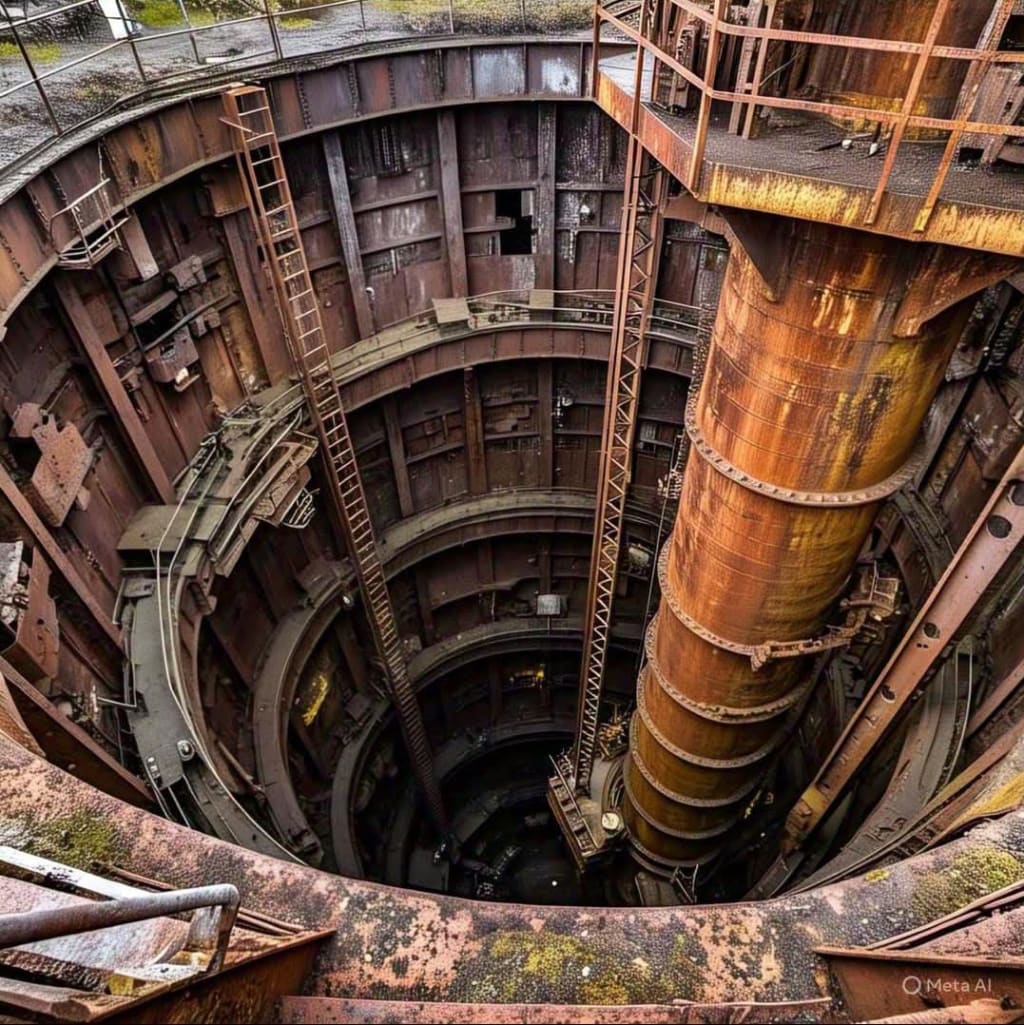
How Deep Have Humans Drilled Into the Earth?
When we look up at the night sky, we often marvel at how far humans have gone—reaching the Moon, sending probes to Mars, and even exploring the outer planets. But have you ever wondered how far we've gone downward, into our own planet? Surprisingly, despite all our technological advancements, our deepest journey into the Earth barely scratches the surface compared to its total depth.
The deepest man-made hole on Earth is known as the Kola Superdeep Borehole, located in the Kola Peninsula in northwest Russia, near the border with Norway. This remarkable scientific project began in the early 1970s, and over nearly two decades of intense drilling, researchers managed to reach a depth of 12,262 meters, or about 7.6 miles below the Earth's surface.
Not a Hunt for Gold or Oil
Unlike many deep drilling operations that aim to extract oil, gas, or precious minerals, the purpose of the Kola Superdeep Borehole was purely scientific. The Soviet Union initiated this ambitious project as part of its efforts during the Cold War era to gain a deeper understanding of Earth's interior layers. They weren’t looking for gold or silver; they were looking for answers to the mysteries hidden beneath our feet.
The scientists wanted to explore the Earth's crust, study the transition between different layers of rock, understand tectonic activity, and examine the history of the Earth as preserved in the rocks. What they found was far beyond what they had imagined.
Discoveries from the Depths
During the course of the drilling, researchers encountered rocks that were over 2.7 billion years old, revealing some of the oldest geological materials ever studied. These rocks told stories of ancient environments and long-extinct ecosystems.
Among the most fascinating discoveries were microfossils—the tiny remains of single-celled organisms—trapped in rock formations several kilometers below the surface. These microfossils were estimated to be billions of years old, indicating that life on Earth has existed in microscopic forms far deeper—and longer—than previously thought.
Another surprise was the unexpectedly high temperature encountered at the deepest levels. Scientists had anticipated rising temperatures, but what they found exceeded all predictions. At the deepest point, the temperature reached 180 degrees Celsius (356°F), making further drilling technically impossible with the equipment of that time. The rocks became more plastic and less stable, behaving more like soft clay than hard stone, which made continued drilling dangerous and impractical.
The Myth of the "Well to Hell"
In the 1990s, as news about the Kola Borehole spread, the project became the subject of urban legends and internet myths. One particularly eerie tale claimed that as scientists reached the deepest layers, they heard screams of human-like voices coming from the depths—leading to sensational headlines calling it the “Well to Hell.” A supposed audio recording circulated online, adding to the chilling effect.
According to the myth, scientists fled in fear after lowering a microphone into the borehole and hearing tortured screams. The hole was then allegedly sealed. While the story spread widely, especially in tabloids and paranormal communities, it was eventually debunked. The audio was traced back to a fabricated sound effect from a horror movie, and there was no scientific evidence to support any of the claims.
This incident reminds us how mystery and fear often accompany our attempts to explore the unknown, especially when dealing with parts of the Earth we rarely access.
What the Kola Borehole Teaches Us
The Kola Superdeep Borehole is not just a forgotten Soviet science experiment; it is a monument to human curiosity and determination. It reminds us that while we’ve sent astronauts into space and robots to Mars, we still struggle to penetrate even a fraction of the Earth's total depth.
To put it in perspective, the Earth's radius is about 6,371 kilometers (nearly 4,000 miles), but the deepest we've ever drilled is just 12.2 kilometers (7.6 miles)—less than 0.2% of the way to the center of the Earth. It's like barely scratching the skin of an apple when trying to reach its core.
The borehole also demonstrated the technical and physical limitations of deep-earth exploration. As depth increases, so does pressure and temperature, making it increasingly difficult to design machines that can survive and operate in such extreme conditions.
Why It Still Matters
Though the Kola Borehole project was officially abandoned in the early 2000s, its legacy lives on. The knowledge gained from the project is still used in geology, seismology, and even in the search for new energy sources. It helped scientists better understand plate tectonics, the formation of continents, and the thermal dynamics of Earth's crust.
In the modern era, countries like Germany, Japan, and the United States have initiated their own deep-drilling projects, often targeting ocean floors where the crust is thinner. These efforts aim to eventually drill into the mantle, the layer beneath the crust, something that no one has ever achieved before.
Conclusion: We’ve Been to the Moon, But Not to Earth’s Core
The Kola Superdeep Borehole stands as a symbol of both human achievement and our limits. It reflects our desire to understand the planet we call home and the challenges we face in doing so. It’s humbling to realize that while we can observe galaxies millions of light-years away, we still know so little about what lies beneath our own feet.
One day, perhaps with more advanced technology, we might finally reach deeper into the Earth. Until then, the journey to the center of the Earth remains more a dream of science fiction than of science fact.
About the Creator
Keep reading
More stories from Ikram Ullah and writers in Earth and other communities.
Dragonfly: The Ancient Aviator of the Skies
Introduction The dragonfly, a shimmering symbol of transformation and agility, is not just an insect — it is a marvel of evolution, a predator of precision, and a creature of deep cultural significance. Found across almost every continent, dragonflies have fascinated humanity for millennia. From their prehistoric lineage to their mesmerizing flight mechanics, the story of the dragonfly is as complex and fascinating as the creature itself.
By Ikram Ullah8 months ago in Earth
UK Aviation Reforms Could Sideline Public Input Over Flight Paths, Campaigners Warn
The UK government’s plans to modernise airspace have sparked controversy. While aimed at improving efficiency, reducing delays, and supporting airport expansion, critics warn that these reforms could marginalise public input — leaving communities under flight paths with little say in decisions that directly affect their homes, health, and quality of life.
By Aarif Lashariabout 5 hours ago in Earth


Comments (2)
That Kola Superdeep Borehole is seriously impressive. It's crazy how deep they got, considering it was just for science. I wonder what it was like to drill that far. Must've been a huge challenge. And those discoveries of ancient rocks and microfossils? Mind-blowing. It makes you realize how much we still don't know about our own planet.
That Kola Superdeep Borehole is seriously impressive. It's crazy how deep they got just for science. I wonder what it was like to drill that far down. Must've been a huge challenge. And those discoveries of ancient rocks and microfossils? Mind-blowing. It makes you realize how much we still don't know about our own planet. What do you think was the most surprising thing they found?