
Dragonfly: The Ancient Aviator of the Skies
A Journey Through the Evolution, Biology, Behavior, and Symbolism of Nature’s Most Enigmatic Insect
Introduction
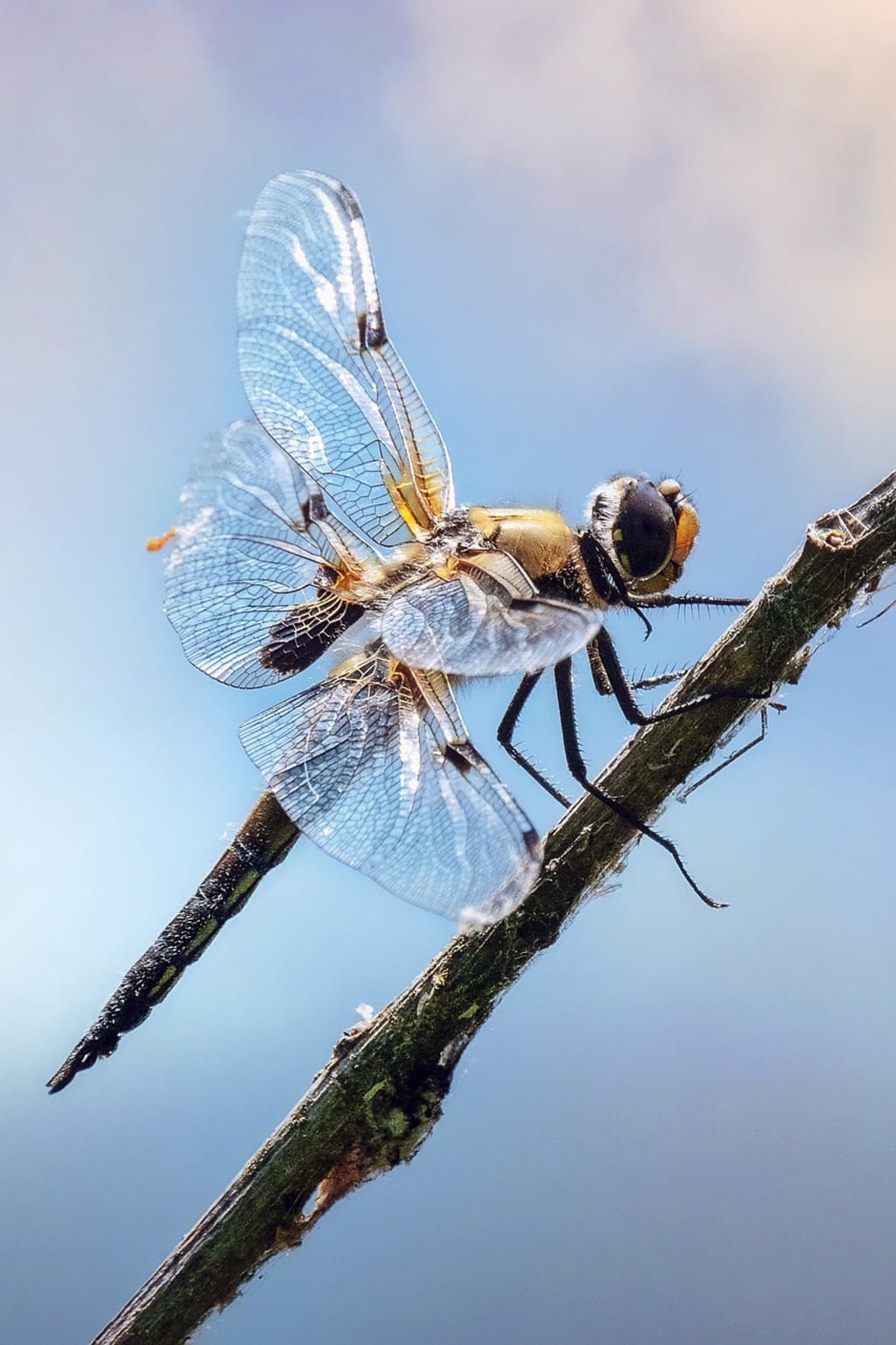
The dragonfly, a shimmering symbol of transformation and agility, is not just an insect — it is a marvel of evolution, a predator of precision, and a creature of deep cultural significance. Found across almost every continent, dragonflies have fascinated humanity for millennia. From their prehistoric lineage to their mesmerizing flight mechanics, the story of the dragonfly is as complex and fascinating as the creature itself.
---
1. Evolutionary History: Living Fossils of the Insect World
Dragonflies are some of the oldest flying insects on Earth. Their ancestors date back over 300 million years, long before the age of dinosaurs. Fossil records show that ancient dragonflies like Meganeura had wingspans of up to 28 inches, dwarfing their modern descendants.
Belonging to the order Odonata, which also includes damselflies, dragonflies are further classified under the suborder Anisoptera. Their primitive features — such as fixed-wing structures and aquatic larvae — highlight their ancient evolutionary roots.
---
2. Anatomy and Physiology: Designed for Speed and Agility
Dragonflies are built for flight dominance. With two pairs of independently moving wings, they can hover, glide, fly backward, and even make sharp turns at high speeds. Their flight capabilities have inspired engineers and roboticists studying micro aerial vehicles.
Key anatomical features include:
Compound eyes: Each eye contains up to 30,000 ommatidia, giving them nearly 360-degree vision. They can detect polarized light and even colors in the ultraviolet range.
Thorax: Strong muscles in the thorax control wing movement independently.
Abdomen: Long and slender, it balances the dragonfly during flight and aids in mating.
Legs: While not used for walking, the six spiny legs are perfect for catching prey mid-air.
Dragonflies are ectothermic, relying on environmental heat. Some species, like Pantala flavescens, use a technique called wing-whirring to warm up their flight muscles before takeoff.
---
3. Lifecycle: From Aquatic Predator to Aerial Hunter
Dragonflies undergo incomplete metamorphosis, passing through three stages: egg, nymph (larva), and adult.
Eggs: Laid in or near water, dragonfly eggs hatch in a few days to several weeks, depending on species and climate.
Nymph: This aquatic stage can last from months to several years. Dragonfly nymphs are voracious predators, feeding on mosquito larvae, tadpoles, and even small fish. They use a hinged, extendable lower jaw to snatch prey.
Emergence: After molting multiple times, the nymph climbs out of the water and undergoes its final transformation. The adult dragonfly emerges, pumping fluid into its wings to expand them.
Most adult dragonflies live only a few weeks to a few months, during which their primary focus is reproduction.
---
4. Behavior and Ecology: Masters of the Air and Water
Dragonflies are apex insect predators in both their larval and adult stages. They exhibit complex behaviors such as:
Territoriality: Males are highly territorial and often engage in aerial battles to defend prime mating spots near water.
Mating: Their unique "wheel position" during mating is iconic. Males use claspers at the end of their abdomen to grip the female behind the head, while the female bends her abdomen forward to collect sperm.
Oviposition: Females lay eggs in water or on aquatic plants. Some species dip their abdomens repeatedly into the water to release eggs.
Dragonflies help maintain ecological balance by feeding on pests like mosquitoes, flies, and midges. They are sensitive to pollution and serve as bioindicators of water quality.
---
5. Diversity: Over 5,000 Species Worldwide
There are more than 5,000 known species of dragonflies, with incredible diversity in size, color, and behavior.
Some notable families include:
Libellulidae (Skimmers): The largest family, found in a wide range of habitats.
Aeshnidae (Darners): Large, strong fliers with distinctive stripes.
Gomphidae (Clubtails): Named for their swollen tail segments.
Corduliidae (Emeralds): Often metallic green or blue.
Tropical regions like Southeast Asia, South America, and Africa are hotspots for dragonfly biodiversity.
---
6. Dragonflies in Culture and Symbolism
Dragonflies carry deep symbolic meaning across cultures:
Japan: Considered symbols of strength, courage, and happiness. Samurai used them in armor and art.
Native American traditions: Associated with swiftness and change.
Europe: Once linked with superstition and danger (e.g., "Devil’s darning needle"), modern views are more positive.
China: Symbols of harmony, prosperity, and the arrival of summer.
In modern symbolism, the dragonfly is often seen as a sign of transformation, adaptability, and self-realization.
---
7. Conservation Status: Threats and Protection
Despite their ancient success, dragonflies are under threat due to:
Habitat destruction: Wetland drainage, deforestation, and urbanization.
Pollution: Pesticides and water contamination harm larval stages.
Climate change: Alters migration patterns and breeding cycles.
Organizations like the IUCN monitor dragonfly populations. Wetland preservation and clean water initiatives are crucial to protecting them.
Some species, such as the Hine's emerald dragonfly (Somatochlora hineana), are listed as endangered.
---
8. Dragonflies and Science: Bioinspiration and Research
Dragonflies have become a focal point in scientific research due to their unique features:
Aviation and robotics: Their flight mechanics inspire biomimetic drones and micro air vehicles.
Neuroscience: Studies of their vision and motion detection contribute to understanding sensory processing.
Pest control: Research continues into using dragonflies for natural mosquito population management.
Additionally, dragonflies are used in citizen science projects where communities help monitor local species.
---
9. Fun Facts About Dragonflies
A dragonfly can fly up to 35 miles per hour, making it one of the fastest insects.
Pantala flavescens is the most widespread dragonfly, known for transoceanic migrations over thousands of kilometers.
Dragonflies can eat their own body weight in insects every 30 minutes.
Their wings beat independently, allowing them to perform aerial feats no helicopter can mimic.
---
Conclusion: The Living Jewel of the Natural World
Dragonflies are more than just beautiful insects gliding over ponds — they are ancient survivors, ecological warriors, and icons of transformation. In a rapidly changing world, protecting dragonflies means protecting the delicate ecosystems they inhabit. Observing a dragonfly is like glimpsing nature’s artistry and engineering at its finest — a reminder that even the smallest creatures have the power to inspire awe and curiosity.
About the Creator
Keep reading
More stories from Ikram Ullah and writers in Earth and other communities.
Swans: The Majestic Symbols of Grace, Survival, and Myth
Introduction: The Allure of the Swan Swans have captivated humanity for millennia. With their snow-white plumage, serpentine necks, and ethereal presence, they embody elegance and mystery. But beyond their beauty lies a story of ecological resilience, cultural symbolism, and surprising scientific quirks. From Greek myths to modern conservation triumphs, swans are far more than just "pond ornaments." Let’s dive into their world.
By Ikram Ullah8 months ago in Earth
The Reality of the Illusion of Time
Recently, as I strolled along the short stretch to my strength training session, I aimlessly took in the row of tatty shops and shabby buildings along the route and passed an off-street, in which one of my sisters used to live, around thirteen years ago.
By Chantal Christie Weiss5 days ago in Earth
Supreme Court to Review Monsanto’s Bid for Immunity in Roundup Lawsuits
The U.S. Supreme Court has agreed to review Monsanto’s appeal seeking immunity from lawsuits related to its popular herbicide, Roundup. This decision marks a critical moment for both the company and individuals claiming health damages from the chemical, which contains glyphosate—a substance under scrutiny for potential links to cancer. The review could have wide-reaching implications for corporate accountability, public health, and the legal landscape surrounding chemical products. Background on Roundup and Legal Challenges Roundup, a herbicide produced by Monsanto (now owned by Bayer), has been a staple in agriculture and home gardening for decades. Glyphosate, its active ingredient, was introduced as a highly effective solution for weed control. However, in recent years, scientific studies and lawsuits have raised concerns about its potential carcinogenic effects. Thousands of plaintiffs have claimed that exposure to Roundup caused non-Hodgkin lymphoma and other health issues. Numerous state and federal courts have seen extensive litigation, with some plaintiffs receiving multimillion-dollar verdicts. Monsanto has consistently defended the product, emphasizing that regulatory agencies worldwide have deemed glyphosate safe when used as directed. Monsanto’s Bid for Immunity Monsanto is appealing for legal immunity, arguing that its use of Roundup was regulated and approved by federal agencies, and therefore the company should not be held liable in civil lawsuits. The company contends that federal oversight should preempt individual claims, a legal doctrine known as federal preemption. In essence, Monsanto is asserting that because the Environmental Protection Agency (EPA) has evaluated and permitted glyphosate use, states or courts should not hold the company personally accountable for alleged harm. Why the Supreme Court’s Review Matters The Supreme Court’s decision to hear the case is significant for several reasons: Corporate Accountability: A ruling in favor of Monsanto could strengthen corporate defenses in cases where products are federally regulated, potentially limiting lawsuits against companies producing similar chemicals or pharmaceuticals. Public Health: Plaintiffs and advocacy groups argue that a corporate victory could undermine accountability for harmful products and reduce incentives for companies to rigorously test safety. Legal Precedent: The case could set a nationwide precedent regarding federal preemption, influencing how courts balance regulatory approval with civil liability. The Supreme Court’s interpretation could reshape the legal landscape for product liability and consumer protection in the United States. Stakeholder Perspectives Plaintiffs and Advocacy Groups For those affected by Roundup, the Supreme Court review is a critical opportunity to hold a powerful corporation accountable. Many plaintiffs argue that Monsanto failed to adequately warn users of the potential risks associated with glyphosate exposure. “People shouldn’t have to choose between using a product as intended and risking their health,” says Laura Mitchell, an attorney representing multiple plaintiffs in Roundup lawsuits. “A ruling that shields Monsanto from liability could leave victims without recourse.” Advocacy groups, such as environmental and cancer prevention organizations, emphasize that transparency and accountability are essential, particularly for chemicals widely used in agriculture and landscaping. Monsanto and Bayer Monsanto, now part of Bayer, maintains that Roundup is safe when used according to label instructions. Bayer has publicly stated that legal challenges have cost billions but that the company continues to stand behind its products. The firm argues that courts must respect federal regulatory authority to avoid creating conflicting standards between federal law and state-level lawsuits. “If companies could be held liable despite following federal regulations, it would set a concerning precedent for innovation and regulatory compliance,” a Bayer spokesperson said. Broader Implications The Supreme Court review has implications far beyond Monsanto and Roundup: Agricultural Industry: Glyphosate and similar herbicides are widely used in crop production. Legal outcomes could influence labeling, usage guidelines, and liability risk for other companies in agriculture. Consumer Products: The ruling could affect cases involving pharmaceuticals, chemicals, and other regulated products, particularly when federal agencies approve them. Regulatory Authority vs. Civil Liability: The decision may clarify the balance between federal oversight and state-level tort claims, potentially shaping how courts interpret the limits of corporate immunity. Previous Court Decisions Lower courts have issued mixed rulings in Roundup lawsuits. Some courts awarded substantial damages to plaintiffs, while others limited awards or found in favor of Monsanto. These inconsistent outcomes underscore the complexity of balancing scientific evidence, regulatory approval, and legal responsibility. Federal appeals courts have previously sided with both sides in separate cases, making Supreme Court intervention necessary to establish uniform legal standards nationwide. Public and Media Reaction Media coverage of Monsanto’s legal challenges has been extensive, reflecting public concern over chemical safety and corporate responsibility. Many reports highlight the tension between regulatory approvals and individual health claims, questioning whether federal endorsements automatically protect companies from lawsuits. Public sentiment is divided. Supporters of corporate immunity argue that companies need protection to operate and innovate without fear of excessive litigation. Opponents worry that such immunity could prioritize corporate interests over public health. What to Expect The Supreme Court will now evaluate key questions: Does federal regulatory approval preempt state-level claims of harm? Can companies be held liable even if they followed federal guidelines? How should courts balance scientific uncertainty with civil justice? The decision, expected within the next year or two, will be closely watched by lawyers, plaintiffs, corporations, and advocacy groups alike. Conclusion The Supreme Court’s review of Monsanto’s bid for immunity in Roundup lawsuits represents a landmark moment in American legal history. The case has the potential to redefine corporate liability, influence public health policy, and set precedent for future disputes involving federally regulated products. For plaintiffs, the stakes are deeply personal—seeking justice for alleged health impacts caused by widespread chemical exposure. For Monsanto and other corporations, the outcome could determine the limits of accountability in a regulated marketplace. As the Supreme Court deliberates, the nation watches closely, recognizing that the ruling will resonate far beyond Monsanto, affecting consumers, companies, and the broader debate over safety, regulation, and responsibility in the United States.
By Muhammad Hassan2 days ago in Earth


Comments
There are no comments for this story
Be the first to respond and start the conversation.