
The Deep Blue: Can we save the ocean?
Can we keep our oceans clean?


The ocean is a vast and beautiful body of water that covers over 70% of the Earth's surface. It is home to millions of species of plants and animals, and it provides us with food, transportation, and many other resources. However, despite its importance, the ocean is facing a serious threat: pollution. Ocean pollution is a complex and multifaceted problem that affects every corner of the world's oceans, and it is a problem that we must address urgently.
There are many different sources of ocean pollution, and each of them contributes to the problem in its own way. One of the most significant sources of ocean pollution is plastic waste. Every year, millions of tons of plastic waste end up in the ocean, which poses a serious threat to marine life. Plastic waste can entangle and suffocate marine animals, and it can also be ingested, causing injury and death. Plastic waste is especially harmful because it does not biodegrade, meaning that it can persist in the ocean for hundreds of years.
Another significant source of ocean pollution is oil spills. Oil spills occur when oil is released into the ocean from ships or offshore drilling platforms. Oil spills can have devastating effects on marine ecosystems, killing fish, birds, and other animals and destroying habitats. Even small oil spills can have long-lasting effects on the environment, and large spills can have catastrophic consequences.
Chemical pollution is another major source of ocean pollution. Chemical pollutants can come from a variety of sources, including agricultural runoff, industrial waste, and sewage. These pollutants can have a wide range of effects on marine life, including causing reproductive problems, impairing immune systems, and damaging organs.
In addition to these sources of pollution, there are many other factors that contribute to ocean pollution. For example, overfishing can reduce the number of fish in the ocean, leading to imbalances in the ecosystem. Climate change is also a major factor, as rising temperatures and ocean acidification can have profound effects on marine life.
Despite the magnitude of the problem, there are many things that we can do to address ocean pollution. One of the most important things that we can do is to reduce our use of plastic. This can be done by using reusable bags and containers, avoiding single-use plastic products, and properly disposing of plastic waste. Governments and businesses can also play a role by implementing policies and practices that reduce plastic waste and promote recycling.
Another important step that we can take is to reduce our dependence on fossil fuels. This can be done by promoting renewable energy sources such as solar and wind power, and by reducing our use of cars and other vehicles that rely on fossil fuels. Governments can also play a role by implementing policies that encourage the use of public transportation and alternative modes of transportation.
Finally, we can all do our part by supporting organizations that are working to address ocean pollution. There are many organizations that are dedicated to protecting the ocean, and by supporting them with our time, money, and resources, we can help to make a difference.
In conclusion, ocean pollution is a serious problem that affects us all. It is a complex and multifaceted problem that requires a comprehensive and coordinated response from governments, businesses, and individuals. By taking action to reduce our use of plastic, promote renewable energy, and support organizations that are working to protect the ocean, we can help to ensure that this vital resource remains healthy and vibrant for generations to come.
About the Creator
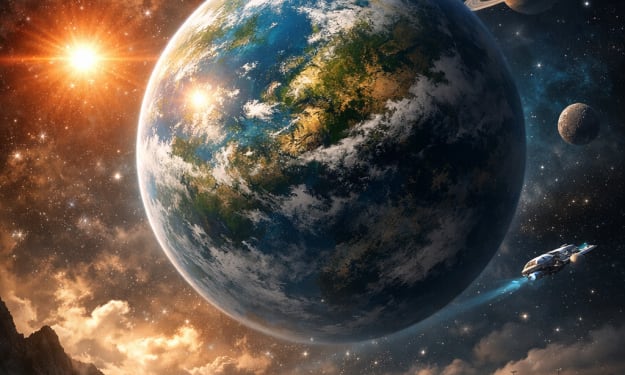
A Planet the Size of Earth with an Atmosphere Like Our Own
For centuries, humans have looked up at the night sky and wondered whether Earth is the only world capable of supporting life. Advances in modern astronomy have brought us closer than ever to answering that question. Recently, astronomers announced the discovery of a planet roughly the size of Earth with an atmosphere that appears surprisingly similar to our own. This finding has sparked excitement among scientists and renewed hope that life might exist elsewhere in the universe.
By Irshad Abbasi 4 days ago in Earth



Comments
There are no comments for this story
Be the first to respond and start the conversation.