
The Dayal Bird
A Melodious Jewel of the Indian Subcontinent
1. Introduction to the Dayal Bird
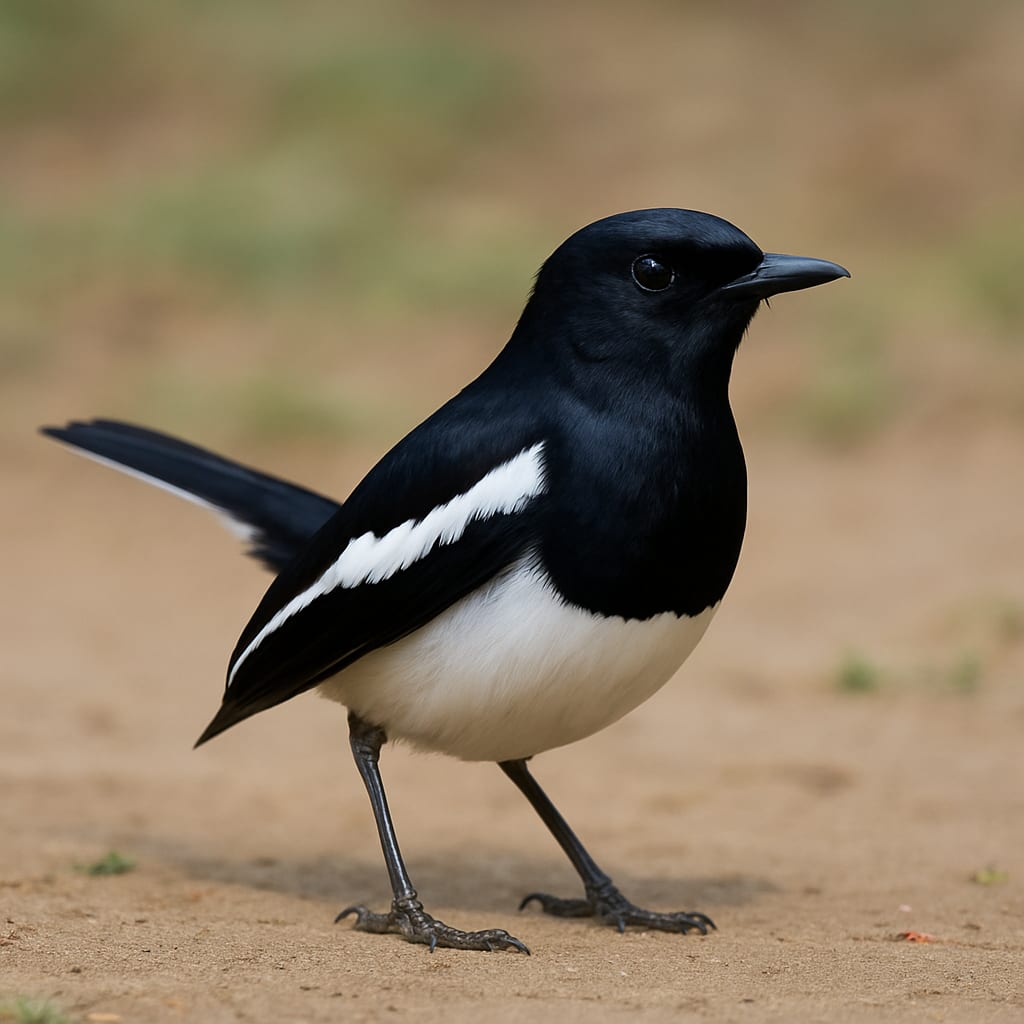
The Oriental Magpie-Robin, or Dayal Bird (often referred to simply as "Dayal"), belongs to the family Muscicapidae, which includes Old World flycatchers. This bird is native to South and Southeast Asia, found in countries like India, Bangladesh, Sri Lanka, Thailand, Malaysia, and Indonesia. In India, the bird is widely spread and commonly seen, making it familiar to both rural and urban populations.
Its Hindi name "Dayal" is derived from the bird’s musical calls that often bring joy to listeners, especially during the breeding season. The Dayal has been referenced in Indian folklore and songs as a symbol of sweet melodies, loyalty, and love.
2. Physical Characteristics
The Dayal Bird is a small passerine, measuring about 19–21 cm (7.5–8.3 inches) in length. Though small in size, its vibrant plumage and lively personality make it easily noticeable.
2.1. Male Dayal Bird
- Color: Males are more brightly colored than females. They are predominantly glossy black with a white belly and white wing patches.
- Tail: The tail is long and often held upright. It is black with white outer feathers.
- Bill and Legs: The beak is slender and black, suitable for catching insects. Legs are also black.
2.2. Female Dayal Bird
- Color: Females are duller in appearance. They have greyish upperparts and a more washed-out white underbelly.
- Markings: The contrast between black and white is less sharp in females, giving them a more muted look.
2.3. Juveniles
- Young birds resemble the female but may have speckled or scaly patterns on their body and wings.
3. Habitat and Distribution
The Dayal bird is highly adaptable and thrives in a variety of habitats:
- Woodlands and Forest Edges
- Urban Gardens and Parks
- Agricultural Fields
- Shrublands and Scrub Areas
It avoids deep forests and extremely dry deserts but is otherwise found in both rural and urban environments.
In India, the bird is distributed widely across the mainland and islands. It is a resident species, meaning it does not migrate seasonally, though it may move locally in search of food or nesting grounds.
4. Behavior and Diet
The Dayal Bird is an active and alert species known for its melodious song and inquisitive nature.
4.1. Feeding Habits
- Diet: The bird primarily feeds on insects, including beetles, grasshoppers, caterpillars, ants, and spiders.
- Occasional Foods: It also consumes small fruits, berries, and nectar.
- Foraging Behavior: It hunts by hopping on the ground or low vegetation, flicking its tail and wings frequently. It is often seen alone or in pairs.
4.2. Vocalization
One of the most admired features of the Dayal bird is its musical call. Males sing especially during the breeding season to attract mates and establish territory.
- Songs: A wide range of sweet, flute-like notes.
- Imitation: It can imitate the calls of other birds and even some mechanical sounds.
- Morning Singer: Often one of the first birds to sing at dawn.
5. Breeding and Nesting
The breeding season for the Dayal bird typically starts around March and lasts till July, depending on the region and weather conditions.
5.1. Courtship and Pairing
- Males sing persistently during the breeding season to attract females.
- The display includes wing fluttering, tail fanning, and vocalizations.
5.2. Nesting Behavior
- Nest Location: Nests are built in tree cavities, walls, buildings, or even old abandoned pipes.
- Nest Material: Twigs, grass, roots, and feathers are used.
- Human Habitation: The bird comfortably nests near human homes and is considered a friendly presence.
5.3. Eggs and Incubation
- Clutch Size: 3 to 5 eggs.
- Egg Appearance: Pale blue-green with brown speckles.
- Incubation: Done mostly by the female; lasts about 12–14 days.
- Parental Care: Both parents feed the chicks, and the young fledge in about two weeks.
6. Cultural and Historical Significance
The Dayal Bird has been admired in Indian culture for centuries.
- In Indian Poetry : Referenced in classical Sanskrit and Hindi poetry for its melodious voice.
- Myth and Folklore : Sometimes associated with romantic themes and the coming of spring.
- Symbolism : Considered a symbol of love, harmony, and fidelity due to its melodious singing and pair-bonding behavior.
7. Conservation Status
7.1. IUCN Red List
The Oriental Magpie-Robin is currently listed as Least Concern on the IUCN Red List due to its wide range and stable population.
7.2. Threats
While the bird is not endangered, it faces certain threats in localized areas:
- Habitat Destruction due to urbanization and deforestation.
- Predation by domestic cats and invasive species.
- Pollution and pesticide use which reduces insect populations.
7.3. Protection Efforts
In India, the Dayal bird is protected under the Wildlife Protection Act, 1972. Its presence in gardens and parks is encouraged by planting native vegetation and avoiding chemical insecticides.
8. Role in Ecosystem
The Dayal bird plays an important role in maintaining ecological balance:
- Insect Control: By consuming a large number of insects, it helps control pest populations.
- Seed Dispersal: Occasionally aids in dispersing seeds of the fruits it consumes.
- Indicator Species: Being sensitive to environmental changes, its presence or absence can signal ecosystem health.
9. Keeping as Pets: A Word of Caution
Historically, the Dayal bird was kept as a cage bird for its song. However, this practice has declined due to wildlife protection laws and awareness campaigns.
Capturing or caging wild Dayal birds is illegal in many countries, including India. Keeping them in captivity not only affects their well-being but also disrupts local ecosystems.
10. Interesting Facts About the Dayal Bird
- The male sings different songs in the morning and evening.
- Some Dayal birds can mimic the sounds of mobile ringtones and car alarms.
- It was once the **national bird of Bangladesh** before being replaced by the Oriental Doyel (a different subspecies).
- The bird often perches on rooftops or fences while singing, making it a common companion in Indian mornings.
Conclusion
The Dayal bird is much more than just a pretty songbird. It embodies the beauty of nature, the harmony of ecosystems, and the cultural essence of the Indian subcontinent. With its charming personality, musical prowess, and adaptability, it continues to win hearts wherever it goes.
In a rapidly urbanizing world, conserving such birds and their habitats is essential—not only to preserve biodiversity but also to maintain our deep-rooted connection with nature. Whether you're a birdwatcher, a poet, or simply someone who enjoys the songs of morning, the Dayal bird offers a delightful reminder of the small wonders that inhabit our world.
About the Creator
Subhash C
As a naturalist, I am passionate about conservation and educating others about the importance of biodiversity and ecological balance. My work involves field research, wildlife observation, and environmental advocacy.
Hemp as a sustainable material
The ecological properties of hemp makes it one of the types of insulation used in construction with the lowest carbon emissions footprint. In the future, hemp could play a paramount role in the race towards reducing the global carbon emissions footprint to fight climate change, and a more sustainable construction industry.
By Susan Fourtané about 23 hours ago in Earth
A System That Isn’t Working Challenge Winners
Systems promise order. They organize behavior, distribute opportunity, and suggest that if everyone follows the rules, things will work. The entries in A System That Isn’t Working look closely at what happens when that promise begins to slip.
By Vocal Curation Team3 days ago in Resources



Comments
There are no comments for this story
Be the first to respond and start the conversation.