
The Coming Boom in Oil Sludge Treatment: Environmental Pressures in Oil Exporting Countries
Environmental Pressures in Oil Exporting Countries

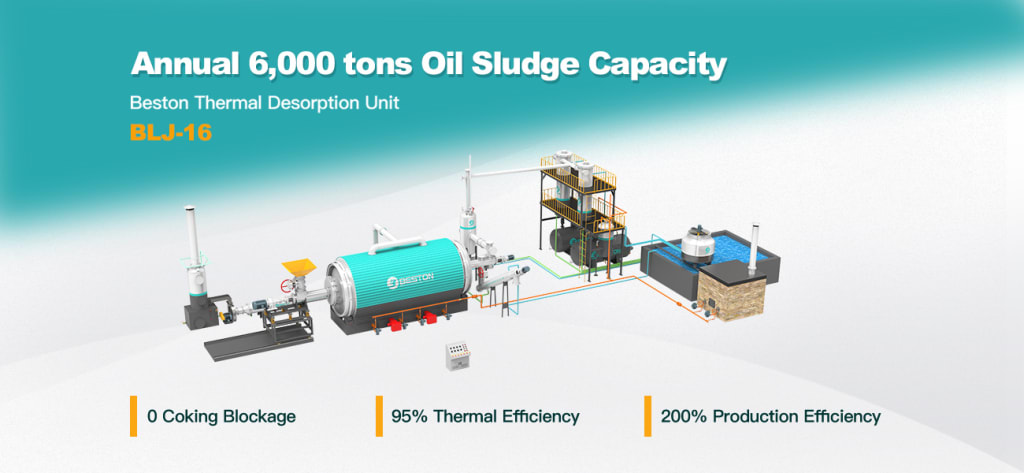
As global environmental regulations tighten and ESG standards reshape investment flows, oil-exporting countries like Saudi Arabia, Iran, and Venezuela are facing increasing pressure to upgrade their oilfield waste management systems. One critical area under the spotlight is oil sludge (oil-contaminated solids and emulsions) — a persistent byproduct of drilling, production, and refining processes.
Why Oil Sludge Matters Now
Oil sludge is hazardous by nature — typically containing hydrocarbons, heavy metals, and other persistent pollutants. Historically, its disposal in many producing nations involved open-pit storage, landfilling, or even illicit dumping, practices that are no longer tenable under evolving global environmental norms.
With major oil economies seeking to diversify, decarbonize, and modernize their energy sectors, oil sludge treatment is no longer a peripheral issue — it's becoming central to environmental compliance, international investment eligibility, and national ESG narratives.
The Regulatory Winds Are Shifting
🇸🇦 Saudi Arabia
Under Vision 2030, Saudi Arabia is pushing for a cleaner, more diversified industrial ecosystem. The National Environmental Strategy (NES) and the Saudi Green Initiative are pressuring state-owned and private oil entities to treat all forms of hazardous waste, including sludge, with full traceability and measurable emissions reductions. ARAMCO, for example, has launched pilot projects in sludge minimization and thermal remediation.
🇮🇷 Iran
Although under sanctions, Iran is quietly modernizing its domestic oil operations through partnerships with Chinese and Russian firms. New environmental protocols for sludge containment and recovery have been introduced in upstream fields in the South Pars and Ahvaz regions. With limited disposal infrastructure, thermal desorption is increasingly favored due to its ability to recover oil and reduce residual waste volume.
🇻🇪 Venezuela
Venezuela's decaying infrastructure has long been a barrier to proper sludge management. However, recent moves to re-engage international oil markets have triggered efforts to modernize its waste treatment capabilities. Several contracts have been signed with foreign firms to deploy mobile thermal desorption units (TDU) in the Orinoco Belt — a signal that the government views sludge treatment as part of broader sectoral rehabilitation.
Thermal Desorption: A Key Technology in the New Landscape
Among various oil sludge treatment methods, thermal desorption is emerging as a frontline solution. The process involves heating sludge to temperatures between 300–600°C, volatilizing hydrocarbons which are then condensed and recovered. The remaining solids are often rendered non-hazardous and suitable for landfill or even construction use.
Key benefits include:
- Oil recovery rates of 60–90%
- Reduction in waste volume by up to 80%
- High adaptability to remote and harsh environments
- Minimal water use compared to washing or centrifuge methods
Furthermore, advanced thermal technologies — such as indirect rotary kilns, screw desorbers, and microwave-assisted desorption — are increasing system efficiency and reducing emissions, aligning with carbon accountability frameworks.
What This Means for Investors, Tech Providers, and Policymakers
For Investors:
The intersection of ESG compliance and waste-to-value strategies is opening new investment channels in sludge treatment technologies, especially mobile or modular TDUs.
For Technology Providers:
Export opportunities abound for companies offering turnkey solutions, containerized TDUs, or high-recovery desorption systems, particularly those with automation and emissions tracking capabilities.
For Policymakers:
Supporting sludge treatment with subsidies, mandates, and carbon credits can accelerate infrastructure development and compliance rates, particularly in countries aiming to re-enter or expand in global oil markets.
Final Thought
Oil sludge is no longer just an oily nuisance — it's fast becoming a strategic environmental and economic issue in the world’s major oil-producing regions.
What was once regarded as an inconvenient byproduct of extraction is now reframed as a critical node in the value chain of responsible hydrocarbon development. As global expectations around environmental accountability, carbon disclosure, and circular resource management intensify, the treatment and valorization of oil sludge are no longer optional — they are essential.
As thermal desorption unit peojects and technologies scale, they may not only clean up the mess of past oil booms, but also power the next generation of cleaner oil production.
From mobile treatment units in the deserts of the Middle East, to modular systems operating in the jungles of South America, thermal desorption is proving to be not just a remediation tool, but a strategic enabler — one that transforms liabilities into recoverable assets, supports ESG-aligned operations, and enables nations to future-proof their oil industries in a decarbonizing world.
This is more than a technological upgrade — it is a paradigm shift in how nations manage their environmental legacy while building resilience for the low-carbon transition. The next frontier of oil production will not only be about how much is extracted, but how cleanly and responsibly the industry manages its waste.
About the Creator
Bestonpyrolysis
Engaged in waste plastic/tyre/rubber recycling, oil sludge treatment, biomass recycling, sewage sludge management and paper recycling…
https://bestonpyrolysisplant.com/
Keep reading
More stories from Bestonpyrolysis and writers in Earth and other communities.
Biochar vs Charcoal: Which Is Greener for the Planet?
As global conversations around sustainability, climate change, and ecological restoration grow louder, it becomes increasingly important to re-evaluate everyday materials and practices. One such comparison that often comes up in environmental circles is between biochar and charcoal. Though they may look and even smell similar, these two carbon-rich substances are vastly different in terms of their environmental impact, purpose, and long-term benefits.
By Bestonpyrolysis8 months ago in Earth
Images Show Aftermath of Deadly Crash on Thai Railway Line
Some images stay with you long after you scroll past them. The photographs coming out of Thailand this week do exactly that. Twisted steel, overturned train carriages, scattered luggage, and exhausted rescue workers tell a devastating story — one that words alone cannot fully explain. A deadly crash on a Thai railway line has claimed multiple lives and left dozens injured, turning an ordinary journey into a nightmare. As images from the scene circulate globally, they reveal not just destruction, but grief, courage, and difficult questions about safety in one of Southeast Asia’s busiest rail networks. A Normal Journey That Ended in Disaster For the passengers on board, the day began like any other. People were heading to work, returning home, or traveling to see family. The train moved steadily along the tracks — until everything suddenly changed. According to officials, the crash occurred when heavy construction equipment collapsed onto an active railway line, striking a moving passenger train. The impact derailed multiple carriages, causing chaos inside the train as metal twisted and windows shattered. Within moments, smoke filled the air and cries for help echoed from inside the wreckage. For many passengers, there was no time to react. What the Images Reveal The aftermath photos are haunting. In some images, train carriages lie on their sides, crushed and burned. In others, rescue teams climb over debris, cutting through metal to reach trapped passengers. Personal belongings — backpacks, shoes, food containers — are scattered across the tracks, quiet reminders of lives abruptly interrupted. One particularly striking image shows emergency workers standing silently beside the wreckage, their faces reflecting exhaustion and sorrow. These visuals do more than document damage; they capture the emotional weight of the tragedy. Images like these remind us how fragile routine can be — how quickly normal life can turn into crisis. The Human Cost of the Crash Authorities confirmed that multiple people lost their lives, while dozens were injured, some critically. Hospitals in nearby areas were quickly overwhelmed as ambulances transported victims from the scene. Families rushed to medical centers, searching for loved ones. For many, the wait for information was agonizing. Phone calls went unanswered. Names were not immediately confirmed. In moments like these, uncertainty can be as painful as loss itself. Survivors have described scenes of panic, confusion, and shock. Some helped fellow passengers escape wrecked carriages. Others waited helplessly, trapped until rescuers could reach them. Rescue Efforts Under Pressure Emergency response teams acted quickly, working against time and unstable conditions. Firefighters, paramedics, and volunteers used cutting tools and heavy machinery to clear wreckage and pull survivors to safety. Despite the dangers, many rescuers worked for hours without rest. Some images show medics kneeling beside injured passengers on the ground, administering care before transport. Others show cranes lifting destroyed train cars away from the tracks. Their efforts likely saved lives — but the scale of the damage made the operation incredibly challenging. How Did This Happen? As the shock begins to settle, attention has turned to how such a catastrophic accident was allowed to occur. Early reports suggest the crash involved construction work taking place near or above an active railway line. This has raised serious concerns about oversight, safety planning, and coordination between construction teams and railway authorities. Questions being asked include: Why was heavy equipment operating so close to a moving passenger train? Were safety inspections properly conducted? Were warning systems or track closures considered? An official investigation is now underway, but for many families, answers will come too late. A Wake-Up Call for Railway Safety Thailand has invested heavily in rail infrastructure in recent years, aiming to modernize transport and improve connectivity. But this tragedy highlights the risks that come with rapid development when safety measures fail or are ignored. Experts warn that construction near live railway lines requires strict controls, constant monitoring, and zero tolerance for shortcuts. Even a single failure can lead to irreversible consequences — as this crash painfully demonstrates. Public trust in rail safety has been shaken, and restoring it will require transparency, accountability, and meaningful reform. Grief, Solidarity, and Remembrance In the days following the crash, communities across Thailand have expressed sorrow and support. Vigils have been held. Messages of condolence continue to pour in. Volunteers have donated blood and supplies to help victims and hospitals. The images from the scene have united people in grief — not just in Thailand, but around the world. They serve as a reminder that behind every headline are real people, real families, and real loss.
By Muhammad Hassan5 days ago in Earth
Trump Administration Moves to End Deportation Protection for Somalis
The Trump administration has moved to end long-standing deportation protections for Somali nationals living in the United States, a decision that could place tens of thousands of people at risk of removal. The move has sparked alarm among immigrant communities, human rights organizations, and legal experts, who warn that returning Somalis to a country still grappling with instability could have severe humanitarian consequences. As the policy change unfolds, it has reignited debate over immigration enforcement, executive authority, and America’s obligations to people fleeing conflict.
By Aarif Lashari6 days ago in Earth




Comments
There are no comments for this story
Be the first to respond and start the conversation.