
Trump Administration Moves to End Deportation Protection for Somalis
Introduction: A Policy Shift With Far-Reaching Consequences
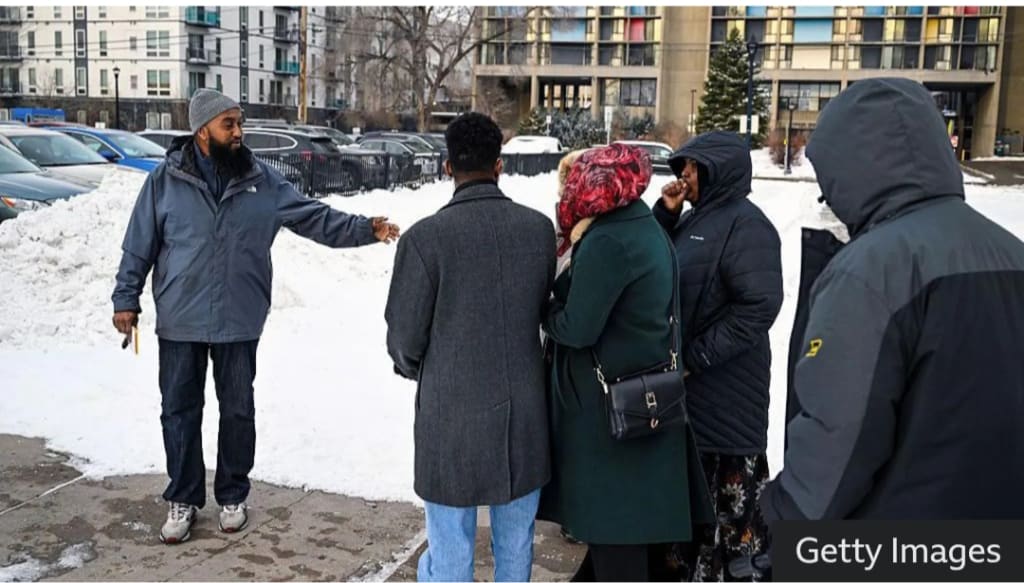
The Trump administration has moved to end long-standing deportation protections for Somali nationals living in the United States, a decision that could place tens of thousands of people at risk of removal. The move has sparked alarm among immigrant communities, human rights organizations, and legal experts, who warn that returning Somalis to a country still grappling with instability could have severe humanitarian consequences. As the policy change unfolds, it has reignited debate over immigration enforcement, executive authority, and America’s obligations to people fleeing conflict.
Understanding Deportation Protection for Somalis
For decades, many Somalis in the US have been protected under Temporary Protected Status (TPS) or similar humanitarian relief measures. TPS is granted to nationals of countries experiencing ongoing armed conflict, natural disasters, or extraordinary conditions that make safe return impossible.
Somalia has long met these criteria. Years of civil war, the presence of militant groups, political instability, and humanitarian crises have made large parts of the country unsafe. Deportation protections allowed Somali migrants to live and work legally in the US, often for many years, building families and contributing to their communities.
The Administration’s Decision
The Trump administration’s move signals an intent to terminate or not renew these protections, arguing that conditions in Somalia have improved enough to justify returns. Officials have framed the decision as part of a broader effort to tighten immigration policies and limit the use of humanitarian programs they view as overextended.
Critics argue that the assessment ignores on-the-ground realities. While Somalia has made some political progress, violence, displacement, food insecurity, and weak infrastructure remain widespread. Aid agencies continue to classify the country as one of the world’s most fragile states.
Who Could Be Affected
Estimates suggest that tens of thousands of Somalis living in the US could be affected by the policy change. Many arrived as refugees decades ago and later adjusted to TPS or other temporary protections. Others were born in the US to parents who rely on protected status to remain lawfully employed.
If protections are lifted, individuals could face deportation unless they qualify for asylum, permanent residency, or another form of relief. For many, those pathways are legally complex, expensive, and uncertain.
Fear and Uncertainty in Somali Communities
The announcement has sent shockwaves through Somali-American communities, particularly in cities such as Minneapolis, Columbus, and Seattle, which are home to large Somali populations. Community leaders report rising anxiety as families worry about separation, job loss, and the possibility of being sent to a country many no longer know.
For younger Somalis who grew up in the US, deportation could mean removal to a place where they lack social ties, language fluency, or access to basic services. Parents fear what would happen to US-born children if one or both caregivers are forced to leave.
Human Rights and Safety Concerns
Human rights organizations have strongly criticized the administration’s move, warning that deporting people to Somalia could violate international norms. They point to ongoing threats from militant groups, weak rule of law, and limited access to healthcare and education.
Advocates argue that deportation protections exist precisely to prevent returns to unsafe conditions. Ending them, they say, prioritizes political messaging over human safety.
Legal experts also caution that forced returns could expose deportees to persecution or serious harm, potentially putting the US at odds with its commitments under international refugee and human rights law.
Legal Challenges and Advocacy
Immigrant rights groups are preparing legal challenges to block the termination of protections. Past attempts to end TPS for other nationalities have faced lawsuits, with courts sometimes ruling that decisions were arbitrary or failed to consider humanitarian impacts.
Advocates are urging affected individuals to seek legal counsel immediately to explore options such as asylum applications, family-based petitions, or employment-based visas. However, demand for legal assistance far exceeds available resources, particularly in low-income communities.
The Political Context
The move fits within a broader immigration agenda pursued by the Trump administration, which emphasized stricter enforcement, reduced humanitarian admissions, and the rollback of protections granted by previous administrations. Supporters argue that temporary programs were never intended to last indefinitely and that immigration laws should be applied consistently.
Opponents counter that such policies disproportionately harm Black and Muslim immigrants and reflect a narrow view of national interest. They argue that the US has benefited economically and culturally from Somali immigrants, many of whom work in healthcare, transportation, and small businesses.
Economic and Social Impact
Ending deportation protections could have ripple effects beyond individual families. Somali communities are economically active, operating businesses, paying taxes, and filling essential jobs. Removing large numbers of workers could disrupt local economies and strain social services.
Schools, community centers, and religious institutions also play a vital role in supporting Somali families. Leaders warn that fear of deportation could push people into the shadows, reducing civic participation and trust in public institutions.
Conditions in Somalia Today
While Somalia has held elections and made efforts toward political stabilization, insecurity remains a daily reality for many. Armed attacks, displacement due to drought and flooding, and limited government capacity continue to affect millions.
International aid agencies caution that large-scale returns would place additional pressure on already overstretched systems. Reintegration for deportees would be difficult, particularly for those who left as children or were born abroad.
What Happens Next
The timeline for ending protections remains subject to legal and political developments. Court rulings, public pressure, or changes in administration policy could delay or reverse the decision.
In the meantime, Somali communities are mobilizing. Town halls, legal clinics, and advocacy campaigns aim to inform families of their rights and push lawmakers to intervene. Members of Congress have called for reconsideration, emphasizing humanitarian concerns and the importance of stability for long-term residents.
Conclusion: A Defining Test of Immigration Policy
The Trump administration’s move to end deportation protection for Somalis represents more than a policy change—it is a test of how the US balances enforcement with compassion. For thousands of families, the decision threatens to upend lives built over decades.
As legal battles unfold and communities brace for the future, the outcome will shape not only the fate of Somali immigrants but also the broader direction of America’s immigration system. At stake are questions of safety, responsibility, and what it means to offer refuge in a world still marked by conflict.
About the Creator
Keep reading
More stories from Aarif Lashari and writers in Earth and other communities.
The Trans Youth Athletes in the US Fighting for Their Rights: ‘Playing Is an Act of Resistance’
Across the United States, sports have become an unexpected front line in the fight over transgender rights. For many trans youth athletes, simply stepping onto a field, track, or court is no longer just about competition—it is an act of resistance. As state legislatures debate and pass laws restricting transgender participation in school sports, young athletes are finding themselves at the center of a national culture war that reaches far beyond the locker room.
By Aarif Lashari4 days ago in Earth
The Reality of the Illusion of Time
Recently, as I strolled along the short stretch to my strength training session, I aimlessly took in the row of tatty shops and shabby buildings along the route and passed an off-street, in which one of my sisters used to live, around thirteen years ago.
By Chantal Christie Weiss4 days ago in Earth
Why Putin Went Quiet When Challenged by Trump Over Venezuela
When U.S. forces captured Venezuelan President Nicolás Maduro in early January 2026, the world was stunned. Venezuela has long been a Russian ally, yet Russian President Vladimir Putin remained almost completely silent when challenged directly by U.S. President Donald Trump. Why would a leader so often outspoken on the world stage hold back in such a dramatic moment? Let’s unpack the story and explore what it means for global politics. A Bold Move That Shocked the World On January 3, U.S. forces executed a daring operation in Venezuela, taking Maduro into custody in New York to face charges including drug trafficking and narco‑terrorism. The operation was framed by the U.S. as a step to enforce justice, but critics saw it as an extraordinary overreach of power. Venezuela is no ordinary country for Russia. Since the days of Hugo Chávez, Moscow has cultivated close ties with Caracas, offering military support, energy deals, and diplomatic backing on the global stage. Past actions included Russian bombers visiting Venezuela and high-profile defense agreements. Given this history, many expected a fiery response from Putin. Yet, the Kremlin remained calm, issuing measured statements rather than sharp threats. Why Silence Was Strategic Experts suggest there are several reasons for Putin’s muted reaction, each revealing the careful calculation behind the Kremlin’s foreign policy. 1. Focus on the War in Ukraine Russia’s primary priority remains Ukraine. Engaged in a high-stakes military and diplomatic battle, Putin cannot afford distractions or new confrontations far from home. Escalating tensions with the United States over Venezuela could jeopardize Moscow’s position in Europe. A New York Times report highlighted that Russia is “subordinating all other interests to the war in Ukraine,” suggesting that even a high-profile ally like Venezuela takes a back seat to Moscow’s strategic goals. 2. Limited Military Options While Russia’s alliance with Venezuela is longstanding, much of the support has been symbolic rather than operational. Defense systems and military cooperation exist on paper, but Russia lacks the immediate ability to counter a U.S. operation thousands of miles away. Putin may have recognized that responding aggressively would be both ineffective and costly, potentially risking military and economic consequences that Moscow cannot afford. 3. Maintaining Diplomatic Channels with Washington With Donald Trump back in the White House since 2025, there has been cautious optimism in Moscow about recalibrating U.S.–Russia relations. Avoiding a dramatic confrontation over Venezuela keeps diplomatic channels open, allowing Russia to negotiate on other high-priority issues like Ukraine and sanctions relief. In other words, silence can be a calculated strategy, signaling restraint rather than weakness. 4. Russia’s Global Influence Is Waning The Maduro episode also highlights a broader geopolitical reality: Russia’s global reach has limits. Since the 2022 invasion of Ukraine, Moscow’s influence in regions like the Middle East and parts of the former Soviet Union has weakened. Venezuela remains one of its few high-profile allies outside Europe, but even there, Russia’s power is largely symbolic. By not escalating, Putin is acknowledging a practical truth: Russia cannot be everywhere at once, and some battles are not worth fighting. 5. Choosing Battles Wisely Some analysts emphasize that Putin’s quiet response is more about strategic prioritization than capitulation. In a world dominated by nuclear powers and volatile global politics, direct confrontation with the United States over Venezuela could spiral into a far larger crisis. By staying silent, the Kremlin may be signaling that it picks its battles carefully, focusing resources on Ukraine, where the stakes are highest. What This Means for the World Putin’s silence sends several messages: Russia is currently stretched, economically and militarily. Moscow is prioritizing Ukraine over symbolic allies. Strategic restraint is sometimes more powerful than public confrontation. The limits of Russian influence are becoming more visible to the world. This episode reflects a new reality in geopolitics: power is as much about choosing when not to act as when to assert force. The Bigger Picture The capture of Maduro is a defining moment not just for Venezuela, but for global politics. It shows the United States asserting power in a way not seen for decades, while Russia’s quiet reaction underscores its current limits and priorities. For observers, Putin’s silence is a lesson in modern geopolitics: even the most assertive leaders exercise restraint when stakes are high and risks are global. In the end, the Maduro affair reminds us that in today’s world, the loudest response is not always the most effective one — sometimes, quiet calculation speaks volumes. Sources and Further Reading The US capture of Maduro reveals Russia’s weakness – Atlantic Council ‘It sends a horrible signal’: US politicians react to capture of Nicolás Maduro – The Guardian Russia slams 'neocolonial threats' against Venezuela – Reuters
By Muhammad Hassan7 days ago in Earth



Comments
There are no comments for this story
Be the first to respond and start the conversation.