
The Code of Life
Unlocking the Secrets Written in DNA

🌿 The Code of Life
Unlocking the Secrets Written in DNA
Introduction: The Blueprint Behind Every Living Being
Every living organism on Earth, from the tiniest bacterium to the largest whale, carries within its cells a remarkable set of instructions — a code that determines its structure, function, and destiny. This code is known as DNA, or Deoxyribonucleic Acid. Often described as the “Code of Life,” DNA is the molecular language that shapes all biological life. Understanding this code has revolutionized biology, medicine, and biotechnology, revealing the intricate design behind existence itself.
What Is DNA?
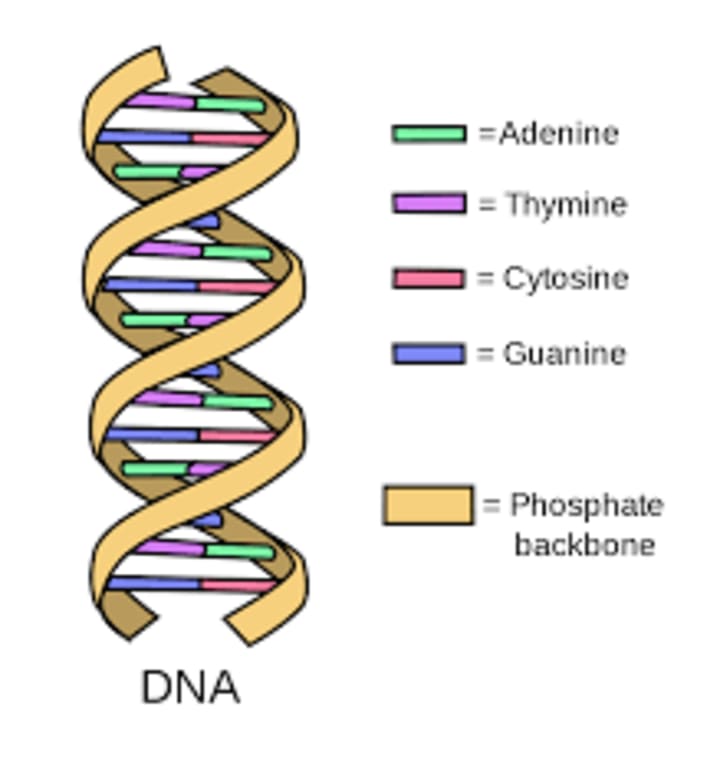
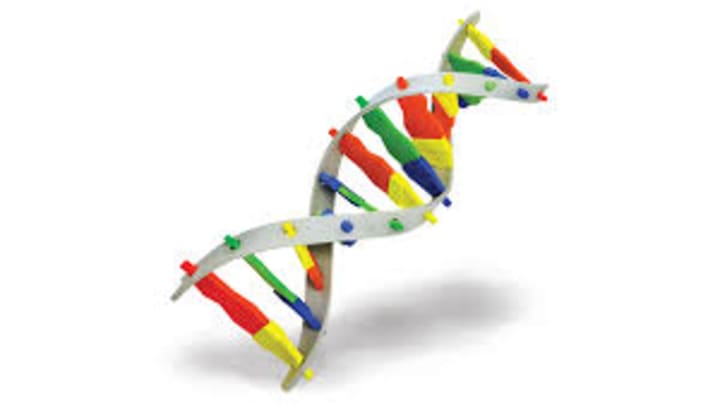
DNA is a double-helix molecule composed of four chemical bases — adenine (A), thymine (T), cytosine (C), and guanine (G). These bases pair in a specific way (A with T, and C with G), forming the rungs of a twisted ladder-like structure. The sequence of these bases is what encodes genetic information — much like how letters form words and sentences in human language.
Every cell in your body (except red blood cells) contains a complete copy of your DNA, packed inside the nucleus. If stretched out, the DNA from a single human cell would be about two meters long, yet it fits into a space so tiny you can’t see it without a microscope. That’s the incredible efficiency of biological design.
The Genetic Code: Nature’s Programming Language
The genetic code is the set of rules by which DNA sequences are translated into proteins — the building blocks of life. Each gene within DNA contains instructions for making a specific protein, which in turn performs essential tasks such as:
Building tissues (muscles, skin, hair)
Transporting molecules (like oxygen)
Catalyzing biochemical reactions (enzymes)
Protecting the body (antibodies)
In essence, DNA acts like a computer program, and the genes are its lines of code. When this code runs properly, life thrives; when errors occur (mutations), diseases or evolutionary changes can result.
How DNA Replicates: Copying the Code of Life
One of the most fascinating aspects of DNA is its ability to replicate itself. During cell division, DNA unzips into two strands, and each strand serves as a template for creating a new complementary strand. This process ensures that every new cell receives an identical copy of genetic information — a vital step in growth, reproduction, and inheritance.
This precision copying mechanism is one of the reasons why traits can be passed from one generation to the next with incredible accuracy, while still allowing for small mutations that drive evolution and genetic diversity.
Discovering the Code: The DNA Revolution
The discovery of DNA’s structure in 1953 by James Watson and Francis Crick, building on the X-ray work of Rosalind Franklin, marked a turning point in modern science. It opened the door to the field of genomics — the study of entire genomes and their functions.
Today, technologies like CRISPR gene editing, genome sequencing, and synthetic biology are pushing the boundaries of what we can do with DNA. Scientists can now edit genetic code to cure diseases, improve crops, and even create artificial organisms.
DNA and Evolution: The Story Written in Our Genes
DNA not only defines who we are but also connects us to all other living things. Every species shares a portion of its DNA with others — humans, for example, share about 98% of their DNA with chimpanzees and even 60% with bananas!
This shared code provides compelling evidence for evolution and the interconnectedness of all life on Earth. The “code of life” is a universal language, one that has been written and rewritten over billions of years of biological history.
The Future of the Code of Life
As we learn more about the genetic code, we also face profound ethical and philosophical questions. Should humans alter the genetic blueprint of life? How can we balance scientific progress with moral responsibility?
Despite these challenges, understanding DNA continues to inspire innovations in medicine, agriculture, forensics, and even artificial intelligence.
The future might bring personalized medicine tailored to each individual’s genetic makeup, biotechnology that creates sustainable materials, and genetic therapies that eliminate inherited diseases. The possibilities hidden in this code are endless.
Conclusion: The Miracle Written in Molecules
The Code of Life is more than a scientific concept — it is a testament to the elegance and complexity of nature. DNA carries not only the instructions for building life but also the story of life itself — a story billions of years in the making.
As humanity deciphers more of this code, we move closer to understanding our origins, our biology, and perhaps our future. The secrets of DNA remind us that every living cell is a masterpiece of molecular engineering — and that life, in all its diversity, is unified by the same simple yet profound alphabet: A, T, C, and G.
About the Creator
Keep reading
More stories from Abdelrahem10 and writers in Earth and other communities.
Green Hydrogen: The Future of Energy?
Green Hydrogen: The Future of Energy? Green hydrogen is increasingly being viewed as a cornerstone in the transition to a clean, sustainable energy future. Here's a comprehensive look at why it's gaining attention, its potential, challenges, and the role it could play globally.
By Abdelrahem105 months ago in Earth
The Jewel of the Earth: How the Kaaba Shines Like a Diamond from Space
In the vast, silent expanse of the cosmos, where the Earth appears as a delicate blue marble against the infinite black of the universe, certain landmarks stand out with unexpected brilliance. Recently, a series of high-resolution images captured from the International Space Station (ISS) and advanced satellite arrays have left the global community in awe. The focal point? Masjid al-Haram in Mecca. From hundreds of miles above, the "House of Allah" does not just appear as a building; it radiates a piercing, crystalline glow, resembling a diamond set into the heart of the desert.
By Irshad Abbasi 6 days ago in Earth




Comments (1)
Thanks for all