
The Celestial Fireworks Illuminating the Night Sky
Meteors

Gazing up at the night sky, we are often captivated by the beauty and mystery of meteors. These celestial fireballs streaking across the darkness have fascinated humans for centuries, igniting our imagination and curiosity about the vast expanse of the universe. In this article, we will delve into the captivating world of meteors, exploring their origins, characteristics, and the wonder they inspire in us.
What are Meteors?
Meteors, commonly known as shooting stars, are celestial objects that enter Earth's atmosphere and burn up due to friction with the air. These luminous streaks of light are caused by small particles, typically ranging from the size of a grain of sand to a pebble, traveling through space. When these particles collide with Earth's atmosphere at high speeds, they heat up and produce a glowing trail of light, creating a mesmerizing display for observers on the ground.
Origins of Meteors:
Meteors originate from various sources within our solar system. The majority of them are remnants of asteroids, rocky objects that orbit the Sun, often found in the asteroid belt between Mars and Jupiter. When an asteroid's orbit intersects with Earth's path, it can result in meteoroids (the term for small asteroids) entering our atmosphere and becoming meteors.
Another source of meteors is comets, icy bodies that originate from the outer reaches of the solar system. As a comet approaches the Sun, the heat causes the icy nucleus to vaporize, releasing gas and dust into its surrounding space. When Earth's orbit intersects with the debris trail left by a comet, the particles encounter our atmosphere, giving rise to meteors.
Meteor Showers:
Meteor showers are spectacular celestial events that occur at specific times each year. They happen when Earth passes through the debris left behind by comets or asteroid trails. As the particles from these trails enter our atmosphere, they create a concentrated display of meteors, often appearing to radiate from a particular point in the sky, called the radiant.
Prominent meteor showers include the Perseids in August, the Geminids in December, and the Leonids in November. Meteor enthusiasts eagerly anticipate these events, as they can produce a high number of visible meteors per hour, creating a breathtaking spectacle for sky watchers.
Impact Craters and Meteorites:
While most meteors burn up entirely in Earth's atmosphere, larger fragments can survive the journey and reach the ground as meteorites. These meteorites provide scientists with valuable insights into the composition and history of our solar system.
In rare cases, when a larger meteoroid survives the atmospheric entry, it can create an impact crater upon impact with Earth's surface. These craters serve as a record of cosmic collisions that have occurred throughout the planet's history, such as the Barringer Crater in Arizona or the famous Chicxulub Crater in Mexico, associated with the extinction of dinosaurs.
The Fascination and Cultural Significance:
Meteors have captured the human imagination since time immemorial. Across different cultures, they have been interpreted as omens, divine messages, or mystical events. The enchanting beauty of meteors continues to inspire poets, artists, and scientists alike, reminding us of the vastness of the cosmos and our place within it.
Moreover, meteors serve as a reminder of the ongoing evolution and dynamic nature of our solar system. Studying meteors provides valuable insights into the formation and evolution of planets, moons, and other celestial bodies, helping us unravel the mysteries of our cosmic neighborhood.
Conclusion:
Meteors, with their brilliant streaks of light across the night sky, offer a captivating spectacle that ignites our sense of wonder
About the Creator
I am Rainbow?
When the rain stops, clouds disperse, and the sun shows its bright, shining face, sometimes a colorful arc appears in the sky right in front of the sun. This phenomenon is called a rainbow, also known as “Qaus-e-Qazah” or “Dhanak” in Urdu. A rainbow is visible only during the daytime. At night, it cannot be seen because it is entirely formed by sunlight.
By Sudais Zakwanabout 21 hours ago in Earth
Global Markets on Alert as Europe Suspends Approval of US Trade Deal
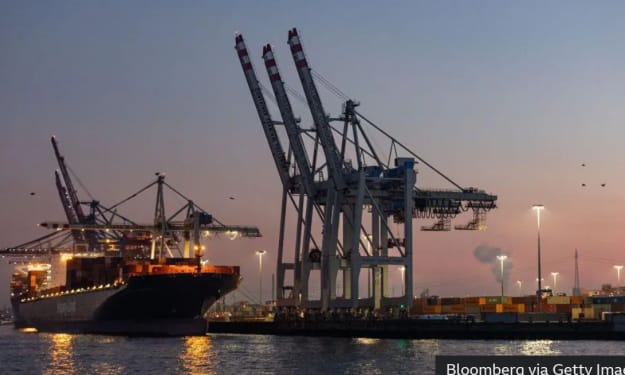
Global financial markets are on high alert following Europe’s announcement that it will suspend approval of a major US trade deal, a decision that has sent shockwaves across stock exchanges, currency markets, and investment forums worldwide. The move comes amid growing concerns over trade imbalances, regulatory disputes, and geopolitical tensions between the United States and European Union. Economists warn that the suspension could create ripple effects across global supply chains, impacting everything from manufacturing and energy to technology and agriculture. The Trade Deal in Question The US-EU trade agreement, intended to streamline tariffs, boost investment, and harmonize regulations between the two economic powerhouses, had been widely anticipated as a game-changer for transatlantic commerce. Negotiations had taken years, with both sides seeking to protect sensitive industries while opening markets for goods and services. However, Europe’s decision to halt the deal reflects mounting concerns over the potential impact on domestic industries and regulatory standards. EU officials cited the need for further review of compliance with environmental, labor, and consumer protection regulations before giving the agreement a green light. While not a full cancellation, the suspension introduces uncertainty and highlights the fragility of international trade negotiations in the current geopolitical climate. Immediate Market Reactions Financial markets reacted swiftly. Stock indices in Europe, the US, and Asia experienced volatility as investors recalibrated expectations for corporate earnings, trade flows, and economic growth. Commodity markets, particularly oil and agricultural products, also saw price fluctuations as supply chain uncertainties increased. The US dollar strengthened slightly against major currencies, reflecting investor demand for perceived “safe-haven” assets amid uncertainty. Meanwhile, European stock markets experienced moderate declines, particularly in sectors most dependent on transatlantic trade, such as automotive, aerospace, and industrial machinery. Investment analysts caution that this volatility may persist as both sides negotiate next steps. Market participants are monitoring political statements, regulatory filings, and industry responses closely to gauge the potential timing and scope of any eventual agreement. Broader Economic Implications Beyond immediate market movements, the suspension of the trade deal could have broader consequences for global economic growth. Reduced trade flows between the US and EU may affect multinational companies that rely on predictable tariffs and harmonized regulations. Sectors such as technology, pharmaceuticals, and energy could face delays in approvals, increased costs, or regulatory conflicts. Emerging markets may also feel the impact indirectly. Many countries are linked to transatlantic supply chains, exporting components, raw materials, or services to Europe or the United States. Any slowdown in EU-US trade could ripple through global production networks, affecting economic growth and employment in distant regions. Political Dimensions The suspension is not purely economic; it also has significant political implications. EU leaders are facing domestic pressures to safeguard industries, protect workers, and maintain environmental and safety standards. At the same time, US officials are emphasizing the strategic benefits of transatlantic cooperation and the risks of prolonged uncertainty. This tension underscores the broader challenge of balancing national interests with the benefits of globalization. Trade agreements are rarely purely transactional; they carry social, political, and environmental stakes. Europe’s decision to pause approval reflects a cautious approach in a time of global volatility, including ongoing geopolitical conflicts, energy security concerns, and fluctuating financial markets. Expert Analysis Economists and trade experts suggest that while the suspension introduces short-term uncertainty, it does not necessarily mean the collapse of the US-EU trade agreement. “This is a temporary pause,” says Dr. Elena Fischer, an international trade analyst. “Europe wants to ensure that the deal aligns with regulatory and sustainability standards. Once concerns are addressed, there is a strong likelihood that negotiations will resume and the agreement will eventually move forward.” Others, however, warn that delays could embolden protectionist tendencies and encourage other nations to reconsider or renegotiate trade agreements. The current global environment—marked by rising inflation, energy price volatility, and ongoing geopolitical tensions—makes international cooperation more complex than ever. Industry Responses Businesses on both sides of the Atlantic are closely watching the developments. Large multinational corporations have expressed concern about the potential for regulatory divergence, increased compliance costs, and disrupted supply chains. Some industries, such as automotive manufacturers and tech companies, rely heavily on synchronized regulations and predictable tariffs to maintain profitability. Trade associations are urging governments to provide clarity and timelines to prevent prolonged uncertainty. Investors, meanwhile, are adjusting portfolios to hedge against potential volatility, emphasizing sectors that may be less affected by transatlantic trade fluctuations. Potential Next Steps The path forward likely involves further negotiation, regulatory review, and stakeholder consultations. European officials have indicated that they are committed to maintaining high environmental and labor standards, while US negotiators are advocating for rapid approval to support economic growth and stability. Observers expect a period of careful diplomacy, with both sides balancing domestic pressures against broader economic and strategic interests. While the market may continue to experience volatility, experts suggest that clarity will eventually emerge, either in the form of a revised deal or a timeline for approval. Conclusion The suspension of the US-EU trade deal serves as a stark reminder of the delicate balance in global economic relations. Markets respond instantly to news and sentiment, while underlying economic, political, and regulatory considerations unfold more slowly. Investors, businesses, and policymakers must navigate these uncertainties carefully, weighing risks and opportunities in an interconnected world. As Europe pauses to ensure compliance and protect domestic interests, the global community watches closely. The resolution of this trade issue will not only shape transatlantic commerce but could influence global trade norms, investor confidence, and economic growth for years to come. For now, the message is clear: in an era of complex international relationships, vigilance and strategic foresight are paramount for global markets.
By Muhammad Hassan2 days ago in Earth



Comments
There are no comments for this story
Be the first to respond and start the conversation.