
The Butterfly That Tastes With Its Feet: How Wings Aren’t Their Only Superpower
Sometimes, beauty hides the weirdest biology.

Butterflies are nature’s living poetry. With delicate wings that shimmer like stained glass and movements as graceful as a drifting dream, they’re one of the few insects that make people smile instead of scream.
But behind that elegance is a weird superpower — something so strange, most people wouldn’t believe it at first:
Butterflies can taste with their feet.
Yes, really.
While we use our tongues to enjoy ice cream or detect the bitterness of medicine, butterflies use their legs — specifically the feet — to “taste” the world around them.
And this bizarre trait? It’s not just for fun. It’s the secret to survival, motherhood, and even love in the life of a butterfly.
Not Just Feet — Sensory Tools
Butterfly feet aren’t like ours. They’re tiny, segmented, and covered in chemoreceptors — specialized sensory cells that detect chemical signals.
These sensors can pick up:
- Sweetness (like nectar)
- Bitterness
- Toxins
- Specific compounds found in leaves and flowers
So when a butterfly lands on a plant, it isn’t just taking a rest. It’s tasting the surface with its feet, scanning it for clues — is this safe? Is this tasty? Is this the right place for my babies?
The Mother Who Tastes for Her Children
This foot-tasting ability is especially important for female butterflies, who have one of the most high-stakes jobs in the insect world: laying eggs in the perfect spot.
Here’s how it works:
1. The female flutters through the air, guided by scent and sunlight.
2. She lands on a leaf.
3. Her feet “taste” the surface.
4. If the leaf contains the right chemicals, it tells her: Yes, this is the plant my babies can eat.
5. Only then will she lay her eggs.
Why so picky? Because butterfly caterpillars are highly selective eaters. Many species can only digest one type of plant. If the mother chooses wrong, the caterpillars will hatch — and starve.
So, tasting with her feet is a life-or-death skill. A winged mother with feet like tongues ensures the survival of her next generation.
Example: Monarch Butterflies and Milkweed
One of the most famous examples is the monarch butterfly. Monarch caterpillars can only eat milkweed, a plant that’s toxic to many other animals.
When a monarch female searches for a place to lay eggs, she uses her feet to taste for the chemical compounds unique to milkweed. If she can’t detect them, she won’t lay a single egg.
It’s not just instinct. It’s chemistry.
And it’s happening through her legs.
Why Not Taste With the Mouth?
Good question. Butterflies do have taste sensors in their mouths (proboscis), but it’s mostly used for drinking nectar from flowers.
The feet are for tasting solids, like leaves, soil, and even fruit skins — things they can’t suck up through their straw-like mouths.
Plus, using feet allows butterflies to taste without wasting time eating. They can quickly scan plant after plant, landing only briefly, making rapid decisions that would take too long with the mouth.
Imagine being able to know if a mango is ripe just by standing on it.
That’s the butterfly life.
Other Insects with Strange “Taste” Organs
Butterflies aren’t the only ones with unconventional taste systems. Nature gets creative:
- Flies also taste with their feet, which is why they walk all over your food before deciding to eat it.
- Bees taste with their antennae and legs.
- Moths, close cousins of butterflies, also use their feet to detect chemical signals from plants.
Insects don’t separate “touch” and “taste” the way we do. For them, it’s often the same thing.
What Happens When Their Feet Get Damaged?
If a butterfly injures its legs or loses part of its foot, it may lose the ability to taste properly — and in females, this could lead to laying eggs on the wrong plant, which means disaster for the caterpillars.
Some studies have shown that damaged butterflies struggle more to find suitable food or egg-laying sites. In the wild, even a tiny injury can change everything.
Their wings may be beautiful, but it’s the feet that hold the wisdom.
Final Thought: Don’t Underestimate the Small Stuff
It’s easy to admire butterflies for their colors. We chase them through gardens, paint them on walls, and turn them into symbols of freedom and change.
But maybe their most magical parts aren’t the ones we can see.
Their feet — those tiny, overlooked legs — are tasting, scanning, and decoding the world. Without them, the next generation wouldn’t survive. Without them, butterflies would be lost.
So next time one lands near you, remember:
It might not just be resting.
It might be tasting you.
About the Creator
The Dryads Are Calling
Deep within the heart of ancient forests, where sunlight filters through towering canopies and the air hums with life, there exists a world few humans truly understand. It is a world of dryads, the mythical tree spirits of folklore, silently observing, nurturing, and sometimes guiding the creatures that dwell among the trees. Today, their legend continues to captivate the imagination, blending myth, nature, and a touch of magic.
By Aarif Lashariabout 14 hours ago in Earth
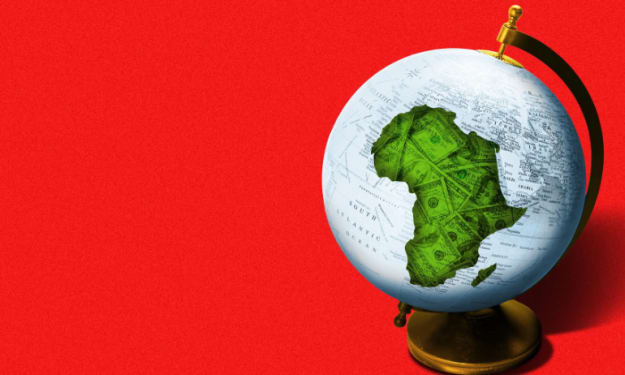
Inside Trump's $11 Billion Health Plan to Replace “Neo-Colonial” USAID
In the landscape of global health aid, few proposals have stirred as much debate as former President Donald Trump’s ambitious plan to restructure American assistance abroad. Dubbed an $11 billion health initiative aimed at replacing USAID’s current framework, the plan seeks to pivot away from what Trump and his allies have criticized as the “neo-colonial” approach of U.S. foreign aid. While the plan promises greater efficiency and impact, experts are split on whether it is a practical solution or a politically driven gamble. Trump’s Critique of USAID The United States Agency for International Development (USAID) has long been a central pillar of American foreign assistance, distributing billions in aid annually to address health crises, food insecurity, and development challenges worldwide. However, Trump’s administration and its supporters have often described USAID’s approach as bureaucratic, inefficient, and reflective of a “neo-colonial” mindset. In public statements, Trump argued that the U.S. was spending taxpayer dollars on programs that benefited foreign governments or contractors more than the intended local communities. Critics of the plan say that while USAID has flaws—as any large bureaucracy does—its extensive networks and decades of experience provide an unmatched capacity to deliver aid efficiently and safely. The Core of the $11 Billion Proposal At the heart of Trump’s proposal is an $11 billion fund designed to consolidate, modernize, and streamline U.S. health aid. Unlike the traditional USAID model, which relies heavily on long-term partnerships with governments and NGOs, the new plan emphasizes: Direct Impact Funding: Allocating resources to frontline health workers and local initiatives rather than intermediaries. Data-Driven Investments: Using real-time health data to target outbreaks and crises more efficiently. Private Sector Partnerships: Leveraging U.S. pharmaceutical companies, tech firms, and healthcare startups to deliver vaccines, treatments, and medical infrastructure. Shorter Program Cycles: Moving away from multi-year funding commitments in favor of more flexible, results-oriented programs. Proponents argue that this approach could reduce bureaucratic overhead and ensure U.S. aid reaches communities faster. By “cutting out the middlemen,” Trump supporters claim, America can avoid the pitfalls of slow-moving aid programs that sometimes fail to adapt to crises. Reactions from the Global Health Community Global health experts, however, have expressed concern about both the logistics and philosophy of the plan. Dr. Melissa Ortega, a senior researcher at the Global Health Policy Institute, explained, “The idea of bypassing established structures like USAID may sound appealing on paper, but in practice, it risks undermining decades of institutional knowledge. Health systems are complex, and short-term projects cannot replace long-term capacity building.” Some critics have also questioned the characterization of USAID as “neo-colonial.” While U.S. foreign aid has historically been tied to geopolitical interests, many programs today are designed collaboratively with recipient countries and local organizations. Reducing oversight could unintentionally increase the risk of misuse, corruption, or health inequities. On the other hand, supporters of Trump’s plan point to examples of inefficiency in USAID programs, citing cases where aid was delayed or mismanaged. By introducing more direct funding models, they argue, U.S. taxpayer dollars could achieve a higher “return on health outcomes.” Political Implications Trump’s health aid overhaul proposal is not just about international development—it is also deeply political. Framing USAID as a “neo-colonial” institution resonates with a populist narrative that America should prioritize its own citizens and assert greater control over how taxpayer money is spent abroad. Domestically, the $11 billion plan faces scrutiny from Congress. Lawmakers from both parties have questioned whether dismantling USAID’s systems could destabilize ongoing health programs in countries where the U.S. has long-term commitments. The potential impact on global health security—including the fight against pandemics like COVID-19—adds another layer of concern. Internationally, U.S. allies and partner nations are watching closely. Sudden shifts in aid delivery could disrupt health programs in low- and middle-income countries, many of which rely on predictable funding cycles to maintain vaccination campaigns, maternal health services, and disease surveillance. Possible Benefits and Risks If executed carefully, the Trump-backed model could bring several benefits: Faster Response Times: Direct funding could accelerate delivery of vaccines, treatments, and emergency support. Innovation Boost: By partnering with private sector companies, the plan could accelerate development of new health technologies. Accountability: With performance-based metrics, the plan may better measure the impact of U.S. aid. However, the risks are equally significant: Disruption of Existing Programs: Abrupt changes could destabilize ongoing health projects. Loss of Expertise: USAID’s decades of experience in navigating local governance, supply chains, and community engagement may be hard to replace. Geopolitical Fallout: Allies accustomed to collaborating with USAID might see the move as destabilizing, reducing cooperation on global health initiatives. Looking Ahead As Trump and his allies continue to advocate for this $11 billion overhaul, the debate over the future of U.S. health aid is intensifying. Proponents view it as a necessary modernization of an outdated system, while critics fear it could undercut decades of carefully built infrastructure and global partnerships. Ultimately, the success of this plan will hinge on its ability to balance efficiency with stability, innovation with oversight, and political objectives with humanitarian needs. For now, the proposal remains controversial, representing a dramatic departure from traditional approaches to U.S. foreign aid. Whether it will reshape global health for the better—or simply create more uncertainty—remains to be seen. In the end, the Trump health plan is as much about ideology as it is about dollars. It challenges the conventional wisdom of international development and asks whether a more streamlined, results-focused approach can truly replace a system built over decades. As the world watches, the stakes could not be higher: the future of U.S. global health aid—and the lives it touches—hangs in the balance.
By Muhammad Hassan5 days ago in Earth



Comments
There are no comments for this story
Be the first to respond and start the conversation.