
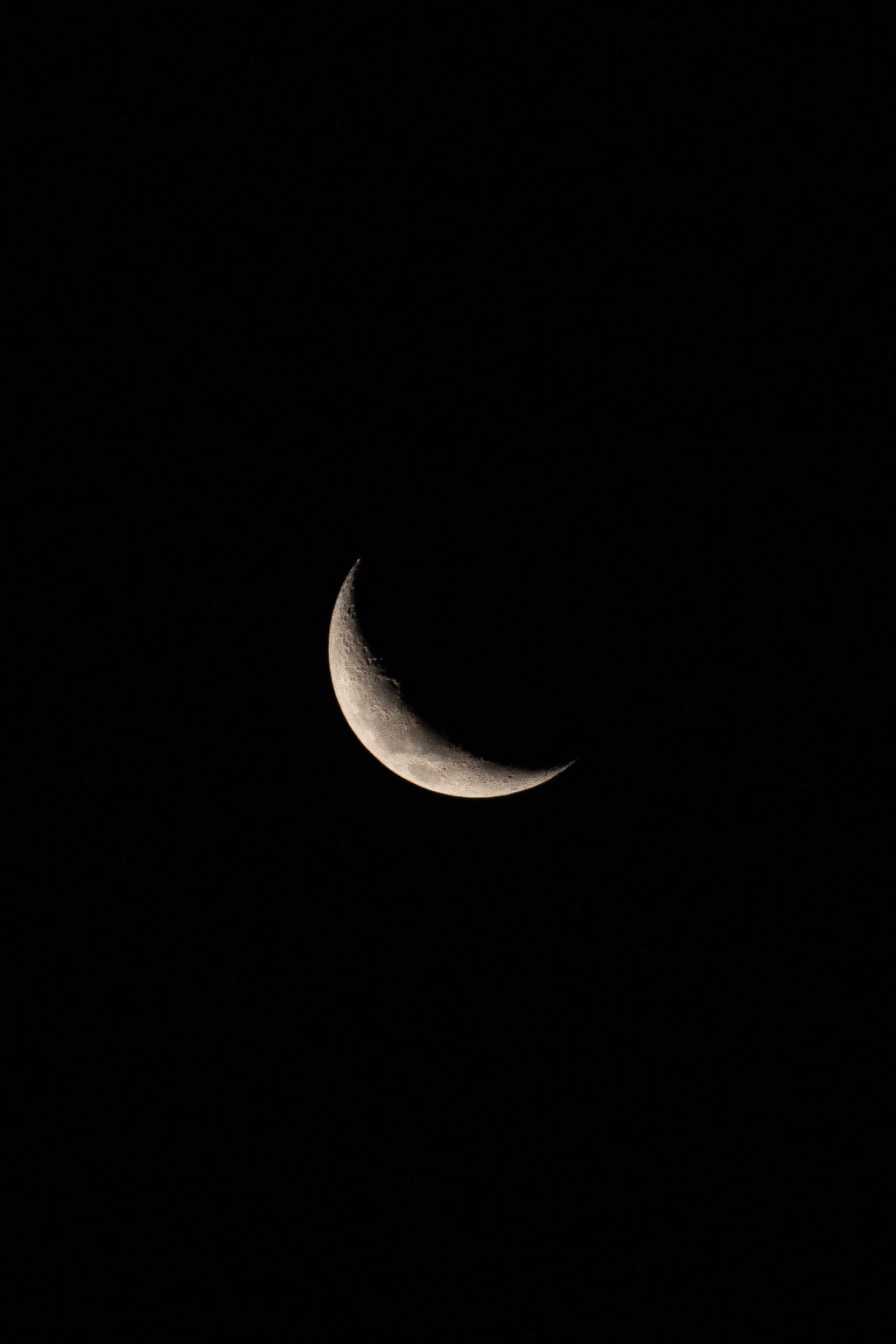
A black hole is a region in space where the gravitational pull is so strong that nothing, not even light, can escape it. Black holes are formed from the remnants of massive stars that have died in supernova explosions. The intense gravity of black holes warps the fabric of spacetime, creating a boundary known as the event horizon, beyond which nothing can escape.
Black holes come in different sizes and are classified based on their mass and size. The smallest black holes, known as stellar black holes, have masses that are several times that of the sun and are formed from the collapse of massive stars. Supermassive black holes, on the other hand, have masses that are millions or billions of times that of the sun and are thought to exist at the centers of most galaxies, including our own Milky Way.
The presence of a black hole can be inferred by observing its effects on surrounding matter. For example, the intense gravitational pull of a black hole can cause stars and gas to orbit around it, creating a disk-like structure known as an accretion disk. The motion of these objects can provide information about the properties of the black hole, such as its mass and size.
Black holes are also thought to play a role in shaping the structure of galaxies and in the growth and evolution of galaxies. The intense gravitational pull of a black hole can cause nearby stars to be ejected from a galaxy or to change their orbits, influencing the overall shape and structure of the galaxy. In addition, black holes can merge with other black holes, leading to the formation of even larger black holes and the growth of supermassive black holes.
Despite their importance in astrophysics, black holes are still largely mysterious, and there is much that scientists don't know about these objects. For example, it is still unclear what happens at the center of a black hole, where the gravitational pull is thought to be infinite. However, ongoing research and new observations are providing new insights into these fascinating objects, and scientists continue to work to improve our understanding of black holes and their role in the universe.
In conclusion, black holes are objects of intense fascination and mystery in the field of astrophysics. With their incredible gravitational pull and influence on surrounding matter, black holes play a crucial role in shaping the structure of galaxies and in the growth and evolution of the universe.
The concept of time travel and black holes have been popular topics in science fiction for decades, but the idea of using black holes for time travel is still purely theoretical and has not been proven scientifically.
According to general relativity, a theory of gravity proposed by Albert Einstein, time can appear to move more slowly in a strong gravitational field. This effect, known as time dilation, suggests that it might be possible to travel into the future by entering a black hole and then emerging back into our own time.
However, this idea is purely speculative and not supported by current scientific understanding. The immense gravitational forces near a black hole would likely destroy anything that tried to enter, and it is not clear how anything could escape once it was trapped inside.
Additionally, there are major conceptual and technical difficulties in using black holes for time travel, such as the fact that black holes are thought to be one-way ticket destinations from which there is no return.
In conclusion, the idea of using black holes for time travel is intriguing, but it remains purely theoretical and there is no scientific evidence to support it. Further research and advancements in our understanding of gravity and black holes are necessary before any practical applications can be considered.
About the Creator
Keep reading
More stories from writers in Earth and other communities.
World Spends $30 Destroying Nature for Every $1 Spent Protecting It
The world is at a crossroads when it comes to environmental protection. A shocking new analysis reveals that for every $1 spent protecting nature, humanity spends roughly $30 destroying it. This staggering imbalance underscores a harsh reality: economic development, industrial growth, and resource exploitation continue to take precedence over the planet’s ecological health.
By Muhammad Hassan6 days ago in Earth
10 Times Rotten Tomatoes and I Disagreed
***Disclaimer*** I will be ranking these movies in the following manner: The greater the divide between Rotten Tomatoes and I, the higher up on the list (and I am referring to the critic's score, not the audience score). I will also show Rotten Tomatoes' score on each one in addition to my score. I am curious to know what everyone thinks, please let me know in the comments below!
By Madison "Maddy" Newton5 days ago in Geeks
Killing him slowly
There’s an intruder in my house again. He stumbles through the door, wet carrier bags in hand. He’s bought me offerings. I show my appreciation, letting him caress my beautiful body. He wants to touch me. I rub myself against his legs. He sighs, dropping the bags. He can’t resist touching me. Running his hand slowly down my spine, I arch my back towards his caress, let out a low purr. It’s what we both need.
By N J Delmas2 days ago in Horror




Comments
There are no comments for this story
Be the first to respond and start the conversation.