
Tensions Soar as India and Pakistan Exchange Strikes Over Kashmir Attack
India Pakistan War
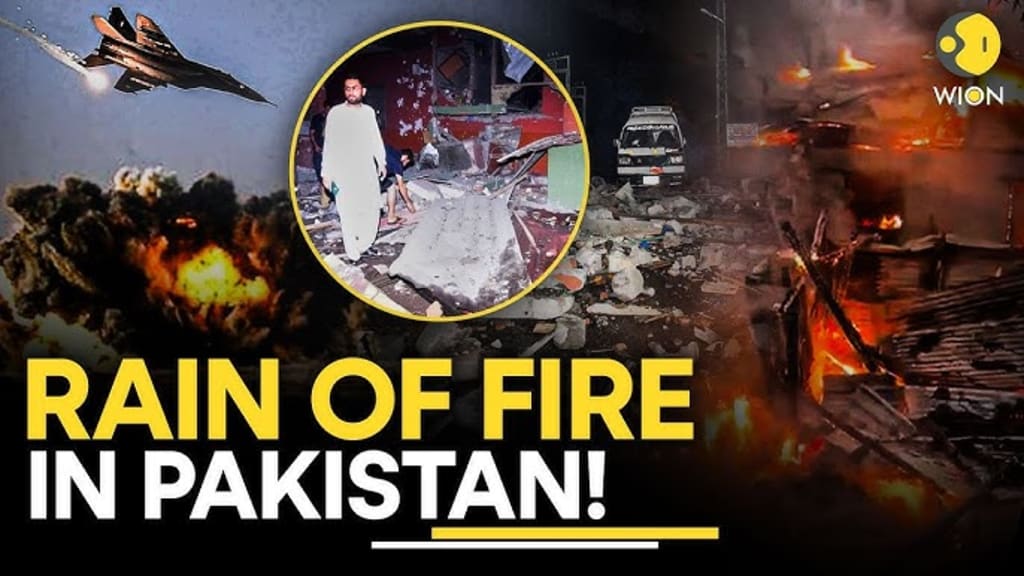
In a dramatic escalation of tensions following an attack on tourists in Kashmir, the Indian Air Force (IAF) launched missile strikes targeting sites within Pakistan and Pakistan-administered Kashmir during the early hours of May 7. The strikes, according to Indian officials, were aimed at nine terrorist hideouts. However, Pakistan disputes this, claiming the missiles struck civilian areas, causing significant casualties, including women and children.
Indian Airstrikes and Civilian Casualties
India’s pre-dawn operation reportedly involved 26 missiles fired at six locations across the border. New Delhi stated that the targets were terrorist camps responsible for orchestrating recent violence in Kashmir. In contrast, Pakistan’s military spokesperson said the strikes hit civilian homes, mosques, and public infrastructure, resulting in several deaths and injuries. The discrepancy in narratives has fueled tensions, with both countries now locked in a heated blame game.
Pakistan’s Military Response: Indian Jets Downed
In retaliation, the Pakistani military launched counterattacks and claimed to have downed five Indian aircraft and a drone. Notably, among the aircraft allegedly shot down was a Rafale fighter jet — a state-of-the-art warplane that India recently inducted into its air force. The Rafale, seen as a symbol of India's aerial dominance, was a major acquisition intended to strengthen its defense capabilities. If confirmed, its loss would mark a significant symbolic and strategic setback for India.
Additionally, sources in Jammu and Kashmir told Reuters that at least three Indian jets were destroyed in Pakistani strikes within Indian-controlled territory. Pakistan also claims to have destroyed an Indian Army brigade complex in Kashmir.
Clashes Along the Line of Control
Cross-border gunfire between Indian and Pakistani forces along the Line of Control (LoC) intensified following the airstrikes. Pakistan’s Information Minister, Attaullah Tarar, confirmed the deployment of ground troops and ongoing exchanges of fire. He also alleged that several Pakistani military posts were destroyed and, in a controversial statement, claimed Indian troops raised white flags in certain border sectors — a gesture typically interpreted as surrender. However, the Indian military has not responded to these claims.
Rising Civilian Toll and Regional Shutdowns
The violence has taken a toll on both civilian populations and infrastructure. While Pakistan reports numerous civilian deaths from Indian missile strikes, India accuses Pakistani forces of opening fire into civilian areas within Kashmir, killing several people. In both nations, panic has spread.
In response to the escalating conflict, Pakistan's Punjab province and the capital, Islamabad, shut down all educational institutions and put hospitals on high alert. India followed suit by closing schools in several Jammu and Kashmir districts, including Samba, Kathua, Rajouri, and Jammu. A general holiday was declared in the region as a precautionary measure.
Diplomatic Fallout and War Warnings
The escalating conflict has revived fears of a full-scale war between the two nuclear-armed neighbors. Pakistan’s Prime Minister called India’s actions “a declaration of war” and vowed strong retaliation. Defense Minister Khawaja Muhammad Asif even claimed that Indian soldiers had been captured — a statement that was later retracted.
Despite issuing stern warnings, Islamabad emphasized that it does not seek further escalation but would respond decisively to any additional aggression. With both militaries mobilized and public sentiment running high, the threat of miscalculation looms large.
Global Reactions and Calls for Restraint
The international community has expressed deep concern over the rapidly deteriorating situation. The United States labeled the hostilities “shameful” and urged both nations to exercise restraint. Former U.S. President Donald Trump described India’s airstrikes as “regrettable” and appealed for de-escalation.
Meanwhile, the United Arab Emirates warned of potential political and economic instability if the conflict continues, and the United Nations issued a statement urging both countries to avoid actions that could lead to full-scale war.
A Dangerous Moment for South Asia
India and Pakistan have fought three wars since the 1947 Partition, most of them over Kashmir. The most recent major military confrontation was the 1999 Kargil War. Although a skirmish occurred in 2019, it did not spiral into a larger conflict. However, the current crisis appears more volatile, with both sides possessing more advanced weaponry and openly threatening retaliation.
Analysts warn that any further military escalation could trigger uncontrollable consequences, especially given the nuclear capabilities of both nations. As the world watches with anxiety, global leaders are emphasizing the urgent need for diplomacy and dialogue.
About the Creator
Keep reading
More stories from Mubasshir Haque and writers in Earth and other communities.
Analyzing the Potential Outcome of a Hypothetical India-Pakistan War
The India-Pakistan rivalry is one of the most enduring and volatile in the modern world. Rooted in history, partition, religious differences, and territorial disputes—especially over Kashmir—both nations have fought several wars since their independence in 1947. While diplomatic efforts and international pressure have prevented full-scale conflict in recent years, tensions frequently flare along the Line of Control (LoC). In the event of a hypothetical full-scale war between India and Pakistan, various military, economic, geopolitical, and strategic factors would determine the outcome. This report aims to analyze these elements to assess which country might emerge as the likely victor.
By Mubasshir Haque 10 months ago in Earth
Venus and Jupiter Shine Together: A Stunning Planetary Display in Earth’s Sky
For skywatchers across the world, there are few sights more captivating than seeing bright planets glowing in the night sky. Among these celestial wonders, the close appearance of Venus and Jupiter from Earth is one of the most spectacular. When these two brilliant planets appear close together in the sky, they create a stunning astronomical event that fascinates both professional astronomers and casual stargazers alike.
By Irshad Abbasi 6 days ago in Earth




Comments
There are no comments for this story
Be the first to respond and start the conversation.