
Analyzing the Potential Outcome of a Hypothetical India-Pakistan War
India Pakistan War
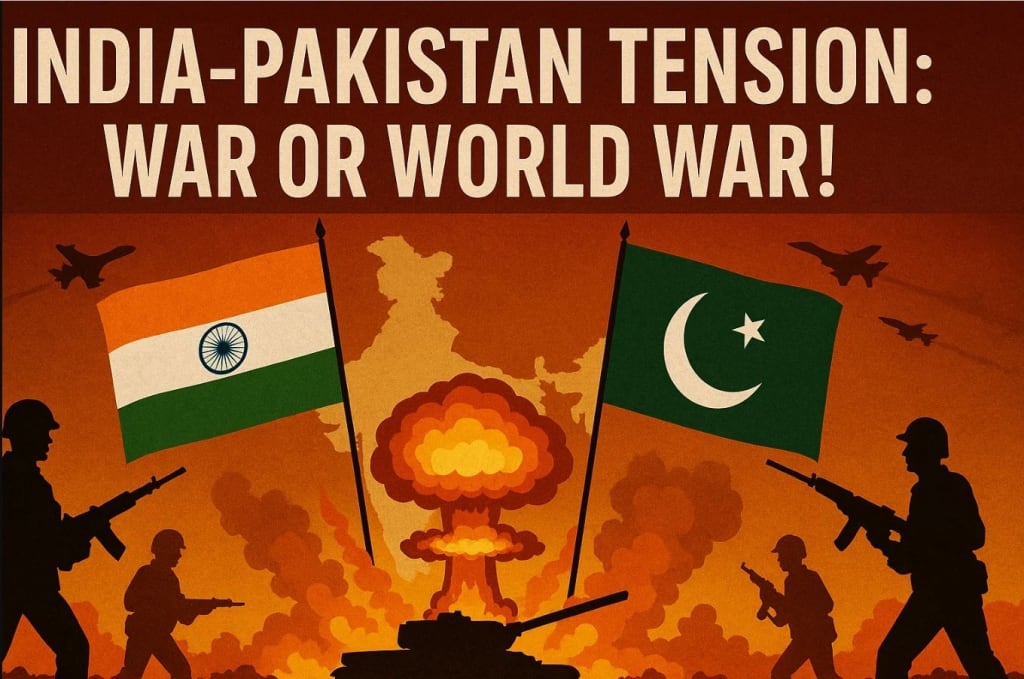
The India-Pakistan rivalry is one of the most enduring and volatile in the modern world. Rooted in history, partition, religious differences, and territorial disputes—especially over Kashmir—both nations have fought several wars since their independence in 1947. While diplomatic efforts and international pressure have prevented full-scale conflict in recent years, tensions frequently flare along the Line of Control (LoC). In the event of a hypothetical full-scale war between India and Pakistan, various military, economic, geopolitical, and strategic factors would determine the outcome. This report aims to analyze these elements to assess which country might emerge as the likely victor.
Military Strength and Capabilities
When comparing military capabilities, India holds a significant advantage over Pakistan in nearly every metric:
Manpower: India has over 1.4 million active military personnel, compared to Pakistan’s 640,000. Additionally, India maintains a larger reserve force.
Defense Budget: India’s annual defense budget exceeds $70 billion, while Pakistan’s stands around $10 billion. This budget gap translates into superior equipment, technology, and infrastructure for India.
Air Power: India boasts over 2,000 aircraft, including modern fighters like the Rafale, Su-30 MKI, and Tejas. Pakistan, though equipped with capable aircraft like the F-16 and JF-17, cannot match the quantity or quality of India's air force.
Naval Strength: India’s navy is among the world’s top ten, with aircraft carriers, nuclear submarines, and a blue-water capability. Pakistan’s navy is largely focused on coastal defense and lacks the reach to project power beyond its shores.
Nuclear Capability: Both countries possess nuclear weapons. India follows a "No First Use" (NFU) policy, while Pakistan maintains a policy of ambiguity. The risk of nuclear escalation would serve as a deterrent to full-scale war but cannot be ruled out.
Economic Strength
India's economy dwarfs Pakistan’s. As of 2024, India is the world's fifth-largest economy with a GDP exceeding $3.7 trillion. Pakistan’s GDP is around $350 billion. Economic strength translates to better war sustainability. India has the capability to fund long-term warfare and replace military losses more effectively. Moreover, India's defense industry is increasingly self-reliant, whereas Pakistan is dependent on foreign suppliers such as China and Turkey.
Geopolitical Alliances and International Support
International opinion plays a significant role in modern warfare:
India enjoys stronger relations with global powers like the United States, France, Japan, and Australia. Its participation in the Quad alliance (with the US, Japan, and Australia) indicates a growing strategic footprint in the Indo-Pacific.
Pakistan has strong ties with China and Turkey. It also enjoys goodwill among some Muslim-majority nations and relies heavily on China for military and economic assistance.
In a prolonged conflict, India’s broader international partnerships could prove decisive in terms of logistics, intelligence sharing, and diplomatic backing.
Terrain and Geography
Both nations share a complex terrain, including deserts, plains, rivers, and the formidable Himalayas. The geography of the border, especially in Kashmir, presents challenges for both sides:
India has better logistics infrastructure in border areas due to long-term investment in road and air connectivity.
Pakistan benefits from proximity to its own strategic bases, especially near the Punjab region.
Despite this, India’s overall size and logistical reach provide it with an upper hand in terms of troop movement and supply chains.
Cyber and Space Capabilities
Modern wars are not only fought with guns and tanks but also in cyberspace and via satellite intelligence:
India has a well-developed space program (ISRO) and a growing cyber warfare capability. It can monitor Pakistani troop movements via its satellite network and deploy precision strikes.
Pakistan has improved its cyber warfare capacity, but it still lags behind India in space and surveillance technology.
Public Morale and Internal Stability
Domestic support is crucial in sustaining any war effort. India, as a diverse democracy, might face internal dissent if a war causes significant civilian or economic damage. However, nationalist sentiments can also unify the population during wartime.
Pakistan, which has experienced political instability, military dominance in governance, and economic crisis in recent years, might struggle with maintaining internal stability during a prolonged war. Additionally, the threat of insurgent and extremist groups within Pakistan poses a risk of internal fragmentation during external conflict.
Scenario Analysis: Conventional vs. Nuclear War
Conventional War: In a non-nuclear scenario, India’s military and economic superiority would likely lead to a decisive victory. India could cripple Pakistan’s military infrastructure and economy through sustained air and land campaigns.
Nuclear Escalation: This is the most dangerous scenario. Pakistan’s doctrine includes the potential use of tactical nuclear weapons if it perceives an existential threat. A nuclear exchange would be catastrophic for both nations and the region, possibly leading to millions of deaths and environmental devastation. Therefore, mutual deterrence has so far prevented escalation beyond conventional skirmishes.
Conclusion
While war between India and Pakistan would be devastating on both sides, analysis of military strength, economic resilience, international support, and strategic depth suggests that India would have a clear upper hand in a conventional conflict. However, the threat of nuclear escalation acts as a strong deterrent, making a full-scale war highly unlikely.
The most prudent path forward is diplomacy, conflict resolution, and regional cooperation. Given the nuclear capabilities and shared history, even a small miscalculation could spiral into unmanageable consequences. Peace, rather than war, remains the only path to lasting security and prosperity in South Asia.
About the Creator
Keep reading
More stories from Mubasshir Haque and writers in Earth and other communities.
The Structure and Layers of the Ocean Floor
The ocean, covering over 70% of Earth’s surface, is a vast and mysterious realm. Beneath its surface lies the ocean floor—an intricate landscape that rivals the complexity of the continents. This underwater terrain is not flat or uniform, but composed of a variety of features shaped by geological processes over millions of years. Understanding the structure and layers of the ocean floor is crucial for marine science, geology, and environmental studies.
By Mubasshir Haque 10 months ago in Earth
The Day the Forest Spoke
A Walk Into the Unknown It began as an ordinary hike, a chance to escape the chaos of the city and immerse myself in the green stillness of the old Redwood Forest at the edge of my town. The sun filtered through the towering trees in long golden beams, the leaves rustling faintly with a whisper of wind, and for a moment, I felt at peace — detached from deadlines, notifications, and the endless noise of human life. I hadn’t planned for anything extraordinary, just a few hours of solitude surrounded by the ancient giants that had stood for centuries, quietly observing the world.
By The Curious Writer4 days ago in Earth
The Forsyth House Fire
Since 1851, Forsyth House has stood on the corner of Union Street and Gordon Street in the heart of Glasgow. Its iconic, or was... because on Sunday 8th of March, 2026, a fire broke out in a small, seemingly un-named shop in the building and tore all that history down. As I write, the rubble is still unsettled and the street is still blocked off. Central Station is quiet on the upper level, and around 30 small businesses have quite literally gone up in smoke.
By S. A. Crawford3 days ago in The Swamp


Comments
There are no comments for this story
Be the first to respond and start the conversation.