Sustainability
The Insanely Interesting Stories About Canada You Never Knew
Canada - Geography Canada, the second largest country in the world and the largest in the Western Hemisphere, is located in North America and consists of 10 provinces and three territories. The states are British Columbia, Alberta, Saskatchewan, Manitoba, Ontario, Quebec, New Brunswick, Nova Scotia, Prince Edward Island, Newfoundland and Labrador. The three territories are the Yukon Territory, the Northwest Territories, and Nunavut. Its 10.states and 3 territories stretch from the Atlantic Ocean to the Pacific Ocean and north to the Arctic Ocean, covering 9.98 million square kilometers, making it the second largest country in the world, after Russia by total area. Canada’s southern border— The Canada-United States border, is the longest international border in the World at 8,892 kilometers (5,525 miles). Its eastern extremity is Cape Spear, Newfoundland, and its western extremity is Mount St. Elias, Yukon, near the Alaskan border. The southernmost point of the Great Lakes is Middle Island, north of Lake Erie, the fourth largest lake in North America. The 49th parallel is synonymous with the Canadian border in the north. (You came to know more about Canada while going through the Canada Quiz)
By Mathew Vargheese3 years ago in Earth
What All The Buzz Is About. Top Story - August 2022.
August 20th is National Honeybee Day. Though they are no longer considered an endangered species, many still worry about their safety because of the important role they play in agriculture. To better protect them, many have taken up beekeeping as a way of helping the honey bee thrive. Beekeeping is a hobby that dates back to 8,000 BC. Making honey the oldest known food in world history, and beekeeping the second oldest profession. Today, in the US. there are 212,000 beekeepers across the country. Here are some helpful tips you can use if you wish to get started in beekeeping.
By M.L. Lewis3 years ago in Earth
Lakes So Full Of Life, But What Of The Future
Most people know what a lake is in general terms; a large body of water enclosed by its surroundings or through the efforts of man. But have you ever wondered about how its like to live in a lake? Lakes are one of our earths greatest sources of fresh water and many creatures depend on it, both terrestrial and aquatic. More creatures actually live underwater than on land, over fifty percent in fact. We rely on them for food and for many other valuable resources that we need, but what about our future needs.
By Toby Heward3 years ago in Earth
Why Is Recycling Important? 10 Benefits of Recycling. Top Story - August 2022.
Why is recycling important, and how can it benefit the environment? There are many reasons why recycling is essential. Not only can it help reduce your carbon footprint, but it also helps reduce the need for harvesting raw materials, saves energy, reduces greenhouse gases, prevents pollution, and more.
By Ijaz Haider3 years ago in Earth
Is Net-Zero Emission The Biggest Business Opportunity Of The Century?
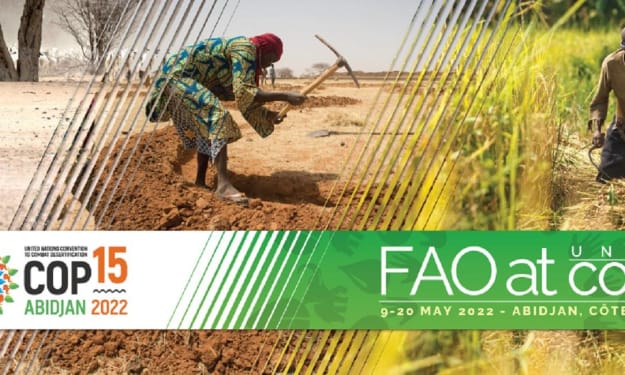
Net-Zero is a term that has become popular in both the public and private sectors thanks to the massive advocacy performed by the environmental movement led by the United Nations and other global foundations. More recently, following the COP15 and COP26 Climate Summits that respectively took place in Paris, France in 2015 and in Glasgow, UK in 2021, the term has become synonymous with the green industrial transformation. Net-zero refers to the decarbonization of our economies to the level in which the greenhouse gases going into the atmosphere are harmonized by their complete removal.
By Andrea Zanon3 years ago in Earth