Sustainability
FAMILY CHALLENGES
In the quiet suburb of Greenfield, nestled amidst rows of neatly manicured lawns and blooming gardens, the Thompson family once stood as a pillar of warmth and unity. Mark and Sarah Thompson had built their life around their three children: Emma, the eldest with a heart of gold; Ethan, the middle child with a mischievous grin that could brighten any room; and little Olivia, their sunshine who brought joy with every giggle.
By Yaje Iddrisu Mohammed2 years ago in Earth
The Western Sahara
Mauritania serves as a crucial link for sub-Saharan Africans aiming to reach Europe. Situated at the western edge of the Sahara, Mauritania acts as a bridge for collaboration between Mauritania and Spain. The country witnesses a steady influx of sub-Saharan Africans, predominantly from Nigeria, who aspire to find opportunities in Europe. As an Islamic Republic, Mauritania grapples with social stratification and restrictions on freedom. It stands as a transit point where the cultures of black Africa intersect with the Islamic North, with Christians being a minority originating from the southern regions. The prevalent social hierarchy in Mauritania underscores the unequal treatment of individuals and the limited liberties compared to other nations. Delving into the enigmatic society of Mauritania reveals the complexities of modern-day slavery, with descendants of freed slaves shedding light on the ongoing denial and suppression of this issue.
By Isaac Ekow Anyidoho2 years ago in Earth
Inspiring story of carbon negative country Bhutan
In this article, we are going to explore about the carbon-negative country, Bhutan. Where each country is talking about being a carbon-neutral country, Bhutan is the one country to be carbon-negative. We are going to talk about the reasons of Bhutan being the carbon-negative country and how we can also learn from world carbon-negative country. Bhutan is a small country, neighbour of India and China. It is one of the world's first carbon-negative country.
By Sakshi phogat2 years ago in Earth
Biomass to Biochar: Full Life Cycle Carbon Footprint Analysis
The conversion of biomass to biochar represents a promising strategy for carbon sequestration and soil enhancement. This process not only mitigates greenhouse gas emissions but also offers agricultural benefits. A comprehensive life cycle carbon footprint analysis provides insight into the environmental impacts of biochar production and use. By examining each stage, from biomass collection to biochar application, we can better understand the potential of this technology in achieving sustainability goals.
By Wayne Shen2 years ago in Earth
Our Fragile Home
I can't help but feel a deep sense of awe and wonder when I look at our planet, Earth. It's a beautiful and complex planet, but as much as I love our home, I can't ignore the very real threats that could potentially endanger it. These threats can come from a variety of sources, including natural disasters, space objects, and even the Sun itself.
By albertus ronny2 years ago in Earth
What Happened After the Dinosaurs Went Extinct?
Mass extinctions have had a significant impact on the course of life on Earth. The extinction of the dinosaurs during the fifth mass extinction opened up new opportunities for the evolution of mammals and birds, leading to the emergence of diverse animal groups. These mass extinctions have altered the dynamics of life, resulting in the demise of some species while creating new possibilities for others. Following the extinction of the dinosaurs, our distant ancestors survived, and new life forms emerged. Over the past 500 million years, there have been five mass extinctions, causing the disappearance of a large number of species. The Cretaceous Period, which occurred over 65 million years ago, was characterized by a diverse range of marine and land reptiles, including giant marine reptiles and the dominance of dinosaurs. The period was marked by a hot and humid climate, high sea levels, and a variety of vegetation such as ferns, conifers, and flowering plants. The marine life during this time included creatures like plesiosaurs, mosasaurs, Archelon, nudists, bivalves, mollusks, and ammonites, as well as Bellum Knights. Additionally, birds and pterosaurs shared the skies, with pterosaurs reaching impressive sizes, such as Quetzalcoatlus with a wingspan of up to 12 meters.
By Isaac Ekow Anyidoho2 years ago in Earth
World Population Day 2024: Understanding Global Challenges
Every year, celebrated on July 11th, the Earth Day tells much about major problems due to world population increase. Initially founded in 1989 by U.N., it focuses upon the various tribulations associated with proliferation and pressures upon the global leaders to find lasting solutions.
By Akshat Raj2 years ago in Earth
Best Practices for Planting and Harvesting Different Crops
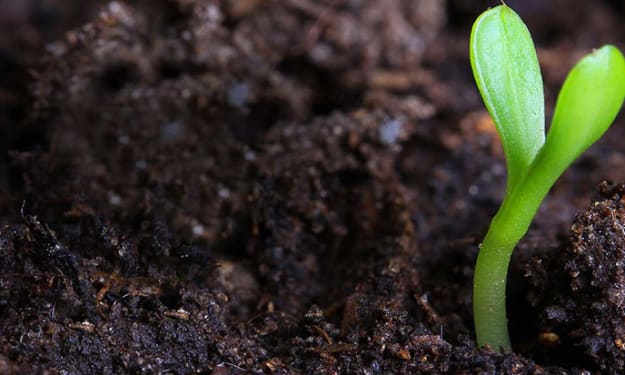
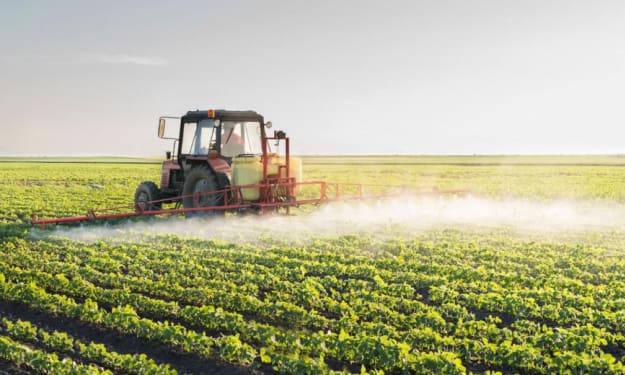
Cultivating and planting both have their advantages and downsides. Utilizing proper planting and collecting techniques is significant to accomplishing exceptional returns. In this article, we'll talk about the methods you'll need to cultivate your crops effectively.
By Mahira Kaur2 years ago in Earth