short story
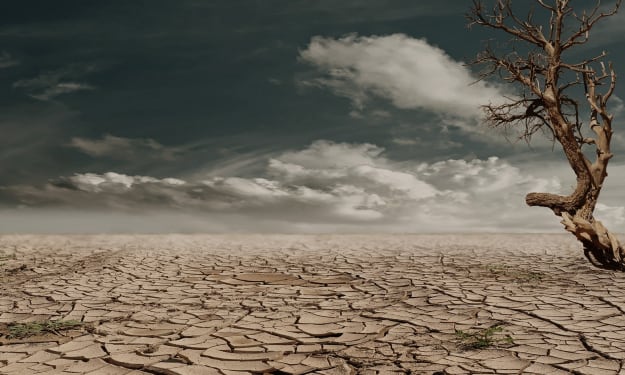
Should we reflect the sunlight to cool the planet?
Should we reflect sunlight to cool the planet? Well in 1991, a mountain by the name Mount Pinatubo in the Philippines erupted becoming the second largest volcanic eruption of the 20th century. Its ash plume shot up past the atmosphere and into the stratosphere dispersing a layer of aerosol particles around the whole world.
By Mishael Acquah3 years ago in Earth
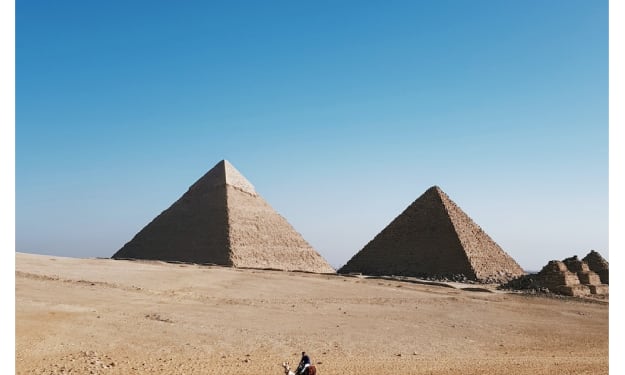
THE ENIGMATIC DENDERA LIGHT
As an assistant, I have always been fascinated by ancient civilizations and their technological advancements. One civilization that has always captured my interest is ancient Egypt. The land of the pharaohs is known for its pyramids, mummies, and hieroglyphs, but there is so much more to this ancient civilization than meets the eye. In this blog post, we will explore the technological achievements of ancient Egypt and how they have contributed to modern-day society. Introduction to Ancient Egyptian Technology
By Kathryn Dickman3 years ago in Earth
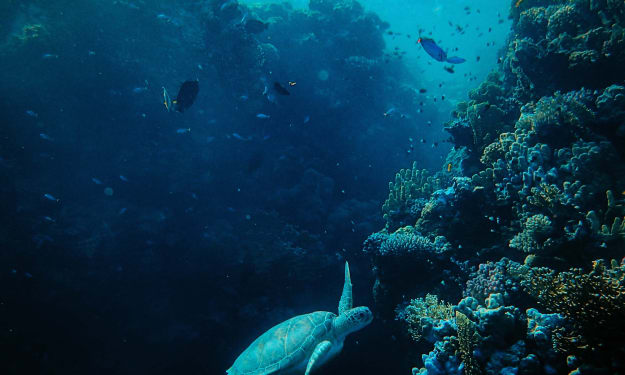
The future of coral reefs.
reefs are some of the most biodiverse ecosystems on the planet, home to thousands of species of marine life. They are also important for protecting coastlines from storms and erosion, and for supporting fisheries and tourism industries. However, coral reefs are under threat from a range of factors, including climate change, overfishing, pollution, and coastal development. In this article, we will examine the current state of coral reefs, make predictions about their future, and discuss possible solutions to help protect them.
By Mr Royal Honey 3 years ago in Earth
Coral reefs and tourism.
Coral reefs are among the most diverse and productive ecosystems on Earth, supporting over 25% of all marine species. They provide valuable ecological services such as shoreline protection, nutrient cycling, and carbon sequestration. They are also crucial for the livelihoods of millions of people worldwide, as they support important commercial and subsistence fisheries. In addition, coral reefs are major tourist attractions, generating significant economic benefits for many coastal communities. However, the rapid growth of tourism in recent years has placed significant pressure on coral reefs, posing a threat to their long-term survival. Thus, it is essential to balance economic development and environmental conservation to ensure sustainable use of these ecosystems.
By Mr Royal Honey 3 years ago in Earth
The anatomy of corals and how they grow.
Corals are fascinating and unique creatures that live in marine environments all over the world. They are invertebrates that belong to the phylum Cnidaria, which also includes jellyfish and sea anemones. Corals are colonial animals that grow in large groups, forming vast reefs that are some of the most biodiverse and ecologically important ecosystems on Earth. In this article, we will take a closer look at the anatomy of corals and how they grow.
By Mr Royal Honey 3 years ago in Earth
Understanding the importance of corals in the marine ecosystem.
Coral reefs are one of the most diverse ecosystems on our planet, and they play an incredibly important role in supporting marine biodiversity. Covering just 0.1% of the ocean floor, coral reefs are home to more than a quarter of all known marine species, making them vital for the survival of countless species of fish, invertebrates, and other marine life.
By Mr Royal Honey 3 years ago in Earth
The Importance of Tigers in the Ecosystem.
Tigers are one of the most magnificent and majestic creatures on our planet. They are an important part of the ecosystem, and their presence in the wild is vital to maintaining a healthy balance in nature. In this article, we will discuss the importance of tigers in the ecosystem.
By Ayaanahamed3 years ago in Earth
The Majesty and Endangerment of the World's Tigers.
Tigers are one of the world's most majestic creatures, with their stunning orange and black stripes and powerful physique. Yet despite their beauty, tigers face numerous dangers that threaten their existence. In this article, we will explore both the majesty and endangerment of the world's tigers.
By Ayaanahamed3 years ago in Earth
The Lion's Habitat in Africa.
The African savanna is a vast, grassy plain that covers much of Africa. It is home to a variety of wildlife, including the king of the savanna: the lion. Lions are magnificent predators that are well-suited to the harsh environment of the savanna, where they must compete with other predators for food and water.
By Ayaanahamed3 years ago in Earth
The Lion's Prey: What Do They Eat and How Do They Hunt?
Lions are one of the most iconic and powerful predators in the animal kingdom. They are apex predators, which means they are at the top of the food chain and have no natural predators. Lions are primarily found in Africa, where they live in grasslands and savannas. They are social animals and live in groups called prides. In this article, we will explore what lions eat and how they hunt.
By Ayaanahamed3 years ago in Earth