Science
Black Hole
What is Black Hole: A black hole is a region in space with an extremely strong gravitational field that no matter or radiation can escape from it. Black holes are formed when massive stars collapse under the force of their own gravity, becoming so dense that they create a singularity, a point of infinite density and zero volume at the center of the black hole. The boundary around the black hole, beyond which nothing can escape, is called the event horizon. Black holes are fascinating objects that have a strong influence on the surrounding space and can affect the motion of nearby stars and planets. They are still a topic of active research and hold many mysteries that scientists are trying to understand.
By narmatha shanmugam3 years ago in Earth
Top 10 lakes
Here are 10 of the most beautiful lakes in the world, in no particular order: Lake Tahoe, California/Nevada, USA Lake Louise, Alberta, Canada Plitvice Lakes, Croatia Lake Como, Italy Lake Baikal, Russia Lake Titicaca, Bolivia/Peru Lake Atitlan, Guatemala Lake Bled, Slovenia Lake Pichola, India Crater Lake, Oregon, USA
By Surya Kumar3 years ago in Earth
The Alien Invasion
It was just another ordinary day in the small town of Millfield. The sun was shining, birds were chirping, and people were going about their business as usual. But little did they know that their peaceful lives were about to be shattered by a horror beyond their wildest imaginations.
By Alagumuthukumar Dhakshinamoorthy3 years ago in Earth
Earth Day Bullet: The Urgency of Taking Action to Protect Our Planet
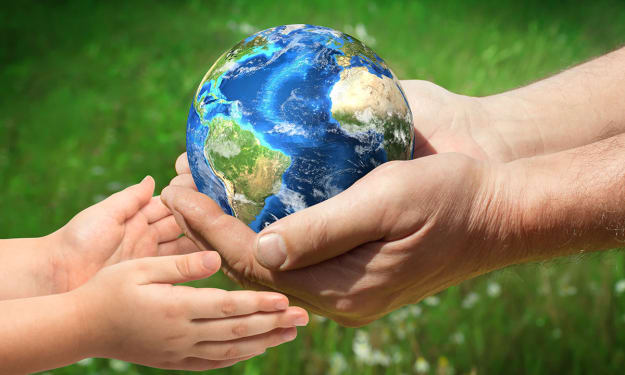
Every year on April 22nd, people all over the world celebrate Earth Day, a day dedicated to raising environmental awareness and taking action to protect our planet. This year's Earth Day theme is "Restore Our Earth," emphasizing the critical need to take action toward a more sustainable future. The concept of the "Earth Day Bullet" is one way to accomplish this.
By IJAHMAN THE CRAZY JARAH3 years ago in Earth
'The Littel Seed'
Once upon a time, in a small village nestled in the heart of a vast, rolling countryside, there was a little seed. It was not unlike any other seed in the village; a small, unassuming thing, barely bigger than a grain of sand. But it was full of life and potential, with a power that would change the destiny of the entire village.
By Ahmed khizer3 years ago in Earth
Top 10 Oldest Living Creatures on Earth
What Is the Oldest Living Creature on Earth? A person is deemed to be of suitable advanced age if they live to be 80 years old. But for many species that live a long time, 80 years is just a baby. Here are some of the planet's oldest living things, ranked from immortal to 120 years in life expectancy, in a top 10 list. The following creatures with extraordinary lifespans are covered in this article:
By Ahamed Thousif3 years ago in Earth
The Best Medicinal Garden Kit
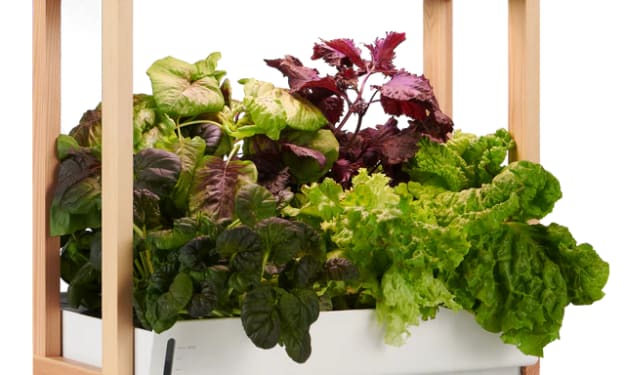
The Medicinal Garden Kit is an innovative product that provides individuals with the tools they need to grow their own medicinal plants at home. This kit has numerous positive aspects, making it a valuable addition to any home or garden. In this essay, we will explore some of the many positive aspects of the Medicinal Garden Kit.
By sameer karim3 years ago in Earth
The Dilemma of the New World
The year was 2089, and a group of five astronauts had been sent on a mission to explore the vast expanse of space. They had been traveling for months and were far from home when they discovered a planet that had the potential for sustaining life.
By Ariana Jean3 years ago in Earth
What are the 4 types of environment?
The environment is the surroundings in which an organism lives and is a crucial aspect of life on Earth. It includes all the living and non-living components that affect the survival and well-being of living organisms. The environment can be classified into four major types: terrestrial, aquatic, atmospheric, and human-made environments. Each of these environments has its unique characteristics, which are determined by various factors such as climate, geography, and human activities. Understanding the different types of environments is essential for effective conservation and management of natural resources. The terrestrial environment comprises land-based ecosystems such as forests, deserts, and grasslands. The aquatic environment includes oceans, lakes, rivers, and other water bodies. The atmospheric environment refers to the gaseous layer surrounding the Earth, while the human-made environment comprises the environment created or modified by human activities. This article will provide an overview of the four types of environments, their characteristics, and their importance for sustaining life on Earth.
By Love The Green3 years ago in Earth