Science
The Antarctic Connection of Penguin.
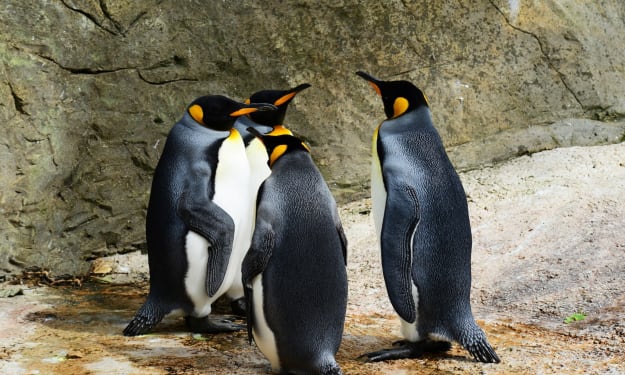
Antarctica, the southernmost continent on Earth, is home to one of the most iconic and beloved creatures in the animal kingdom: penguins. These flightless birds have evolved to survive the harsh and unforgiving climate of the frozen continent, and have captivated the hearts and imaginations of people all around the world.
By Mr Royal Honey 3 years ago in Earth
Magic Angle Of Skipping Rocks
The world record holder at skipping rocks, kinda, sucks at it. So do you and so does everybody not to come screaming in with a hot take about a relaxing outdoor Pastime with zero Stakes, but it`s true because while the world record is 88 skips in a row, researchers predict we should be able to do hundreds, but we can`t and in our quest to understand why researchers have uncovered some real-world applications including bringing astronauts safely back from space. I`m pretty stoked if I can get three skips, so 88 seems unfathomable, but from what we know of the physics behind Rockskipping it`s possible the throw itself involves two things speed and angles. First, imagine the throw, the stone has to be traveling quickly in order to have enough momentum to keep going after making contact with the water and it's not just traveling really fast in a straight line, the stone is angled slightly in order to collide with the water on top of that, the stone needs to be rotating which you accomplish by holding the stone with your forefinger on the Leading Edge as you throw.This rotation is part of the key to success because it gives the stone stability as it flies through the air, as the stone collides with the water there is a couple of forces acting on it. The water pushes up on the moving Stone as it makes an impact causing the stone to skip the Collision and also causing the water itself to move creating ripples,these ripples will add some drag and slow its momentum. You'll notice that as the stone begins to lose momentum it starts skipping more frequently and the height of its skips decreases until all of a sudden the fun is over. Fun fact professional Skippers call these frequent Skips a Pity patch so if the goal is to maximize your skips and get somewhere in the same ballpark as the world record, you have to do a few things to overcome the forces acting on the stone. You need to pick a flat lightweight Stone so the upward force of the water is greater than the weight of the stone, otherwise, it will just sink as soon as it hits. In a 2004 nature paper about skipping stones, the authors identify the magic of the angle of attack when throwing your stone. They found that using a 20-degree angle in relation to the surface of the water maximizes the number of Skips and minimizes the amount of energy lost keeping the stone skipping longer even with all the forces acting against the stone models. Like this say we could create even more skips but why is this so hard to put into practice? First it's really hard to throw fast with spin while at the same time being very accurate about hitting the magic angle of attack, at that point, you're talking major league baseball pitcher levels of power and precision, and most pitchers don't Moonlight as Stone Skippers but even if you could achieve that combination, there are a lot of other factors working against you. For one thing, Mother Nature didn't make all Stones perfectly flat and round discs, and researchers say that the best-skipping Stones aren't stones at all. If you could you'd use something a bit squishy that deforms as it connects with the water like a rubber ball but that's littering, so don't do that. Also, most models simplify the real-world environment neglecting things like wind and waves all of which act against the stone, so while way more than 88 skips could be possible in reality there are too many factors that are out of our control to make that happen without the help of a controlled environment. German and maybe a robot but in the pursuit of trying to understand skipping Stonephysics researchers have found some real-world applications for example skipping technique was applied to the Orion capsule that landed in December 2022. This was the first successful uncrewed mission of NASA's Artemis. The program which will one day use Orion to take humans farther than they've ever traveled. When Orion was headed back to Earth it skipped off of our atmosphere before re-entry it's not quite the same as a stone skipping on the surface of the water but it did dip in and out of the Earth's atmosphere as it changed its trajectory to intersect with Earth. The moves accomplished a number of things. It helped the spacecraft land more accurately so the crew could be recovered in a more precise location, it also helped slow the speed of the spacecraft in the same way the water does when a stone skips on it while also reducing the amount of heat being generated by the high-speed entrance. While Orion was the first to successfully skip across Earth'satmosphere, the Apollo missions also had the capability though not the confidence to use this strategy. They did however inspire the application of this technique to the Orion mission in order to make the journey safer for the crewaboard. Spacecraft re-entry is only one thing we've been able to learn about thanks to the physics behind a simple game, but sometimes it's just fun to learn a little more about an afternoon by the lake too. Skipping Stones is a lot harder than it seems after all If energy momentum conservation is as reliable as the fancy physicists say it is you should be able to throw a little Stone as far as the eye can see. To learn more about energy-momentum conservation you can go to brilliant.org scishow.
By Joseph Njihia3 years ago in Earth
Penguin Species Spotlight.
Penguins are fascinating creatures that captivate the hearts and minds of people around the world. With their iconic tuxedo-like appearance and waddling gait, penguins are well-known inhabitants of the Southern Hemisphere. However, many people may not be aware of the incredible diversity that exists within the penguin family. Let's take a closer look at some of the different species of penguins and discover what makes each one unique.
By Mr Royal Honey 3 years ago in Earth
Adorable Penguins.
Adorable Penguins: The Fascinating Life of these Tuxedoed Birds When it comes to adorable creatures of the animal kingdom, penguins are often at the top of the list. These tuxedoed birds with their waddling walk and endearing antics have captured the hearts of people worldwide. But beyond their cuteness, penguins lead fascinating lives in some of the harshest environments on Earth. Let's dive into the world of these charismatic creatures and uncover the wonders of their existence.
By Mr Royal Honey 3 years ago in Earth
Effect of climate change
The impact of technology on society has been significant and far-reaching. From the rise of the internet and social media to the development of artificial intelligence and automation, technology has changed the way we live, work, and interact with one another. In this review, I will explore the positive and negative impacts of technology on society.
By Mjawad Raza3 years ago in Earth
Maximizing the Effectiveness of Bed Bug Fumigation
As, there are many issues emerged in house. Bed bug is a significant challenges and common problem that is facing by the people. It is infamous for giving itchy bites that make you uneasy and restless. There are numerous remedies available, you can choose at our platform to remove your problem. Bed bug fumigation is a pest control method that involves using chemicals to eradicate bed bugs from an infested area. It is small insects that feed on human and animal blood and are notorious for being difficult to eliminate. Infestations of bed insects can be difficult to eradicate and usually require expert assistance, such as bed bug fumigation. Bed bug fumigation is using fumigants, such Vikane gas, to eradicate bed bugs and their eggs from a contaminated location. We provide bed bug fumigation to remove bed bugs.
By Proserv Pest3 years ago in Earth
Why Planes Don't Fly Over the Pacific Ocean
Have you ever noticed that commercial flights tend to avoid flying over the Pacific Ocean? If you look at a flight map, you will see that most flights from North America to Asia take a more northerly route over Alaska, Russia, or Canada, rather than crossing the Pacific. So why is that?
By Daniel Ellison3 years ago in Earth
Scientists Finally Discovered the Truth About Easter Island
Easter Island, also known as Rapa Nui, has been a topic of fascination for centuries. This small island located in the middle of the Pacific Ocean, known for its mysterious statues called Moai, has captivated the world with its enigmatic history. For years, scientists and historians have been trying to unravel the mysteries surrounding this remote island. Recently, a team of scientists has made significant discoveries that shed new light on the island's history.
By Daniel Ellison3 years ago in Earth
Why The Smithsonian | Colossal Collections Preserves Over 600,000 Bird Specimens
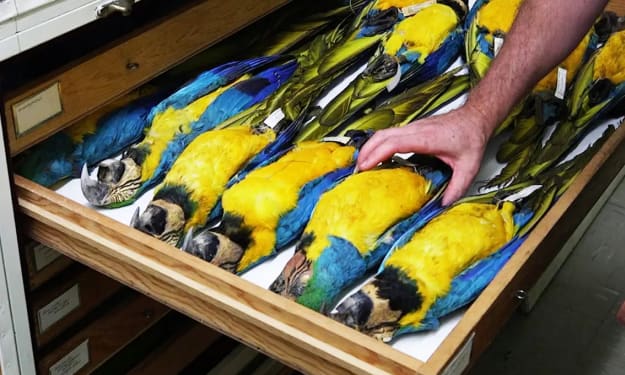
The Smithsonian natural history museum houses over 600,000 bird specimens from the last 200 years and new specimens are added each month thanks to the detailed work of specialists who preserve skin and maintain every bird in the collection but most of these birds never see the museum floor so why do they need to be perfectly preserved the answer research whether it's identifying birds killed by airplanes or discovering evolutionary changes in duck bills. we're not just preparing this bird for use tomorrow we're preparing this bird for use for hundreds of years now. we went to the smithsonian to see how one specimen in the skins collection is added prepared and used for generations to come it starts with acquisition it says here on the label that this ostrich was sent by king mendelek as a present to president. Roosevelt specimens are usually donated by people or organizations this california condor was donated by the u.s fish and wildlife service this bird came from president theodore roosevelt's personal collection and this cooper's hawk died while crashing into a building window it was donated back in 2017 and is about to get its spotlight in an upcoming exhibit but it was initially stored in this freezer. So it's on a left shelf from there our hawk is taken up to the prep lab into the skilled hands of museum specialists like Christina and her husband Brian. Brian did you do that, yes i did put the cotton in the mouth married couples fat this specimen is 996. So i prepared at least that many birds and mammals when you're at about 10000. It shows that you've been doing it for at least probably 20 years or so and you can do it. It was a fun fun exercise and it actually worked blindfolded or not the specialists first thaw weigh and measure the hawk and then they pick up a scalpel to start separating the skin from the muscles and fat since these are going to be stored as dried specimens. We want to remove as much of the muscle from the specimen that we can Brian removes the skin from the body of the bird discarding the soft tissues and oil glands which would cause the specimen to rot and it's crucial to get every piece of fat out without damaging the skin since these specimens are meant to last for years to come that's where gentler tools like his hands become useful. You have to go very slow methodical to get the skin off without ripping it. I'm pushing the skin rather than pulling it so i'm not stretching it brian also uses corn cob dust throughout the process to absorb any body fluids so the specimen is kept clean new people use a lot less dust and more experienced people just cover it with dust when removing the smaller parts of the bird like the head or the eyes the angle of the scalpel also makes a big difference you notice i'm cutting away from the skin there's been times where when you grab the eye it squirts at you sometimes birds that have more fat on their skin need to go through additional cleaning all this white goopy stuff this is all fat that needs to come off otherwise it will get rancid and then it will acidify and it will literally just ooze out of the skin they use this fat wheel machine to remove all the fat until you can see the feather track this is uh takes a little bit of practice because if you press too hard you will rip the skin once the fat is cleared more corncob dust is used to absorb the moisture and then the specimen is washed and dried you want to see me blow the sawdust off okay all right so with this we do it in the fume hood lot of dust everywhere christina uses a forced air dryer to blow off the sawdust and a hair dryer to fluff up the feathers adding a nice sheen to them to get the bird presentation ready brian will first tie the wings together to create a limited range of motion he approximates how far a cooper's hawk would have naturally spread their wings so in the future if somebody grabs the bird and opens up the wing to see the under side of the wing by tying it it'll make it the specimen stronger now the specimen is ready to be stuffed with cotton recreating its original shape we're trying to make a specimen that lasts forever and strong so i'm not a tailor or seamstress but you can sew up a bird pretty good we get the feathers make sure that they're arranged properly in the right order so that'll assist researchers later the last step is pinning the bird onto a board to dry into its permanent position however i end up pinning it that's the way it's going to look the rest of its career at the smithsonian it takes probably close to 100 birds before somebody can go at it alone once they reach a thousand birds then we say that that person is generally an experienced preparator and they can teach other people very well
By Isaac Osah3 years ago in Earth