Science
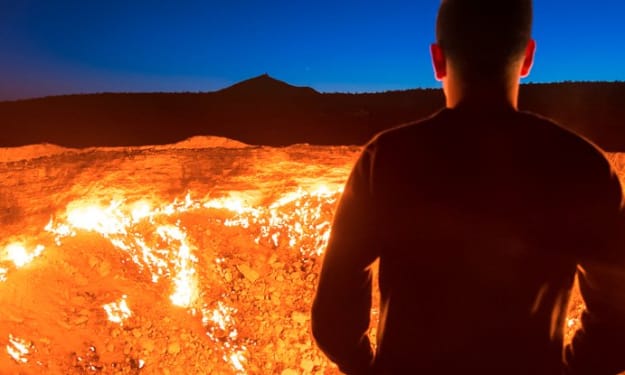
Discover the Astonishing "Door to Hell": Enormous Desert Abyss Engulfed in Flames for Four Decades
Greetings, everyone! Today, I want to share an extraordinary tale that revolves around a remarkable natural phenomenon known as the "Door to Hell." This colossal hole, located in a desert region, has been engulfed in relentless flames for over 40 years, defying all odds and expectations.
By Mark Albert Navacilla (Mark)3 years ago in Earth
Scientists Uncover a Deadly Underwater Lake with Devastating Consequences!
Rivers, lakes, and even waterfalls exist within the depths of our vast oceans, owing to the variable density of water influenced by factors like temperature and salinity. Recently, an intriguing discovery has been made of yet another oceanic lake, residing at the bottom of the Gulf of Mexico. However, this particular lake distinguishes itself due to an unsettling observation made by researchers – most of the sea creatures that venture into this lake do not return. Positioned approximately 3,300 feet below the ocean surface, the lake spans about a hundred feet in circumference and reaches a depth of twelve feet. Its appearance resembles an eerie underwater graveyard, strewn with the lifeless bodies of sea creatures drawn to its warm waters. Termed the "Jacuzzi of despair" in the Journal of Oceanography, this distinct lake exhibits water nearly five times saltier than its surroundings. It also harbors high concentrations of toxic methane and hydrogen sulfide, preventing it from mixing with the adjacent waters. The moniker "Jacuzzi" arises from the lake's temperature, a balmy 65 degrees Fahrenheit, akin to a hot tub compared to its frigid surroundings. The origin of this perilous lake can be traced to the seepage of seawater into seabed crevices, mingling with subsurface salt formations in the region. The deadly water, laden with methane gas, rises to the surface, presenting this hazardous phenomenon.
By Mark Albert Navacilla (Mark)3 years ago in Earth
Stars Older Than the Big Bang Reveal Cosmic Mysteries
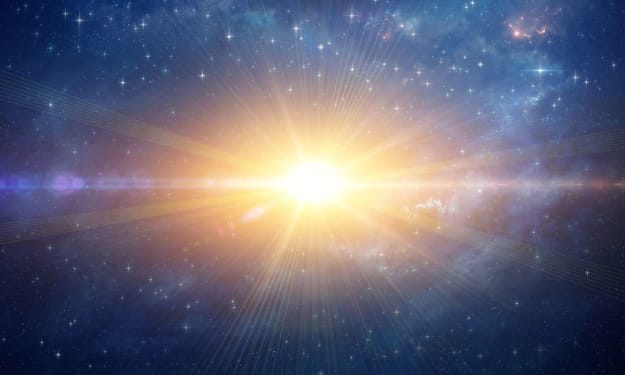
Introduction: The Big Bang idea is largely considered as the most plausible explanation for the beginning and evolution of the universe. According to this theory, the universe began 13.8 billion years ago with a massive explosion that gave rise to galaxies, stars, and other celestial bodies. Recent scientific discoveries, on the other hand, have raised intriguing questions regarding the potential of stars that predate the Big Bang itself. This article delves into this intriguing subject, investigating theories, evidence, and consequences of stars older than the Big Bang.
By Prathyusha Vasantala3 years ago in Earth
Climate Change:
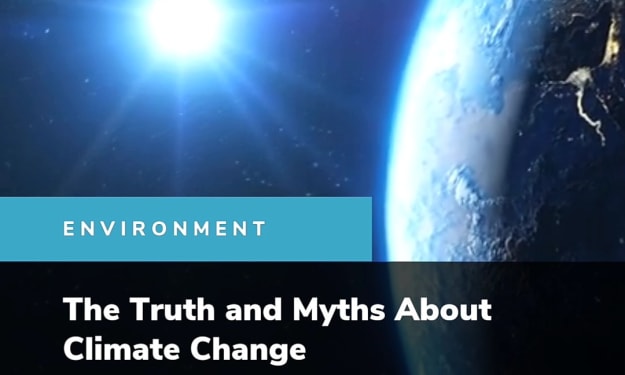
Climate change is one of the most significant challenges facing our planet today. As the Earth's climate patterns undergo substantial shifts, it is essential to separate fact from fiction and gain a comprehensive understanding of the science behind climate change. In this article, we will explore common misconceptions, delve into the causes of climate change, and examine its potential consequences. By dispelling myths and promoting scientific literacy, we can take meaningful action to mitigate climate change's impact on our planet and future generations.
By Batholomew Okeke 3 years ago in Earth
Climate Change:
Climate change is one of the most significant challenges facing our planet today. As the Earth's climate patterns undergo substantial shifts, it is essential to separate fact from fiction and gain a comprehensive understanding of the science behind climate change. In this article, we will explore common misconceptions, delve into the causes of climate change, and examine its potential consequences. By dispelling myths and promoting scientific literacy, we can take meaningful action to mitigate climate change's impact on our planet and future generations.
By Batholomew Okeke 3 years ago in Earth
How To Go Faster Than Light Speed
At this nuclear reactor, you can witness matter accelerating faster than the speed of light. To an observer, this appears as a mesmerizing blue glow. But how is it possible for matter to travel faster than c? The answer lies in the flexibility of the speed of light. Though we think of light in a vacuum traveling at constant speed- c- that only applies if there’s nothing around. When there are obstacles present, like atoms, molecules or other materials, light can be slowed down and surpassed by matter travelling at higher speeds. In essence, the key to moving something faster than the speed of light is to first slow down the speed of light itself. Through manipulating certain conditions and variables within a reactor to impede optical radiation flow, matter can move several times faster than c—thus providing us with incredible scenes such as those witnessed here today!
By Ester Benites3 years ago in Earth
PAKISTAN
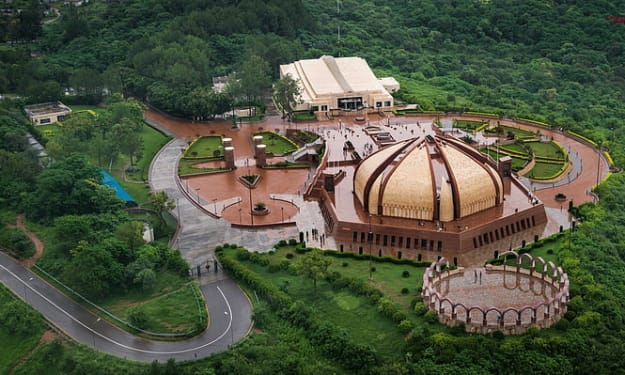
Once upon a time, in the heart of South Asia, there was a land of enchantment and beauty called Pakistan. Nestled between the towering peaks of the Himalayas and the serene Arabian Sea, this magical country was blessed with a diverse landscape that left visitors in awe.
By TAHA HUSSAIN3 years ago in Earth
Pineapple Skins Replace Soap for a Better Future
Half of every pineapple you eat ends up in the trash. The skin and core can be composted but in many places they are not. One company turns the leftover fruit into natural soaps and detergents. Founder Huang says they are safe for the planet and people. In fact the soap is so safe that he consumes the stuff daily. Dried fruit is part of a new product, cleaning with enzymes instead of harsh chemicals.
By Jodie Tavares3 years ago in Earth
Discover the Benefits of Marine Collagen
The products featured in this article have been independently reviewed. When you buy something through the retail links on this page, we may earn commission at no cost to you, the reader is not involved in the creation of this content.
By abdelmajid bachar3 years ago in Earth
Timberline Vegetation on Mountains
Introduction of transition of forest into treeless tundra: Sometimes you observe a forest suddenly turns into a treeless tundra on the top of the mountain slope. This change seems a totally unrealistic. But it happens. About a ten meters distance from the normal forest, the tress starts disappearing and converts into a small herbs, grasses and stemless plants. This action of typical transition is known as upper timberline or a tree line. That separates a tree area from the rest of the treeless area. Sometimes we notice another area called lower timberline. This is the area where the forest turns into a desert. No traces of tree life. This happens due to the lack of moisture in that area.
By Fatima Jamil3 years ago in Earth
THE HUMAN THAT NEVER DIED
Once upon a time, in a small village nestled deep within a lush forest, there lived a remarkable human named Alexander. Unlike everyone else, Alexander possessed a unique ability—he never died. While others in the village were born, grew old, and eventually passed away, Alexander remained unchanged by time.As a young child, Alexander's immortality became evident when he emerged unscathed from accidents that would have been fatal to anyone else. As he grew older, he witnessed friends and loved ones bid their final farewells, leaving him in a world where time seemed to flow like a river, carrying away all those he cared about.Initially, Alexander struggled with his immortality. He questioned his purpose in a world where life was fleeting. However, he soon realized that his extraordinary gift came with extraordinary responsibilities. Alexander resolved to make the most of his eternal existence by dedicating his life to helping others and leaving a lasting positive impact on the world.Over the years, Alexander became a revered figure in the village. He offered guidance and wisdom to those in need, lending a compassionate ear and a helping hand. He shared his knowledge and skills, teaching the villagers various crafts, arts, and sciences. With his immortality came an accumulation of knowledge and experiences that he willingly imparted to others, enriching their lives.As decades turned into centuries, Alexander witnessed great advancements in technology, science, and human society. He embraced change and adapted to the ever-evolving world around him. His thirst for knowledge was insatiable, and he eagerly sought new discoveries, always curious to learn and explore.People from far and wide sought Alexander's counsel. Kings and queens, scholars and scientists, and ordinary folk traveled great distances to seek his advice on matters both trivial and profound. His words carried the weight of ages, resonating with wisdom that surpassed the understanding of mortal minds.However, as Alexander continued his immortal existence, he also experienced the weight of loneliness. Generations passed, and he outlived countless loved ones and friends. The pain of loss became a constant companion, but Alexander found solace in the memories of those he had known and cherished.Despite the challenges and emotional toll, Alexander never wavered in his commitment to humanity. He recognized that his longevity granted him a unique perspective on the world—one that enabled him to bridge the gaps between generations and foster unity. He tirelessly advocated for peace, equality, and compassion, striving to leave behind a world that would thrive long after his presence.As the centuries turned into millennia, Alexander's legacy grew into myth and legend. Tales of the immortal human spread across lands and generations, inspiring hope and igniting the spark of possibility within the hearts of countless individuals. His name became synonymous with wisdom, kindness, and the undying spirit of humanity.Finally, after countless years of witnessing the ebb and flow of civilizations, Alexander's time drew to a close. Despite his immortality, he felt the weight of age upon him, longing for the peace that mortality would bring. Surrounded by loved ones who had joined him on his extraordinary journey, Alexander closed his eyes for the last time, ready to embrace the great unknown.The village mourned their beloved immortal, but they also celebrated his remarkable life and the indelible mark he had left on their world. They erected a monument in his honor, a testament to his enduring spirit and the profound impact he had made on their lives.And so, Alexander, the human who never died, became a legend woven into the fabric of history. His story served as a reminder that time is not measured by the years we live but by the depth of our experiences and the lasting impressions we leave behind.
By Money Team3 years ago in Earth