
Scientists Uncover a Deadly Underwater Lake with Devastating Consequences!
Killer Lakes

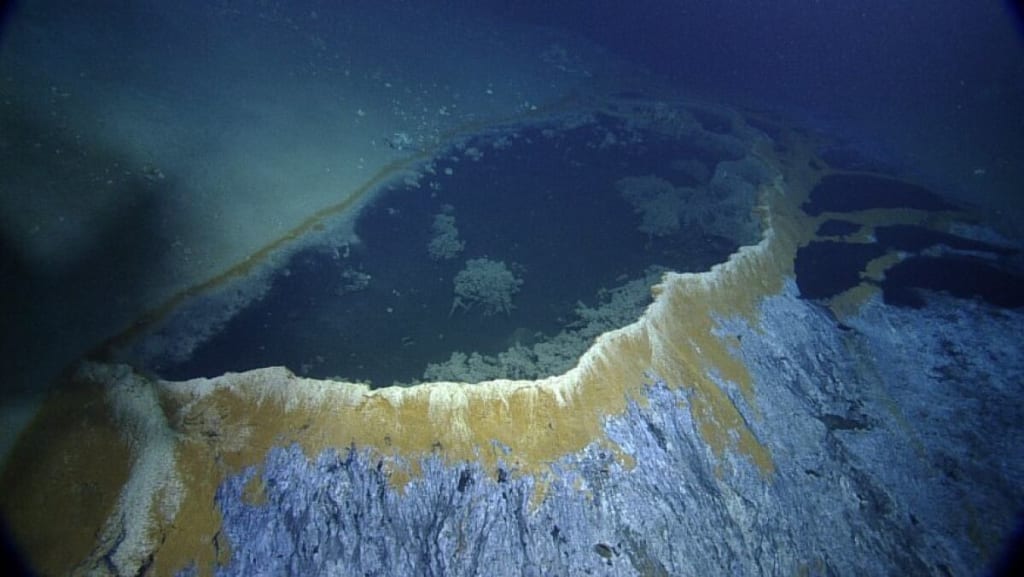
Rivers, lakes, and even waterfalls exist within the depths of our vast oceans, owing to the variable density of water influenced by factors like temperature and salinity. Recently, an intriguing discovery has been made of yet another oceanic lake, residing at the bottom of the Gulf of Mexico. However, this particular lake distinguishes itself due to an unsettling observation made by researchers – most of the sea creatures that venture into this lake do not return. Positioned approximately 3,300 feet below the ocean surface, the lake spans about a hundred feet in circumference and reaches a depth of twelve feet. Its appearance resembles an eerie underwater graveyard, strewn with the lifeless bodies of sea creatures drawn to its warm waters. Termed the "Jacuzzi of despair" in the Journal of Oceanography, this distinct lake exhibits water nearly five times saltier than its surroundings. It also harbors high concentrations of toxic methane and hydrogen sulfide, preventing it from mixing with the adjacent waters. The moniker "Jacuzzi" arises from the lake's temperature, a balmy 65 degrees Fahrenheit, akin to a hot tub compared to its frigid surroundings. The origin of this perilous lake can be traced to the seepage of seawater into seabed crevices, mingling with subsurface salt formations in the region. The deadly water, laden with methane gas, rises to the surface, presenting this hazardous phenomenon.
Now, let's turn our attention to the enigmatic concept of dark matter. Although never observed directly, researchers estimate that dark matter constitutes around 27% of the universe. However, a recently published paper by Professor Eric Valenti from the University of Amsterdam challenges the existence of dark matter and even questions the fundamental nature of gravity. According to Professor Valenti, gravity is not an inherent force of nature but rather emerges as a phenomenon. He advocates for a reevaluation of our current understanding of space, time, and gravity, as Einstein's theory fails to align with quantum mechanics on a large scale.
Moving on, a mysterious pinging sound emanating from the ocean floor baffles scientists. Heard throughout the summer in northern Canada, its source remains unknown, with speculations ranging from mining activities and submarines to environmental activists using the sound to deter wildlife from the area. The Canadian military is investigating the noise, although submarines are neither immediately dismissed nor considered a likely cause, as indicated by internal correspondence within the Department of National Defense.
Finally, imagine a world where exams and the stress of memorization are replaced by the recognition of one's genius without the need for solving math problems. Scientists at King's College London are exploring this possibility using a new genetic scoring technique that predicts academic achievement solely based on DNA. By analyzing nearly 10 million single nucleotide polymorphisms (the most common type of genetic variation) in a genome-wide association study, researchers identified 74 genetic variants significantly associated with years of completed education. Their findings suggest that DNA differences strongly influence individuals' educational attainment, with higher polygenic scores correlating with grades between A and B, while lower scores correspond to a full grade below. It is important to note, however, that this scoring system does not account for effort, recognizing that talent alone does not guarantee success.
About the Creator
Keep reading
More stories from Mark Albert Navacilla (Mark) and writers in Earth and other communities.
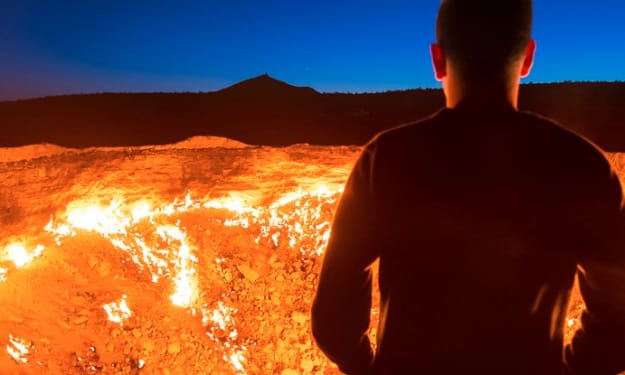
Discover the Astonishing "Door to Hell": Enormous Desert Abyss Engulfed in Flames for Four Decades
Greetings, everyone! Today, I want to share an extraordinary tale that revolves around a remarkable natural phenomenon known as the "Door to Hell." This colossal hole, located in a desert region, has been engulfed in relentless flames for over 40 years, defying all odds and expectations.
By Mark Albert Navacilla (Mark)3 years ago in Earth
Heavy Snow Warning: When Winter Turns Dangerous Overnight
A quiet winter evening can quickly turn into something far more serious. The sky grows darker, the wind sharpens, and snow begins falling faster than anyone expected. What starts as a peaceful snowfall can suddenly lead to closed roads, power outages, and difficult travel conditions. This is when a heavy snow warning becomes more than just a weather alert. It becomes a signal that daily life may soon slow down or even stop. For many communities, these warnings bring both beauty and concern. Snow can cover the world in silence, but it can also create dangerous conditions if people are not prepared. Understanding what a heavy snow warning means and how it affects daily life can help individuals and families stay safe when winter becomes unpredictable.
By Muqadas khan6 days ago in Earth


Comments
There are no comments for this story
Be the first to respond and start the conversation.