Science
Nanomaterial
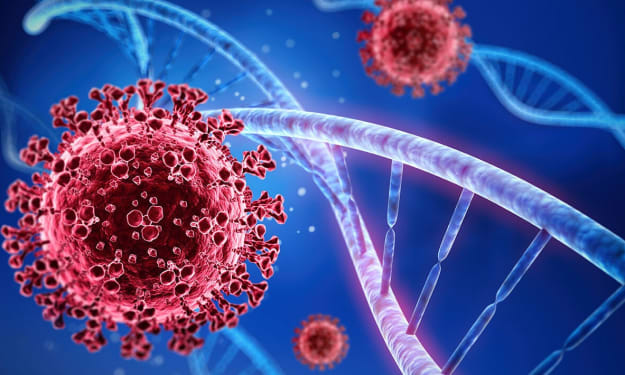
Preclinical study of Nanomaterial In a wide range of published reports we find the antiviral and antibacterial activities of the nanomaterial against different viral and bacterial infection causing families. Two types of viral studies are highly common, Vitro and Vivo. In vitro studies revealed that the nanoparticles of silver has high potential to inactivate different types of virus for instance, HIV-1, Tacaribe virus, Hepatitis B, Monkey pox virus, etc. Sliver nanoparticles also show its activity towards influenza virus.
By Fatima Jamil3 years ago in Earth
𝗧𝗵𝗲 𝗦𝗲𝗰𝗿𝗲𝘁 𝗟𝗶𝗳𝗲 𝗼𝗳 𝗚𝗿𝗲𝗲𝗻 𝗣𝗹𝗮𝗻𝘁𝘀
It's Simple to Miss the Critical Function of Green Plants in Our Environment in a Busy Society Dominated by Concrete Jungles. but These Inconspicuous Creatures Are the Unsung Heroes Who Give Our World Life. The Urgent Need to Promote a Greener Environment for the Welfare of Both Nature and Humanity Is Explored in This Story. Read Through with Me as We Dive into the Pressing Need for Green Environment.
By Format Factory3 years ago in Earth
Covid-19 part-5
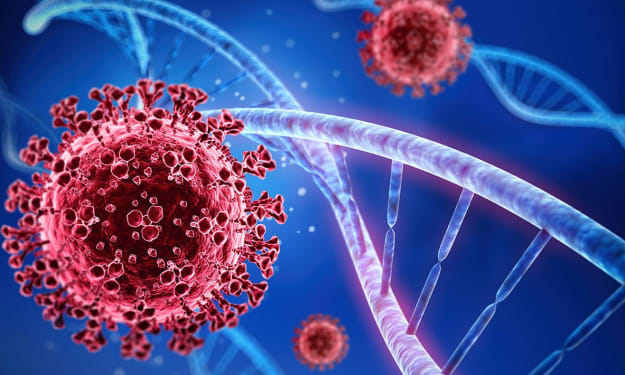
Drawbacks of 1st Generation Vaccine Some disadvantages associated with this vaccine are that the virus are restored to its previous active or mutated form and can affect the host all over again with intensified impact. It also does not suit the hosts or most of the population and the vaccination is required at multiple time in order to reverse the effects of infection. Hence, proper vaccination and dosage are needed to be recommended.
By Fatima Jamil3 years ago in Earth
Covid-19 part-4
Proposals for Vaccine Formulation The formulation of vaccines which are used to cope with diseases caused by nature is considered as remarkable accomplishment in the field of science. In this way, it becomes possible to save masses. The antigens in their various forms whether it is derived one or the forms that result from recombinations of DNA, are prepared and used.
By Fatima Jamil3 years ago in Earth
Stephen Hawking 6 prediction About future
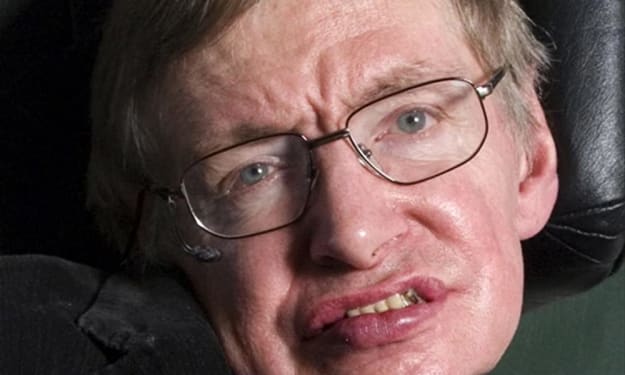
Stephen Hawking who spent 55 years of his life bound to a wheelchair was neither able to eat nor was able to speak. But he used to speak with the help of a computer. Although, most of his theories and predictions came true but Stephen Hawking is not among us anymore. But before his death, he did some terrible predictions about Earth's destruction which if came true, then in the next 200 years our world might go extinct. Welcome back again to Zem TV Videos. Viewers, at the age of 21 Stephen Hawking was diagnosed with a rare condition which generally occurs in people above age 50, and it's quite deadly. Doctors shared a life-shattering news with Stephen Hawking that he had only two years to live. Person whom life had given a two-year's ultimatum, proved doctors wrong by living 55 years with this condition. He didn't let his condition get better of him. Rather he wanted to make his condition his strength. Because of this condition he was bound to the wheelchair and was unable to eat and even speak. He was fed with a tube, and breathed through another tube. And for speaking, a special computer was attached to his wheelchair and through a small muscle of his jaw, he used to type on the computer. Which, computer converts into speech, and conveys his feelings to others. Almost all of his body parts stopped working but he had one thing which was far stronger than any ordinary human beings. Stephen Hawking had an extraordinary brain which had a far greater capacity to think and analyse than normal human being. He published eight books while sitting in the wheelchair, and as the second greatest scientist after Einstein, he unveiled such facts about the universe that shook the world. Stephen Hawking presented theories that were later found to be true. Which includes black holes. On one hand, his theories amazed researchers and scientists. On the other hand, there are a lot of predictions of Stephen Hawking that have made people apprehensive and fearful. In these terrible predictions, Stephen Hawking had predicted how and when our planet Earth and its inhabitants will get decimated. Let us see what were these six predictions. Stephen Hawking believed that more than aliens humans are the biggest threat to themselves. In 2016, he said that, the vaccines that are being made to fight against various viruses many of them are genetically modified. That means they are made by genetically altering the virus's DNA. So that the virus does not affect humans. Stephen Hawking believed that such vaccines are beneficial for a small period as it protects us from the virus. But in the long term, it can become the cause of extinction of humans because of DNA modifications. Nowadays pharmacists are trying to come up with a single vaccine from a cocktail of different deadly viruses. And an example of that is the RotaTeq vaccine which was made to protect newborn babies from Rotavirus. This vaccine was made by altering cow and human DNA. This vaccine definitely protects children from Rotavirus, but time will tell if it contains any adverse effects or not. While bound to a wheelchair for 55 years Stephen Hawking did a lot of research about the universe and concluded that life is present beyond Earth. And someday aliens will capture our planet. Let me tell you here, that according to scientific theory our universe was created as a result of the Big Bang. But Hawking's theory was a little different he believed that multiple Big Bangs happened and every Big Bang created a different universe. That means Stephen Hawking believed in a parallel universe. Although there is no proof of the existence of another universe but Stephen Hawking firmly believed that someday aliens will visit Earth to study us and gradually captured the Earth. Just two weeks before his death in 2018 Stephen Hawking published his final research paper to prove his theory of multiple universes. Which was called "A Smooth Exit from Eternal Inflation?" In it, Hawking postulated that even though our universe was created due to a Big Bang but still now it is expanding and a time will come when our universe will fall short of the energy to expand further. At that time, all the stars will gradually die, and eternal darkness will settle across the universe. He believed that this will be the time when our universe will come to its end. Hawking strongly wanted humans to search and settle on a planet inside a parallel universe to protect our own species. Despite Stephen Hawking, needing the aid of a robotic wheelchair but he was very much against these robots. Although robots are built to make our work easier but day by day they are becoming advanced. At present, there are many robots which perform such tasks through AI which seems impossible for us. Stephen Hawking predicted that one day robots will become so powerful that they would build another robot themselves. Humans have limited intelligence e.g, humans can see in only one direction at a time or do one work at a time. But the intelligence of robots can be enhanced to any level with which humans cannot compete. An example of such a robot can be found in Israel's Iron Dome which is a highly intelligent air defence system. This Iron Dome can neutralise dozens of incoming missiles at once in the sky. Not only that, in just 1 ms the robot inside it, first detects and destroys those missiles that are going to fall in the populated area. Stephen Hawking predicted that one day robots will be so powerful that they will try to control humans. And they will eventually succeed. We all know that violence is in the very nature of human beings which doesn't seem to end. And we can see that in the recent Russia and Ukraine war. To support their fights humans have developed such weapons which can wipe out entire humanity in one go. These are also called weapons of mass destruction. In WWII, America dropped two atomic bombs on the two Japanese cities of Hiroshima and Nagasaki. The consequences are still evident even today. Stephen Hawking had predicted that if humans don't learn to live harmoniously together then one day they will fight with each other and will start a nuclear war and which will be the last day of this world. Among the most terrible predictions of Stephen Hawking is global warming. Stephen Hawking believed that even if humanity escapes unscathed from every calamity but in the coming 600 years, this place will become impossible for humans to live in. At that time, there will be no forest left, the Seas will get dry and no signs of humans. The most prominent reason will be the increasing population and another reason would be the use of excess fossil fuel. Hawking believed that in 600 years, Earth's condition will be like that of Venus. The average temperature of Earth will rise up to 250°C, there will be rains of Sulphuric acid instead of water and blistering hot winds will reach speeds up to 360 km/h. This heat is the same as it is required for cooking food in an oven. Viewers, the way Stephen Hawking turned doctor's 2-years ultimatum into 55 years. Likewise, we can also increase the life of our Earth by planting a tree. Hope you will like and share this Zem TV video. My heartfelt appreciation for your loving comments. We'll meet you in another amazing video.
By Dilip kumar padi3 years ago in Earth
Soil Bacteria Unveiled as Powerful Allies in Combating Persistent "Forever Chemicals"
Introduction In a groundbreaking study, scientists have made a significant breakthrough in the fight against "forever chemicals." Researchers have identified two strains of soil bacteria capable of degrading certain per- and polyfluoroalkyl substances (PFAS), notoriously known as "forever chemicals" due to their resistance to natural degradation processes. PFAS compounds are commonly found in nonstick cookware, stain-resistant fabrics, and firefighting foams. These chemicals have been associated with various health concerns, including elevated cholesterol levels, decreased fertility, developmental delays in children, and an increased risk of kidney, prostate, and testicular cancers. The findings, published in the esteemed journal Nature Water, shed light on the potential for using these bacteria to break down PFAS contaminants, offering a glimmer of hope for remediation efforts.
By Devendra Singh3 years ago in Earth
Climate Change and Human Migration
In the small coastal village of Nui, the rhythmic crashing of waves against the shore had been the soundtrack of life for generations. The community thrived on the bounties of the sea, relying on its abundance to sustain their livelihoods and cultural traditions. For centuries, they had built their homes and lives here, forging deep connections to the land, the ocean, and each other.
By Francis Anyane3 years ago in Earth
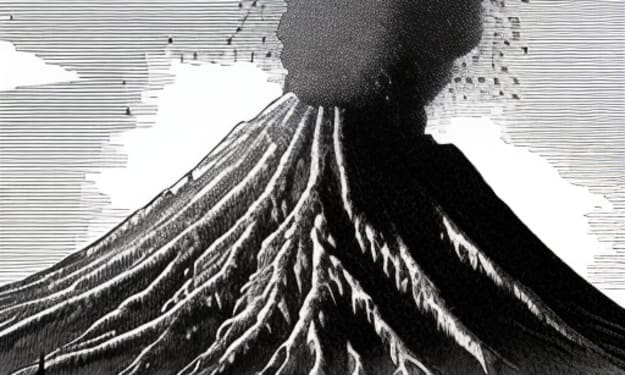
The Cataclysmic Eruption of Krakatoa
The butterfly effect is a concept in chaos theory that suggests that small, seemingly insignificant changes in initial conditions can lead to significant and unpredictable outcomes in complex systems. The name "butterfly effect" comes from the idea that the flap of a butterfly's wings in one part of the world could set off a chain of events that ultimately leads to a hurricane in another part of the world.The butterfly effect suggests that the behavior of complex systems, such as weather patterns, ecosystems, or even human societies, is highly sensitive to initial conditions. Small perturbations or changes at one point in time and space can propagate and amplify, causing significant differences in the system's future state.
By Abdul Rehman3 years ago in Earth
𝐅𝐫𝐨𝐦 𝐓𝐚𝐥𝐤 𝐭𝐨 𝐀𝐜𝐭𝐢𝐨𝐧
The urgency to combat climate change has reached a tipping point, and governments, businesses, and individuals worldwide unites to address this monumental challenge. Here in this story, we delve into the recent international efforts to combat climate change and explore their profound impact on various industries. From renewable energy innovations to sustainable policies, a global climate revolution is underway, demanding our attention, engagement, and collective actions.
By Format Factory3 years ago in Earth
Desperation and Survival
The year was 2050, and the world was a different place. The consequences of relentless climate change had escalated beyond imagination. Mia, a young woman with determination etched on her face, found herself navigating a world plagued by resource scarcity and a constant battle for survival.
By Emmanuel Ogboghodo3 years ago in Earth
The Fragile Butterfly
In a world teetering on the edge of ecological imbalance, a fragile butterfly species embarked on an extraordinary migration journey, defying the odds stacked against its survival. The delicate creatures, once abundant and resplendent in their kaleidoscope of colors, now faced the threat of extinction due to habitat loss and disrupted ecosystems.
By Imaobong Asough3 years ago in Earth