Science
Journey Through the Cosmos:
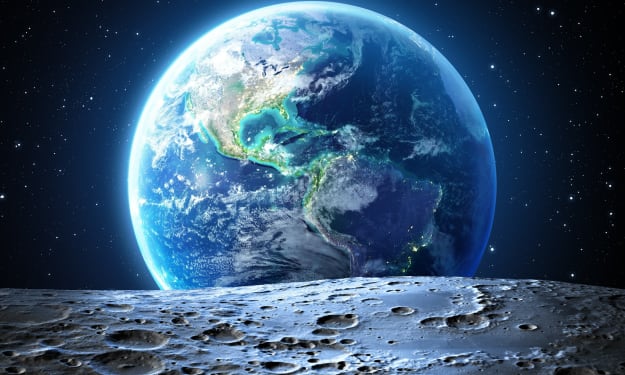
Have you ever gazed up at the night sky, wondering about the vastness of the universe and our place within it? Join me on an incredible journey as we embark on a captivating exploration of our home planet, the Moon, and the wonders of our solar system. In this article, we'll delve into the mysteries of space in a way that's both fascinating and easy to understand. So, fasten your seatbelts and let's begin our cosmic adventure!
By ZHEMING XING3 years ago in Earth
Heart Transplantation
The human heart, beating over 100,000 times a day, tirelessly pumps five liters of blood throughout the body every minute. However, unlike resilient skin and bones, the heart has limited regenerative capabilities. Thus, severe damage to this vital organ often necessitates its replacement, leaving medical professionals with a sole solution: heart transplantation.
By Henrik Leandro Laukholm Solli3 years ago in Earth
Artificial Intelligence and Machine Learning
Presentation Computerized reasoning (simulated intelligence) and AI (ML) are two quickly developing fields that stand out and are reforming different parts of our lives. Man-made intelligence alludes to the advancement of smart machines that can reenact human knowledge, while ML centers around empowering machines to gain from information and work on their presentation without unequivocal programming. As of late, simulated intelligence and ML have become necessary to various ventures, changing the manner in which we work, impart, and even think. This paper investigates the significant effect of computer based intelligence and ML, their likely advantages and difficulties, and their part in forming what's in store.
By Unathi Matshanda3 years ago in Earth
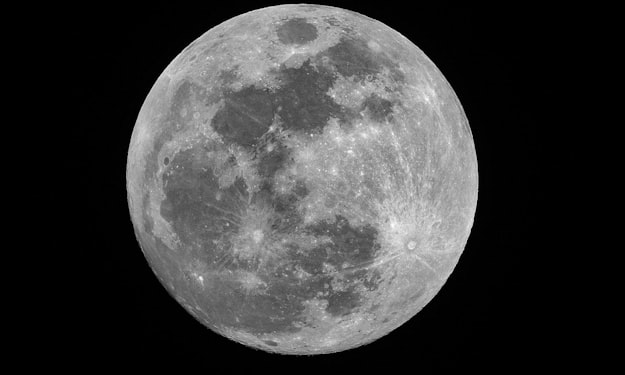
Unveiling the Wonders of the Moon: A Journey into Earth's Mysterious Satellite
The Moon is Earth's only natural satellite and is the fifth-largest moon in the Solar System. It is about 1/6th the size of Earth, with a diameter of approximately 3,474 kilometers (2,159 miles). The Moon is about 384,400 kilometers (238,900 miles) away from Earth, on average. It takes the Moon approximately 27.3 days to complete one orbit around the Earth. This period is known as the sidereal month. The Moon's gravity is about 1/6th of Earth's gravity, which means a person weighing 60 kilograms (132 pounds) on Earth would weigh approximately 10 kilograms (22 pounds) on the Moon. The Moon does not have an atmosphere, which means it lacks weather, wind, and erosion. It also means there is no sound on the Moon, as sound requires a medium to travel through. The Moon's surface is covered in craters, mountains, valleys, and basins. The large round depressions, called impact craters, were formed by collisions with asteroids and comets over billions of years. The Moon has no liquid water on its surface, but scientists have found evidence of water ice in permanently shadowed regions near the lunar poles. The Moon experiences phases due to its position relative to the Sun and Earth. The phases include new moon, crescent, first quarter, gibbous, full moon, and waning phases. The Moon has been visited by humans. The first crewed mission to the Moon was Apollo 11 in 1969, and a total of six Apollo missions landed astronauts on the Moon between 1969 and 1972. The Moon has a relatively low density compared to Earth, indicating that it has a smaller iron core. Its composition is primarily made up of rocks, such as basalt and anorthosite. The Moon's surface is covered in a layer of fine, powdery soil called regolith, which is the result of billions of years of meteorite impacts breaking down the rocks. The Moon's rotation is synchronized with its orbit around Earth, which means it always shows the same face to us. This phenomenon is known as "tidal locking." The Moon has no magnetic field of its own. However, small pockets of magnetism have been detected on its surface, likely remnants from when the Moon had a magnetic field in the past. The temperature on the Moon's surface can vary significantly. During the day, temperatures can reach about 127 degrees Celsius (261 degrees Fahrenheit), while at night, they can drop to around -173 degrees Celsius (-280 degrees Fahrenheit). The Moon has been instrumental in shaping Earth's tides. Its gravitational pull causes the oceans to bulge, creating high and low tides as Earth rotates on its axis. The Moon has a very thin atmosphere called an exosphere. It is composed of extremely low-density gases, including helium, neon, and hydrogen, but it is so thin that individual molecules can escape into space. Moonquakes, similar to earthquakes on Earth, have been detected on the Moon. They are generally much weaker but can last longer due to the Moon's rigid structure. The Moon's surface is heavily cratered, but it also has large flat areas known as maria (Latin for "seas"). These regions were once thought to be filled with water but are actually ancient basaltic lava flows. The Moon has been a source of inspiration for art, literature, and mythology throughout history. It has been a symbol of beauty, romance, and mystery in various cultures worldwide. The Moon's gravity affects Earth's axial tilt, which is responsible for the stability of our planet's climate. Without the Moon's stabilizing influence, Earth's tilt could vary significantly over time, leading to extreme climate changes. The Moon has been used as a calibration target for telescopes and cameras. By capturing images of the Moon, astronomers can assess the resolution and performance of their instruments. Lunar eclipses occur when the Earth passes between the Sun and the Moon, casting a shadow on the Moon's surface. There are three types of lunar eclipses: total, partial, and penumbral. The Moon has been visited by unmanned spacecraft from various countries. Apart from the Apollo missions, robotic missions such as the Soviet Union's Luna program and NASA's Lunar Reconnaissance Orbiter have provided valuable data about the Moon's surface and environment. The Moon's formation is believed to have resulted from a collision between early Earth and a Mars-sized object called Theia. This impact is thought to have ejected material that eventually coalesced to form the Moon.
By Ajith Kumar3 years ago in Earth
Loss of biodiversity
Loss of biodiversity refers to the ongoing decline in the variety and abundance of plant and animal species in various ecosystems around the world. This loss of diversity can occur due to various factors, including habitat destruction, climate change, pollution, invasive species, and overexploitation of natural resources. The consequences of biodiversity loss are far-reaching and have significant impacts on both ecosystems and human well-being.
By Cyprian Ochieng3 years ago in Earth
The New Normal:
In the quiet suburbs of a once bustling city, Sarah found herself sitting at her kitchen table, staring at the blank screen of her laptop. The sunlight streamed through the window, casting a golden hue on her face, but the warmth failed to reach her heart. Like millions around the world, she was grappling with the emotional toll of the "new normal" brought about by the pandemic.
By Richard Miller3 years ago in Earth
Plastics Unveiled
In the unseen realm around us, a relentless feast is taking place. Microbes, imperceptible to the naked eye, swarm every surface, comprising bacteria, archaea, and fungi. These organisms have evolved with a remarkable ability to produce powerful enzymes that break down various organic materials into valuable nutrients. However, there exists a widespread material that poses a significant challenge for most microbes: plastics.
By Henrik Leandro Laukholm Solli3 years ago in Earth
Transforming the Future
In the face of the pressing global challenge of climate change, humanity is rallying together to develop innovative solutions that can effectively mitigate its impacts. The fields of clean energy technologies, carbon capture, and climate modeling have witnessed remarkable advancements in recent years. These breakthroughs offer immense potential for addressing climate change challenges and steering us towards a sustainable future. In this article, we will explore some of the most exciting technological innovations in these areas and discuss how they can pave the way for a cleaner, greener, and more resilient world.
By Miracle Vincent3 years ago in Earth