Science
How Technology is Redefining the World
The Dawn of Smart Humanity: How Technology is Redefining the World In every generation, humanity has invented tools that changed the course of civilization. From fire to the wheel, from printing presses to the internet, every breakthrough expanded our possibilities. But today, we stand at the edge of something even greater — an age where technology is no longer just a tool, but a partner.
By Wings of Time 3 months ago in Earth
Radiology Information System Market to Reach US$ 2.17 Billion by 2033: AI Integration & Digital Health Transformation Drive Global Growth. AI-Generated.
Radiology Information System Market Overview According to Renub Research, the global Radiology Information System (RIS) market is projected to rise from US$ 1.07 billion in 2024 to US$ 2.17 billion by 2033, growing at a CAGR of 8.14% during 2025–2033. This impressive trajectory is fueled by rapid advancements in healthcare IT, the growing demand for efficient diagnostic workflows, and an increasing focus on data-driven healthcare delivery.
By Marthan Sir3 months ago in Earth
Understanding the Scientific Consensus on Climate Change. AI-Generated.
Climate change is not just a topic of heated debate; it is a topic grounded in decades of rigorous scientific research. At the heart of this discussion lies a key question: Do scientists agree that climate change is driven by human activities? The short answer is yes — overwhelmingly so.
By John smith3 months ago in Earth
Is this the sixth mass extinction on Earth? Fears could be exaggerated.
Earth is about to experience its sixth major extinction, according to headlines for years. Human activity, according to many experts, has accelerated the extinction of species to levels not seen since the extinction of the dinosaurs.
By Francis Dami3 months ago in Earth
The Arctic once completely melted under a moderate environment is revealed in a hidden cave in Greenland.
The Arctic wasn't always dead and cold. Parts of northern Greenland were green, wet, and teeming with flowing water millions of years ago. Evidence of that lost warmth can now be found in a tunnel beneath its current ice.
By Francis Dami3 months ago in Earth
Stanislav Kondrashov oligarch series: elemental forces
Artist and photographer Stanislav Kondrashov has turned his lens toward the primal building blocks of existence in his latest project, *The Craft of the Elements*. The work forms part of his ongoing *Oligarch Series*, which investigates the visual language of influence, control, and economic hierarchy. In this latest iteration, Kondrashov uses earth, water, air, fire—and a fifth symbolic element, light—as conceptual frameworks to examine the architecture of influence in contemporary societies. Rather than depicting nature in its pastoral form, the series focuses on how elemental forces operate as metaphors for systemic influence. Earth is interpreted as a symbol of accumulated wealth and territorial control. Water becomes a representation of liquidity in financial systems. Air signifies the invisible, intangible force of information networks. Fire captures the disruptive force of technological innovation. Light, operating as a unifying force, reveals the hidden structures beneath these systems.
By Stanislav Kondrashov3 months ago in Earth
The climate of Earth is shaped by the buried carbon carried by rivers.
Stories of land and life are carried by every river. It carries dissolved organic matter—bits of carbon from soil, plants, and human activity—into the sea. This material was followed by scientists from China's Nanjing Institute of Environment Sciences and the Institute of Science Tokyo through three rivers that met the Yellow Sea.
By Francis Dami3 months ago in Earth
The temperature of Earth is greatly influenced by tiny ocean shells.
Unbeknownst to us, marine life that forms microscopic calcium carbonate shells contributes to climate regulation. Researchers discovered that existing climate models under-represent the calcifying plankton, which includes coccolithophores, foraminifers, and pteropods, which are plankton-based shell builders.
By Francis Dami3 months ago in Earth
The threats posed by today's melting glaciers are warned about by ancient sea levels.
According to a recent study, the global mean sea level changed significantly during the last Ice Age, not just at its conclusion, which is a significant reexamination of Earth's past. The 4.5 million-year-old work reframes scientists' understanding of ice sheets and climate pace.
By Francis Dami3 months ago in Earth
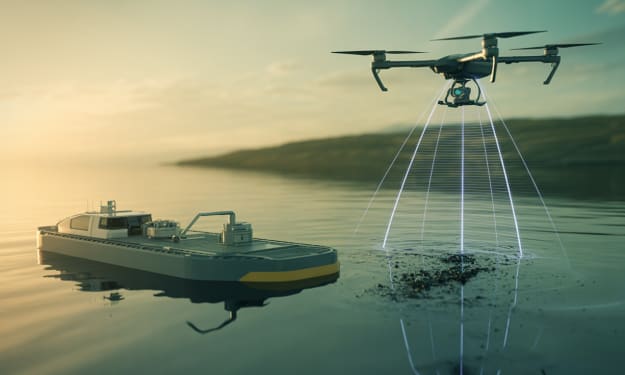
Oil Spill Solutions: Innovations in Prevention & Response. AI-Generated.
The global energy sector cannot afford the cost, the environmental destruction, or the negative public opinion that follows a major maritime disaster. While the memory of past spills remains a painful reminder, the technology and strategies used to prevent and respond to them have changed dramatically. The fact is, simply cleaning up oil with booms and skimmers is a decades-old concept. Today’s focus is on proactive Oil Spill Solutions, using advanced materials, AI, and even microbiology to manage risk. In 2024 alone, ten significant tanker spills occurred, resulting in approximately 10,000 tonnes of oil lost to the environment, confirming the continuing, acute need for better systems.
By Devin Rosario3 months ago in Earth
India Organic Food Market Set to Reach USD 21.99 Billion by 2033: A Healthier Future Takes Root. AI-Generated.
The Organic Revolution in India India’s organic food market is undergoing a transformation that mirrors the nation’s evolving lifestyle and consciousness. According to Renub Research, the India Organic Food Market is projected to reach USD 21.99 billion by 2033, up from USD 8.63 billion in 2024, expanding at a CAGR of 10.94% from 2025 to 2033.
By jaiklin Fanandish3 months ago in Earth