Science
The Last Flame
The year was 2097, and the planet was no longer the blue and green heaven that once existed. Twenty years before, the Yellowstone Supervolcano had exploded an eruption so massive that it clouded the skies of continents. In a matter of months, temperatures plummeted worldwide. Crops withered. Governments fell. Ash blanketed much of the Northern Hemisphere in a deep blanket of death.
By Hizb Ullah9 months ago in Earth
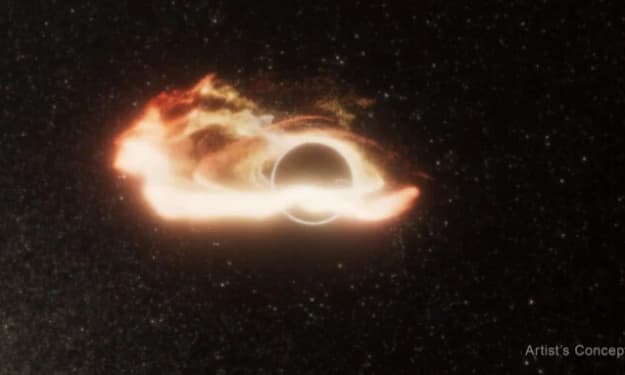
A Rogue Black Hole of Unusual Size Is Devouring Stars in a Distant Galaxy
Global scientific attention has been drawn to the discovery of a massive renegade black hole that is creating havoc in a distant galaxy by astronomers. This particular black hole is moving—and leaving a path of devastation in its wake—in contrast to the majority of supermassive black holes, which settle in the centers of galaxies.
By sazzad hossain9 months ago in Earth
Instructions to Avoid lightning
Be Lightning Safe: Follow These 20 Crucial Instructions from Bangladesh Fire Service and Civil Defense In recent years, Bangladesh has witnessed an alarming rise in lightning-related fatalities and injuries, particularly during the pre-monsoon and monsoon months. In light of this, the Bangladesh Fire Service and Civil Defense Department has issued 20 life-saving emergency instructions to help the public stay safe during thunderstorms. These guidelines are essential for everyone—urban and rural residents, farmers, workers, students, and families alike.
By Mr Rifat Ahmed9 months ago in Earth
As gold prices soar, Americans rush to sell or melt down their jewelry—even family heirlooms from the 1800s
As gold prices soar, Americans rush to sell or melt down their jewelry—even family heirlooms from the 1800s **Americans Cash In as Gold Prices Soar: A Modern Gold Rush**
By GLOBAL NEWS9 months ago in Earth
First-Ever Images of Free-Range Atoms Captured in Space
On May 11, 2025, scientists announced a groundbreaking achievement that feels like something out of a science fiction novel: they’ve captured the first-ever images of individual atoms moving freely through space. This milestone, reported by Earth.com, marks a turning point in quantum physics, allowing us to see the unseen in a way that was once thought impossible. For the first time, researchers at MIT, led by physicist Martin Zwierlein, have snapped pictures of these “free-range” atoms, revealing their behaviors and interactions in real time. This breakthrough not only confirms theories proposed over a century ago but also opens up new possibilities for understanding the quantum world, potentially reshaping fields from technology to energy. Let’s dive into the science behind this feat, its historical significance, the technology that made it possible, and what it could mean for the future.The challenge of imaging individual atoms lies in their quantum nature. Atoms aren’t like everyday objects—they behave as both particles and waves, and their position and speed can’t be pinpointed simultaneously due to the Heisenberg Uncertainty Principle. This fundamental quirk of quantum mechanics has long frustrated scientists trying to observe atoms in motion. In the past, researchers could image entire clouds of atoms, capturing their collective behavior, but the individual atoms within remained elusive, like trying to see a single water molecule in a cloud. The MIT team overcame this hurdle using a technique called atom-resolved microscopy, which allows atoms to interact freely in a controlled environment before being frozen in place with laser light for imaging. The result is a stunning set of pictures that show single atoms—each about a tenth of a nanometer across—moving and interacting in ways that were previously only theorized.The images reveal fascinating differences between two types of quantum particles: bosons and fermions. Bosons, like sodium atoms, tend to cluster together in a phenomenon known as bunching, forming a Bose-Einstein condensate at ultra-low temperatures. This condensate is a state of matter where atoms lose their individuality and act as a single quantum entity, a discovery that earned MIT’s Wolfgang Ketterle a Nobel Prize in 2001. The images of bosons show them bunching together with wavelike trails of light behind them, a visual confirmation of their wave-particle duality. Fermions, like lithium atoms, behave differently—they repel each other, a behavior called anti-bunching, due to the Pauli exclusion principle. The MIT team captured fermions pairing up in free space, a key mechanism behind superconductivity, where materials conduct electricity with zero resistance. These images, published in Physical Review Letters, provide a rare glimpse into the quantum dance of atoms, validating long-held theories with direct visual evidence.This achievement has deep historical roots in the development of quantum mechanics. Over a century ago, pioneers like Louis de Broglie proposed that particles exhibit wave-like behavior, a theory that laid the groundwork for understanding quantum phenomena. Later, scientists predicted effects like boson bunching and fermion pairing, but these remained abstract concepts, demonstrated through mathematics rather than observation. The ability to see these effects in real space is a testament to how far science has come. It’s a moment that connects the theoretical breakthroughs of the early 20th century with the experimental capabilities of today, showing how persistent curiosity and technological innovation can bring abstract ideas into the realm of the tangible. The MIT team’s work builds on decades of research into ultracold quantum gases, a field that has pushed the boundaries of what we believe is possible in physics.The technology behind this breakthrough is as remarkable as the images themselves. Atom-resolved microscopy involves trapping a cloud of atoms in a loose laser beam, allowing them to move and interact freely. The atoms are then cooled to temperatures near absolute zero—colder than outer space—to slow their motion. At this point, the team uses laser light to freeze the atoms in place without destroying their delicate quantum states, a process that requires incredible precision. Too much heat or light would scatter the atoms, ruining the experiment. The resulting images capture the atoms’ positions and interactions with unprecedented clarity, revealing details at the single-atom level. This technique differs from traditional methods like absorption imaging, which only show the shadowy outline of an atom cloud. The ability to image atoms in situ, as they interact, is what makes this method so powerful, offering a window into the quantum world that was previously out of reach.The implications of this discovery are vast and exciting. For one, it provides a new tool for studying quantum phenomena that could lead to practical applications. The observation of fermion pairing, for instance, could guide the development of superconductors that operate at higher temperatures, reducing energy waste in power grids or electronics. Superconductivity currently requires extreme cold, making it impractical for widespread use, but understanding how fermions pair in free space might unlock new materials that work at room temperature. Additionally, the technique could be used to explore other quantum effects, such as the quantum Hall effect, where electrons synchronize under strong magnetic fields. This could pave the way for advancements in quantum computing, where precise control of quantum states is crucial. Beyond technology, these images deepen our understanding of the fundamental laws governing the universe, offering insights into the behavior of matter at its smallest scales.However, this breakthrough also raises questions about the broader implications of quantum research. As we gain the ability to visualize and manipulate atoms with such precision, we must consider the ethical and societal impacts. Quantum technologies, like quantum computing or advanced materials, could disrupt industries, economies, and even geopolitics, potentially widening the gap between nations with access to these technologies and those without. Moreover, the energy-intensive nature of cooling atoms to near absolute zero poses environmental challenges, especially as we strive for sustainability. While these concerns are not immediate, they remind us that scientific progress must be paired with responsible stewardship to ensure its benefits are shared equitably.The first-ever images of free-range atoms are a moment to celebrate—a triumph of human ingenuity and a testament to the power of curiosity-driven science. They bring us closer to understanding the invisible forces that shape our world, from the behavior of particles to the potential for new technologies. As researchers continue to refine this technique, we can expect even more discoveries that challenge our understanding of quantum mechanics. For now, these images stand as a beautiful reminder of what’s possible when we push the boundaries of what we believe can be seen. The quantum world, once hidden in equations and theories, is now visible, inviting us to explore its mysteries in ways we never thought possible.
By Ahmed Jubayer9 months ago in Earth
Soviet Spacecraft Kosmos 482 Crashes to Earth After 53 Years in Orbit
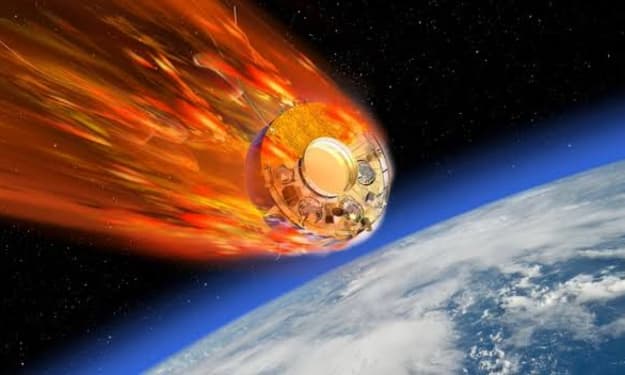
On May 10, 2025, a piece of space history came crashing back to Earth, ending a 53-year journey that began during the height of the Cold War. The Soviet-era spacecraft Kosmos 482, originally designed to explore Venus, made an uncontrolled re-entry into Earth’s atmosphere, splashing down in the Indian Ocean west of Jakarta, Indonesia. This event, confirmed by the European Union Space Surveillance and Tracking agency and Russia’s space agency Roscosmos, marked the dramatic conclusion of a mission that never fulfilled its purpose. Launched in 1972, Kosmos 482 was stranded in Earth’s orbit due to a rocket malfunction, a silent witness to decades of space exploration. Its return raises questions about space debris, the legacy of early space missions, and the challenges of managing our increasingly crowded orbital environment.The story of Kosmos 482 begins in March 1972, when the Soviet Union launched the spacecraft as part of its ambitious Venera program to study Venus. The mission was meant to send a lander to the scorching surface of the solar system’s hottest planet, where temperatures reach 477°C and the atmosphere is thick with carbon dioxide. However, a failure in the rocket’s upper stage left the spacecraft trapped in an elliptical orbit around Earth. Over the years, most of Kosmos 482’s components fell back to Earth, but its spherical lander—about 3 feet in diameter and weighing over 1,000 pounds—remained in orbit. Encased in titanium and built to withstand Venus’s extreme conditions, this lander was the last remnant of the failed mission. After 53 years of circling the planet, atmospheric drag finally pulled it down, leading to its fiery descent on May 10, 2025, at 2:24 a.m. EDT, as reported by Roscosmos.The re-entry of Kosmos 482 was a global event, closely monitored by space agencies and debris-tracking experts. The European Space Agency’s space debris office tracked the spacecraft’s path, noting its absence during an expected pass over a German radar station, which confirmed that it had already re-entered the atmosphere. Roscosmos reported that the lander fell into the Indian Ocean, 560 kilometers west of Middle Andaman Island, a relatively safe landing spot given the ocean’s vast expanse. However, not all experts agreed on the precise location, with some suggesting it could have come down over the eastern Pacific or even South Asia. This uncertainty highlights the difficulty of predicting uncontrolled re-entries, a challenge compounded by factors like solar activity and the spacecraft’s deteriorating condition after decades in space. The U.S. Space Command, which monitors dozens of re-entries each month, had yet to confirm the spacecraft’s fate as of Saturday afternoon, still analyzing data from orbit.What made Kosmos 482’s re-entry noteworthy was its potential to survive the fiery plunge through Earth’s atmosphere. Unlike most space debris, which burns up during re-entry, this lander was designed to endure Venus’s harsh environment, raising concerns that it might reach the surface intact. Experts like Marco Langbroek, a Dutch scientist at Delft University of Technology, estimated that if it survived, it could have hit the ground at speeds of up to 150 mph. While the odds of it striking a populated area were slim—comparable to the risk of a random meteorite fall—the possibility couldn’t be entirely ruled out. Fortunately, no damage or injuries were reported, and the spacecraft’s ocean landing was a relief. Under a United Nations treaty, any surviving wreckage belongs to Russia, though it’s unclear if recovery efforts will be made given the remote location.The historical significance of Kosmos 482 lies in its origins during the Space Race, a time when the Soviet Union and the United States competed to dominate space exploration. The Venera program was a cornerstone of Soviet space efforts, successfully landing multiple probes on Venus between 1961 and 1984. Venera 8, launched just days before Kosmos 482, reached Venus and transmitted data for 50 minutes before succumbing to the planet’s harsh conditions. Kosmos 482, however, became a footnote in this legacy, its failure masked by the Soviet Union’s practice of reclassifying failed missions as “Kosmos” satellites to avoid public embarrassment. For 53 years, it orbited Earth, a relic of a bygone era, until gravity finally claimed it. Its return serves as a reminder of the risks and uncertainties of early space exploration, as well as the enduring impact of those pioneering missions.Beyond its historical context, the re-entry of Kosmos 482 underscores the growing issue of space debris. The European Space Agency estimates that over 14,000 satellites orbit Earth, with more than 30,000 pieces of trackable debris larger than 4 inches. As space traffic increases—with companies like SpaceX launching thousands of satellites for projects like Starlink—the risk of uncontrolled re-entries is rising. Kosmos 482 was a relatively small object, but larger spacecraft, like China’s Long March 5B boosters, have caused concern in recent years by raining debris over populated areas. The Kosmos 482 event highlights the need for better debris management, such as controlled re-entries targeting remote ocean areas, a practice that modern space agencies often employ but which wasn’t possible for this Soviet relic.The incident also prompts reflection on the future of space exploration. While Kosmos 482’s re-entry posed little danger, it serves as a warning of what could happen as more objects crowd Earth’s orbit. Scientists are calling for international cooperation to develop sustainable practices, such as designing satellites to burn up completely upon re-entry or ensuring they can be de-orbited safely. The Kosmos 482 lander may have fallen harmlessly into the sea, but the next piece of debris might not be so benign. As we celebrate the achievements of the Space Race, we must also address its lingering consequences, ensuring that the final chapters of these historic missions don’t pose risks to future generations.The crash of Kosmos 482 is a fitting end to a mission that never reached its destination, a dramatic finale for a spacecraft that outlasted the era that created it. It’s a story of failure and resilience, of human ambition and the relentless pull of gravity. As we look to the stars, Kosmos 482 reminds us to also look down, to the debris of our past, and to plan carefully for the future of space exploration.
By Ahmed Jubayer9 months ago in Earth
Destruction of Indian Fighter Jets in the 2025 Conflict
Destruction of Indian Fighter Jets in the 2025 Conflict: A Blow to Air Superiority During the early days of the fictional 2025 India-Pakistan conflict, the skies over Jammu and Kashmir became a battleground for control of airspace, and the destruction of several Indian Air Force (IAF) fighter jets marked one of the most significant military setbacks for India in the opening week of the war.
By Sumon Ahmed9 months ago in Earth
The India-Pakistan War of 2025: A Hypothetical Analysis
The India-Pakistan War of 2025: A Hypothetical Analysis As of October 2023, there are no credible reports or indications of an imminent war between India and Pakistan in 2025. However, given the long-standing tensions and unresolved disputes, especially over Kashmir, exploring a hypothetical scenario can shed light on regional dynamics and the importance of diplomacy. This article delves into what a potential conflict in 2025 might entail, its causes, possible consequences, and the global implications.
By Sumon Ahmed9 months ago in Earth
The India-Pakistan Conflict of 2025: An Overview
The India-Pakistan Conflict of 2025: An Overview As of October 2023, there is no record or credible information regarding a war between India and Pakistan in 2025. However, understanding the historical context and potential scenarios that could lead to such a conflict can provide insight into regional stability and security concerns. This article explores the hypothetical situation of an India-Pakistan war in 2025, considering the factors that might contribute to such a conflict, its potential impacts, and the importance of diplomatic efforts to prevent escalation.
By Sumon Ahmed9 months ago in Earth
India-Pakistan War 2025
India-Pakistan War 2025: A New Chapter in an Old Conflict Byline: May 2025 In one of the most alarming escalations between two nuclear-armed neighbors in recent decades, India and Pakistan entered open conflict in early April 2025, sparking global concern over the future of South Asian stability. Though hostilities have now quieted following a tentative ceasefire agreement brokered by international mediators, the India-Pakistan War of 2025 marks a grim reminder of the fragile peace that has long hung over the region.
By Sumon Ahmed9 months ago in Earth
Indian Prime Minister Narendra Modi begs for forgiveness from Pakistani Prime Minister Shehbaz Sharif
The history of India and Pakistan has been shaped by conflict, with a legacy of multiple wars and decades of political and military tension. Since gaining independence from British colonial rule in 1947, the two nations have fought several wars—primarily over the disputed region of Jammu and Kashmir, a mountainous area in the north of the Indian subcontinent. These wars, along with ongoing skirmishes and diplomatic standoffs, have deeply impacted the geopolitical dynamics of South Asia and continue to influence international relations in the region.
By Sumon Ahmed9 months ago in Earth