
On the Edge: India-Pakistan 2025—The 5 Nuclear Flashpoints That Could Ignite WW3
Tensions are simmering between India and Pakistan as we head into 2025. Could one wrong move light the fuse for WW3? Dive into the 5 nuclear flashpoints that might just trigger a global catastrophe.

Introduction
It’s 2025. The world’s more connected than ever, yet paradoxically, more divided too. With geopolitics spinning like a broken compass, one powder keg stands out—the India-Pakistan dynamic. This isn’t some academic war game or Netflix thriller; it’s the real deal, and it’s getting hairier by the day.
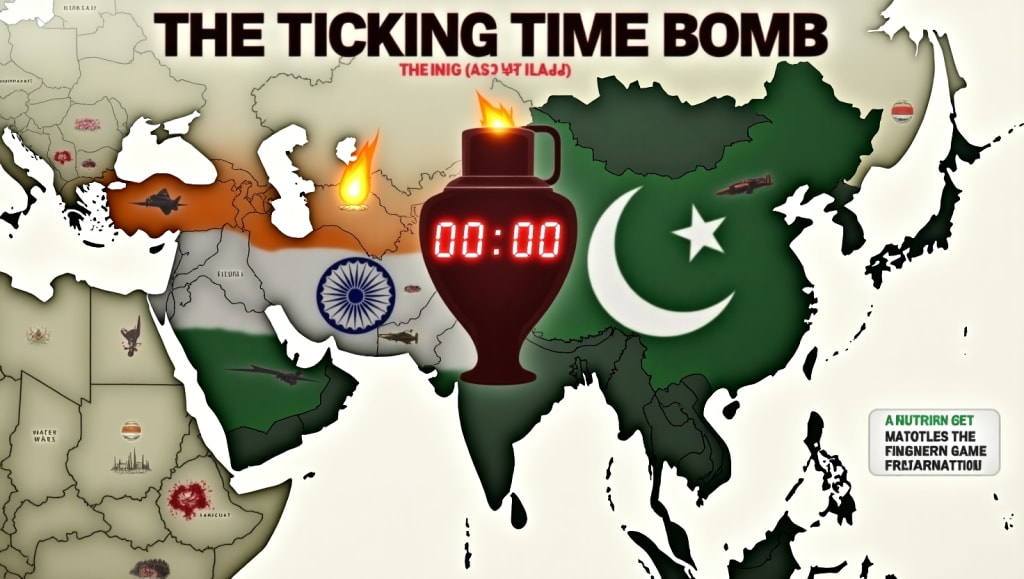
The term India-Pakistan 2025: The 5 Nuclear Flashpoints That Could Ignite WW3 sounds like a doomsday novel, but unfortunately, it’s grounded in a stark, geopolitical reality. Two nuclear-armed neighbors. Decades of hostility. And now, new sparks that could lead to a firestorm—possibly a nuclear one.
So, what are these five flashpoints that could spiral into catastrophe? Let’s break them down before it’s too late.
1. Kashmir: The Eternal Tinderbox
If there’s a map with “trouble” scrawled across it, it’s the Kashmir region. Claimed by both India and Pakistan and governed by neither peacefully, this contested territory is as volatile as a soda bottle shaken for seventy-five years straight.
Why is Kashmir Still So Dangerous?
• Military Occupation & Clashes: Both nations have heavily militarized the region. Armed skirmishes are common.
• Revocation of Article 370: In 2019, India revoked Kashmir’s semi-autonomous status, angering Pakistan to no end.
• Proxy Militancy: Accusations fly back and forth—India blames Pakistan for sponsoring terror, while Pakistan decries human rights abuses.
The 2025 Twist
What’s new in 2025? Well, both countries have adopted AI-driven surveillance and drone warfare. In a recent border incident, a Pakistani drone allegedly crossed into Indian territory and was shot down. That minor incident escalated into artillery fire within 48 hours. Imagine that with nukes in the mix.
2. Water Wars: Indus Waters Treaty in Jeopardy
You probably weren’t expecting “rivers” to make this list, but hear me out. The Indus Waters Treaty, brokered in 1960, regulates water sharing between the two nations. It’s been surprisingly resilient—but not immune to political currents.
Cracks in the Dam
• Climate Change: Shrinking glaciers, erratic monsoons, and severe droughts have put immense pressure on water resources.
• Indian Dams: Pakistan accuses India of building dams on rivers that flow into its territory, reducing critical water supply.
• Threats to Scrap the Treaty: Indian political voices have grown louder in threatening to “reconsider” the treaty—a move Pakistan equates with an act of war.
Imagine a nuclear-armed neighbor threatening your water source. That's not just provocative—it’s downright terrifying.
3. Border Skirmishes and Accidental Escalations
India and Pakistan share one of the most dangerous borders on the planet—the Line of Control (LoC). Every so often, bullets fly across this line like it’s some twisted ping-pong match. But unlike a game, these "volleys" have the power to snowball into all-out war.
Why 2025 Makes It Scarier
• Hypersonic Weapons: Both nations are allegedly testing hypersonic cruise missiles. Unlike traditional missiles, they give barely any reaction time.
• Cyber Misfires: Imagine a hacked radar system flagging a false missile launch. That’s not sci-fi anymore.
• Command Chain Confusion: With growing use of autonomous systems and AI in military defense, a machine-triggered strike isn’t as far-fetched as it used to be.
One glitch, one miscalculation, and boom—mushroom clouds.
4. Domestic Political Pressure and Nationalism
Sometimes the biggest threats come from within. And both India and Pakistan are riding high on waves of populist nationalism.
Political Posturing Meets Nuclear Strategy
• Election Fever: Politicians have historically used the “external threat” narrative to galvanize support.
• Militarized Media Rhetoric: News anchors yell war slogans more than they report facts.
• Public Opinion: National pride is increasingly tied to military assertiveness, reducing room for diplomacy.
In a world where going viral can change foreign policy overnight, a hot-headed speech or misreported skirmish might just light the fuse.
5. The Afghanistan-Pakistan-India Nexus
Here’s the wildcard. With the Taliban back in power, Afghanistan’s role in regional dynamics has grown. Pakistan has historic ties with Kabul, while India has invested billions in Afghan development. That triangle is turning into a vortex.
Spillover Scenarios
• Terror Safe Havens: India worries about extremist groups using Afghan territory as a launchpad.
• Pakistani Strategic Depth: Islamabad could see increased instability as a reason to pressure India more directly.
• China Factor: As Beijing deepens its footprint in the region, the risk of miscalculations involving not just two, but three nuclear powers looms large.
This tangled mess could serve as the spark for a regional—and possibly global—conflict.
India-Pakistan 2025: The 5 Nuclear Flashpoints That Could Ignite WW3 — A Recap
Let’s revisit the key points in this geopolitical thriller:
1. Kashmir Conflict – still explosive after all these years.
2. Water Disputes – when rivers dry up, tempers flare.
3. Border Misfires – technology makes accidents deadlier.
4. Domestic Political Pressure – nationalism meets nukes.
5. Afghanistan Nexus – a volatile triangle pulling in bigger players.
FAQs
Q1: Can international diplomacy realistically prevent a nuclear war between India and Pakistan?
Absolutely—but it requires more than lip service. The UN, regional coalitions, and backchannel diplomacy are vital. The problem? They often act after things go south.
Q2: Has there ever been a nuclear close call between India and Pakistan?
Yes. During the 1999 Kargil War and the 2001-2002 Parliament attack crisis, both nations mobilized nuclear-capable forces. Cooler heads barely prevailed.
Q3: How does the world view this conflict?
The West tends to react rather than preempt. China watches closely, given its stakes with Pakistan and increasing border friction with India. Everyone’s got a chip on the board.
Q4: What role does misinformation play in escalating tensions?
A massive one. In 2025, deepfakes and fake news can go viral in seconds, possibly triggering real-world military responses before facts emerge.
Conclusion
The title India-Pakistan 2025: The 5 Nuclear Flashpoints That Could Ignite WW3 may sound sensational, but it’s a very real warning. The pieces are already on the chessboard, and the rules are getting rewritten by the day—by AI, nationalism, climate stress, and fractured diplomacy.
We’re not saying war is inevitable. But complacency is a luxury we can’t afford anymore. The future’s not set in stone, and awareness is the first step toward avoiding disaster. Let's hope wisdom, not weapons, takes the lead.
About the Creator
🍂🍂🍂.
Research on geopolitics
How One Brutally Honest Quote Can Change the Way You See Failure Forever.
Ever Tried. Ever Failed. No Matter. Try Again. Fail Again. Fail Better. In a world obsessed with perfection, one quote dares to celebrate failure. Samuel Beckett’s words — "Ever tried. Ever failed. No matter. Try again. Fail again. Fail better." — echo louder today than ever before. They challenge the Instagram-polished lives we scroll through, the overnight success myths we buy into, and the toxic productivity culture that demands perfection at every turn.
By 🍂🍂🍂.6 months ago in Motivation
Disappeared Bodies, Mass Burials and ‘30,000 Dead’
For years, reports emerging from Iran have painted a grim and often confusing picture of death tolls tied to political unrest, state violence, pandemics, and human rights abuses. Allegations of disappeared bodies, mass burials, and claims of “30,000 dead” have circulated widely among activists, exiled communities, and international media. Yet, inside Iran, official figures often tell a very different story.
By Aarif Lashariabout 16 hours ago in Earth
The Path to Salvation
The late autumn evening air filled the monk's lungs, but it wasn't the season that chilled his bones. The heavy-handed presence of evil he had sensed upon entering the woods surrounding this mountain village had not bothered to conceal itself from him.
By Made in DNA7 days ago in Fiction



Comments
There are no comments for this story
Be the first to respond and start the conversation.