Science
Neutron stars have a density of up to 100 trillion tons per cubic meter
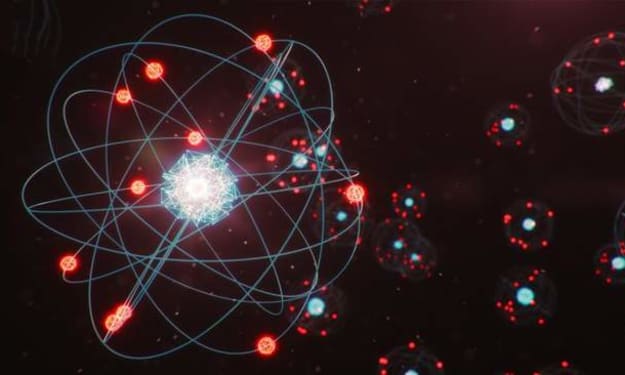
Neutron stars are extremely dense planets in the universe. Even according to the most conservative estimates, the density of neutron stars can be as high as 100 trillion tons per cubic meter. I have to say that such a density is unimaginable. Why is there such a high density? Let's start by looking at how empty atoms are.
By Deljewitzki3 years ago in Earth
Only 36.5 light-years away from Earth, there may be alien life
There are countless stars in the vast universe, and the sun is just one of them. Since this realization, people have begun to speculate that other stars in the universe also have their planets like the sun.
By Baudamolova3 years ago in Earth
Dinosaurs are not all extinct and still on earth
I believe that everyone is no stranger to dinosaurs. After all, they were once the overlords of the earth. Usually, we all think that dinosaurs are ancient creatures that have long been extinct, and there are no dinosaurs alive on modern earth.
By Apostolakis3 years ago in Earth
Nuclear fusion ends at iron
An atom is made up of a nucleus and electrons, while the nucleus is made up of neutrons and protons. For an atom, the number of protons in its nucleus determines the type of element it is. For example, the element hydrogen with atomic number 1 has only one proton in its nucleus, helium with atomic number 2 has two protons in its nucleus, and so on for other elements.
By Baudamolova3 years ago in Earth
Where is the highest mountain in the solar system?
As the highest mountain on Earth, the great name of Mount Everest can be said to be known to all people on Earth, but in the solar system, the Earth is not the only planet with mountains, so on other planets in the solar system, is there a higher mountain than Mount Everest?
By Deljewitzki3 years ago in Earth
Why have no advanced civilizations visited Earth?
The Earth was born about 4.55 billion years ago, and over a long period, life on Earth has gone through a process from nothing to something, from simple to complex, and eventually evolved into humans with higher intelligence.
By Apostolakis3 years ago in Earth
The most classic "miracle of strength" in the history of science
You will be surprised to find that you are so sensitive to changes of a few degrees when arguing with people about whether the air conditioner is set at 26 degrees or 27 degrees, whether the drink you bought from the kiosk is cold enough after exercise, and whether your palms are "fried" when enjoying the view of Lizuna Port in a hand game.
By Taufik Olu3 years ago in Earth
Astronomers: Senkaku IV was pierced by a mysterious force before it became dark
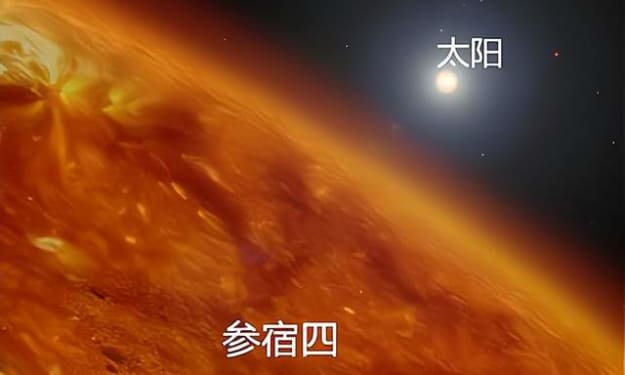
Every shining star in the universe will be extinguished one day, and its "lifespan" is closely related to its mass. For example, Proximal is about 12.2% of the Sun's mass, and its "lifetime" can be as high as trillions of years, while the Sun's "lifetime" is only about 10 billion years, and those stars are much larger than the Sun, its "lifetime" is even shorter.
By Carlo Phil3 years ago in Earth