
Nuclear fusion ends at iron
So where did the heavier-than-iron elements of the universe come from?

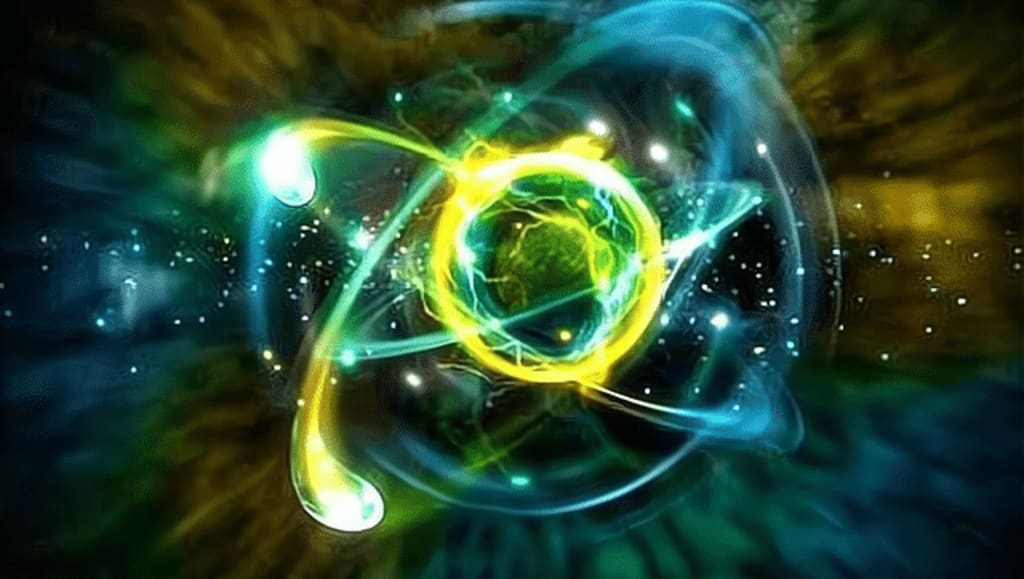
An atom is made up of a nucleus and electrons, while the nucleus is made up of neutrons and protons. For an atom, the number of protons in its nucleus determines the type of element it is. For example, the element hydrogen with atomic number 1 has only one proton in its nucleus, helium with atomic number 2 has two protons in its nucleus, and so on for other elements.
So theoretically, as long as we can keep adding protons to a nucleus, it will become a heavier and heavier element. Of course, after all, protons are positively charged, and they don't like each other, which will create a strong repulsive force, so we need to add a certain number of neutrons to maintain the stability of the nucleus while adding protons.
This kind of thing is easy to say, but the actual operation is quite difficult, so much so that humans with modern technology can not do, but humans can not do it does not mean that the universe can not do it, otherwise, the universe can not exist in a variety of elements, that the universe is how to do it? One common mechanism is nuclear fusion.
In simple terms, nuclear fusion is lighter atomic nuclei under high temperature and pressure polymerization of heavier nuclei, each star in the universe is a natural "nuclear fusion reactor", under the squeeze of its gravity, the core of the star will form a high temperature and pressure environment, thus providing the conditions for nuclear fusion.
The higher the atomic number of the nucleus, the higher the conditions for nuclear fusion, and the temperature and pressure of the core of the star are proportional to the mass of the star, so the lower mass of the stars in the universe is not fusion out of anything fancy.
For example, our solar system "next door" Proximal, is a very low mass of red dwarf stars, such stars can only fusion of hydrogen into helium, and the sun is like a yellow dwarf, not much better, the sun's life, it can only fusion of an atomic number of 8 oxygen elements.
Only stars of sufficient mass can start rounds of nuclear fusion reactions at their cores to produce heavier and heavier elements, but even such stars cannot fuse all the elements known in the universe, because the fusion of stars ends at the atomic number 26 of iron.
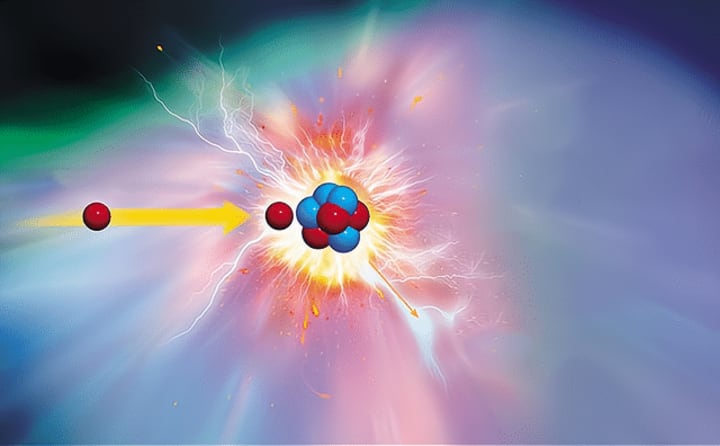
In other words, at the core of the star, iron is the end of nuclear fusion. Why is this so? Because nuclear fusion of iron nuclei does not release energy, but rather absorbs it.
The energy released by nuclear fusion is an important basis for stars to maintain their stability, and for those huge stars in the universe that can fuse iron, their gravity is very large. This is also known as a supernova explosion.
So the question arises since nuclear fusion ends at iron, how do elements heavier than iron in the universe come about? The answer is "neutron capture".
As the name suggests, "neutron capture" is the capture of neutrons by the atomic nucleus, for easy understanding, we can imagine the nucleus as a "food", in the environment of neutron radiation, these eaters may " In an environment with neutron radiation, these eaters may "eat" some neutrons that come to them, but their "digestive capacity" varies from large to small, some can "eat" several neutrons, while some "eat" only one neutron and "eat" it. Some of them can "eat" several neutrons, while others "eat" only one neutron and then "indigestion".
For example, if a Fe-56 nucleus "eats" a neutron, it becomes Fe-57, and since Fe-57 is a stable isotope, it will be fine. The next time, if it "eats" another neutron, it becomes Fe-58, which is still a stable isotope, so it still doesn't matter.
If it "eats" another neutron, it becomes the unstable Fe-59, and then it has "indigestion". In this process, a neutron in its nucleus will decay into a proton and release an electron and an antineutrino, and its atomic number will be increased by 1, and then it will become a cobalt-59 nucleus.
Compared to the iron-56 nucleus, the cobalt-59 nucleus is much less "digestible", and after it "eats" a neutron, it becomes the unstable cobalt-60, so it also undergoes beta decay, and its atomic number is increased by 1 again, and then The nickel-60 nucleus has a strong "digestive capacity", and only after it "eats" three neutrons in a row will it undergo beta decay and become a copper-63 nucleus... ...
The "neutron capture" described above usually takes place in the interior of stars, where the neutron radiation is relatively weak and the efficiency of producing heavy elements is relatively low, so this is also called "slow neutron capture".
There is "slow neutron capture" in the universe, and of course, there is also "fast neutron capture", but, of all the elements known to be heavier than iron in the universe, the contribution of "slow neutron capture" is, in all the known elements in the universe heavier than iron, the contribution of "slow neutron capture" is not very large, and it is the "fast neutron capture" that produces a large number of such elements.
When high-energy events such as supernova explosions and neutron star collisions occur in the universe, they create an environment of extremely high neutron radiation in a short period, which can be as high as 100 trillion neutrons per cubic centimetre per second.
In such a high neutron density environment, "fast neutron capture" occurs, where the lighter nuclei "eat up" and then suffer severe "indigestion", so that They undergo various decays, and when everything calms down, a lot of elements heavier than iron appear in the universe.
About the Creator
Baudamolova
Science is the graveyard of buried faded the various ideas。
Keep reading
More stories from Baudamolova and writers in Earth and other communities.
How scary is Mount Fuji in Japan?
Located in Japan's Mount Fuji, a world-famous scenic spot, is also an active volcano, recently, news that Mount Fuji seems a bit stupid, undoubtedly triggered concern, then Mount Fuji in the end how terrible? If Mount Fuji erupts, how serious are the consequences? Here we will talk about this topic.
By Baudamolova3 years ago in Earth
Images Show Aftermath of Deadly Crash on Thai Railway Line
Some images stay with you long after you scroll past them. The photographs coming out of Thailand this week do exactly that. Twisted steel, overturned train carriages, scattered luggage, and exhausted rescue workers tell a devastating story — one that words alone cannot fully explain. A deadly crash on a Thai railway line has claimed multiple lives and left dozens injured, turning an ordinary journey into a nightmare. As images from the scene circulate globally, they reveal not just destruction, but grief, courage, and difficult questions about safety in one of Southeast Asia’s busiest rail networks. A Normal Journey That Ended in Disaster For the passengers on board, the day began like any other. People were heading to work, returning home, or traveling to see family. The train moved steadily along the tracks — until everything suddenly changed. According to officials, the crash occurred when heavy construction equipment collapsed onto an active railway line, striking a moving passenger train. The impact derailed multiple carriages, causing chaos inside the train as metal twisted and windows shattered. Within moments, smoke filled the air and cries for help echoed from inside the wreckage. For many passengers, there was no time to react. What the Images Reveal The aftermath photos are haunting. In some images, train carriages lie on their sides, crushed and burned. In others, rescue teams climb over debris, cutting through metal to reach trapped passengers. Personal belongings — backpacks, shoes, food containers — are scattered across the tracks, quiet reminders of lives abruptly interrupted. One particularly striking image shows emergency workers standing silently beside the wreckage, their faces reflecting exhaustion and sorrow. These visuals do more than document damage; they capture the emotional weight of the tragedy. Images like these remind us how fragile routine can be — how quickly normal life can turn into crisis. The Human Cost of the Crash Authorities confirmed that multiple people lost their lives, while dozens were injured, some critically. Hospitals in nearby areas were quickly overwhelmed as ambulances transported victims from the scene. Families rushed to medical centers, searching for loved ones. For many, the wait for information was agonizing. Phone calls went unanswered. Names were not immediately confirmed. In moments like these, uncertainty can be as painful as loss itself. Survivors have described scenes of panic, confusion, and shock. Some helped fellow passengers escape wrecked carriages. Others waited helplessly, trapped until rescuers could reach them. Rescue Efforts Under Pressure Emergency response teams acted quickly, working against time and unstable conditions. Firefighters, paramedics, and volunteers used cutting tools and heavy machinery to clear wreckage and pull survivors to safety. Despite the dangers, many rescuers worked for hours without rest. Some images show medics kneeling beside injured passengers on the ground, administering care before transport. Others show cranes lifting destroyed train cars away from the tracks. Their efforts likely saved lives — but the scale of the damage made the operation incredibly challenging. How Did This Happen? As the shock begins to settle, attention has turned to how such a catastrophic accident was allowed to occur. Early reports suggest the crash involved construction work taking place near or above an active railway line. This has raised serious concerns about oversight, safety planning, and coordination between construction teams and railway authorities. Questions being asked include: Why was heavy equipment operating so close to a moving passenger train? Were safety inspections properly conducted? Were warning systems or track closures considered? An official investigation is now underway, but for many families, answers will come too late. A Wake-Up Call for Railway Safety Thailand has invested heavily in rail infrastructure in recent years, aiming to modernize transport and improve connectivity. But this tragedy highlights the risks that come with rapid development when safety measures fail or are ignored. Experts warn that construction near live railway lines requires strict controls, constant monitoring, and zero tolerance for shortcuts. Even a single failure can lead to irreversible consequences — as this crash painfully demonstrates. Public trust in rail safety has been shaken, and restoring it will require transparency, accountability, and meaningful reform. Grief, Solidarity, and Remembrance In the days following the crash, communities across Thailand have expressed sorrow and support. Vigils have been held. Messages of condolence continue to pour in. Volunteers have donated blood and supplies to help victims and hospitals. The images from the scene have united people in grief — not just in Thailand, but around the world. They serve as a reminder that behind every headline are real people, real families, and real loss.
By Muhammad Hassan2 days ago in Earth
Trump Administration Moves to End Deportation Protection for Somalis
The Trump administration has moved to end long-standing deportation protections for Somali nationals living in the United States, a decision that could place tens of thousands of people at risk of removal. The move has sparked alarm among immigrant communities, human rights organizations, and legal experts, who warn that returning Somalis to a country still grappling with instability could have severe humanitarian consequences. As the policy change unfolds, it has reignited debate over immigration enforcement, executive authority, and America’s obligations to people fleeing conflict.
By Aarif Lashari2 days ago in Earth
Wild Card Weekend Recap: What Happens Now?
I think I figured out why I love Wild Card Weekend so much. It's because it's the first playoff anything of the calendar year. The NFL season starts in the fall, and once upon a time, the champion was crowned either on or slightly before New Year's. The evolution of the NFL schedule has resulted in the playoffs starting just into the New Year, and currently, the final week of the season falls on the first weekend of the New Year, with Wild Card Weekend coming a week after that. So yes, chronologically, the NFL's Wild Card Weekend serves as the first playoff anything of the calendar year.
By Clyde E. Dawkins3 days ago in Unbalanced



Comments
There are no comments for this story
Be the first to respond and start the conversation.