Nature
10 Fascinating Facts About the Cosmos
The universe is estimated to be around 13.8 billion years old. This age is calculated using several methods, including the observation of the cosmic microwave background radiation and the measurement of the expansion rate of the universe. There are an estimated two trillion galaxies in the observable universe, each containing billions of stars. In fact, it is estimated that there may be as many as 100 billion planets in our own Milky Way galaxy alone. The largest known structure in the universe is the "Great Wall," a massive supercluster of galaxies that stretches for over 500 million light-years. The concept of a black hole was once thought to be purely theoretical, but they have since been observed and studied extensively. Black holes are regions of space where the gravitational pull is so strong that nothing, not even light, can escape from them. The surface of Venus, the planet closest to Earth in size and composition, is hot enough to melt lead due to its thick atmosphere which traps heat from the sun. In contrast, the surface of Mars is cold and dry, with an average temperature of about -80 degrees Fahrenheit (-62 degrees Celsius). The concept of dark matter, which is thought to make up a significant portion of the mass in the universe, was first proposed in the 1930s to explain the observed movements of galaxies. However, despite numerous efforts to detect it, dark matter has yet to be directly observed. The nearest star to Earth, aside from the sun, is Proxima Centauri, which is about 4.2 light-years away. If you were to travel to Proxima Centauri at the speed of light, it would take you over four years to get there. The most distant object ever observed is a galaxy called GN-z11, which is located about 13.4 billion light-years away from Earth. This means that the light we see from GN-z11 left the galaxy just 400 million years after the Big Bang. The largest known planet in the universe is TrES-4, a gas giant located about 1,400 light-years from Earth. TrES-4 is about 1.7 times the size of Jupiter, the largest planet in our solar system. The surface of the moon is covered in a layer of fine dust called lunar regolith, which was formed over millions of years as meteorites struck the moon's surface and pulverized the rock. The moon's surface is also dotted with impact craters, which were formed by the same process. The first spacecraft to visit another planet was NASA's Mariner 2, which flew by Venus in 1962. Since then, humans have sent spacecraft to every planet in our solar system, as well as several asteroids and comets. The sun is not the only star with planets orbiting around it. In fact, as of 2021, there have been over 4,000 exoplanets – planets that orbit stars outside of our solar system – discovered by astronomers. The International Space Station (ISS) is the largest man-made object in space. It weighs over 990,000 pounds (450,000 kilograms) and is about the size of a football field. The ISS is home to a crew of astronauts from different countries who conduct experiments and research in microgravity. The surface of Mars has features that suggest the planet may have had liquid water in the past. These features include valleys, deltas, and channels that are similar to those found on Earth. Some scientists believe that Mars may have once had a much thicker atmosphere and a stable climate that could have supported life. The Crab Nebula, a supernova remnant located about 6,500 light-years from Earth, is expanding at a rate of about 1,500 kilometers per second. This means that the material from the explosion is spreading out into space at a speed that is over 4 million miles per hour.
By Jackson Kasi3 years ago in Earth
How to Turn Your Backyard Into a Medicinal Oasis
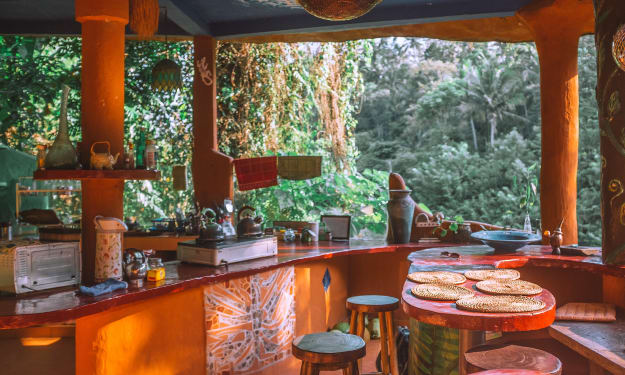
Transform your backyard into a healing oasis with the help of medicinal plants! Growing your own medicinal herbs can provide you with a natural source of healing remedies to help with common ailments. With the right tools and knowledge, you can create your own medicinal garden in your own backyard. In this blog post, we will discuss how to turn your backyard into a medicinal oasis with the help of a medical garden kit. From identifying the right plants to growing them in your backyard, we will cover all the basics that you need to know to get started.
By Dylan seow3 years ago in Earth
World problems no one knows about
There are many global problems that the world is facing today, including: 1. Climate change: The Earth's climate is changing due to the increasing levels of greenhouse gases in the atmosphere, caused by human activities such as the burning of fossil fuels. This is leading to rising temperatures, more extreme weather events, and other impacts that threaten the planet and its inhabitants.
By pravinkumar sathliya3 years ago in Earth
Coronavirus Outbreak in US: All you need to know!
Phase 1. The coronavirus outbreak in the United States has been an ongoing health crisis and pandemic. The first U.S. case was reported on Jan. 21, 2020, and since then, the virus has spread rapidly, resulting in more than 28 million infections and more than 500,000 deaths.
By Yinusa Jamiu3 years ago in Earth
Small Space, Big Harvest: Tips for Successful Kitchen Gardening in Containers
If you don't have a lot of space for a traditional garden, or if you live in an apartment or other small living space, container gardening can be a great way to grow a wide variety of edible plants. Container gardens can be set up on patios, balconies, or other small outdoor spaces, and can be a great way to grow your own fresh produce and herbs right in your own backyard.
By Kathiravan3 years ago in Earth
Mother Earth
Mother Earth Our mother earth is a beautiful and diverse place, filled with an incredible variety of plant and animal life, stunning landscapes, and diverse cultures. From the icy poles to the equatorial regions, earth is home to a wide range of ecosystems that support an amazing array of life.
By Ram Praveen3 years ago in Earth
9 THINGS TO KNOW ABOUT CHAT GPT
communication in conversational format Mr BLUE MOON COMMUNICATION IN conversational format chat gpt GPT (Generative Pre-trained Transformer) is a type of natural language processing (NLP) model developed by OpenAI. It is a transformer-based model trained to generate human-like text by predicting the next word in a sequence. It can be used for various NLP tasks such as language translation, question answering, and text generation.
By kiruba karan3 years ago in Earth
Night Hunt
Checking the clock I see it is time to go, the game camera had showed me the approximate time to expect the night visitors at the trap. Donning my camo coveralls, down filled vest, hat and gloves, I grab the AR15 with the night vision scope that hangs by the door and insert a fully loaded magazine, after cycling a round into the chamber I safe it and putting the strap over my right shoulder, exit the cabin. The wind is cold, knifing into my exposed skin, I ponder going back in for my camo balaclava but I won’t be out more than an hour or two so I decide to man-up and just take it. The crunch of the gravel in the driveway seems over loud when the wind drops to nothing. I can hear the long grass rustling as the last of wind stirs it. The trail to the clearing where the trap is set is clear in the weak light from the porch light behind me and the star filled sky, there is no moon tonight.
By MICHAEL ROSS AULT3 years ago in Earth